Showing posts with label Swansea. Show all posts

Ar Lan y Môr

In October last year, I wrote about Tidal Lagoon Swansea Bay's proposal for a tidal lagoon in Swansea Bay in some detail. There's not much I'd want to add that I didn't say then. I think it's a good scheme, and one that should definitely be built.

The company has now produced this video, which strikes all the right chords.


I'm generally impressed with the architectural quality of the scheme, although the drowning dragon is perhaps a little too much. And I was intrigued by the idea of the kelp and oyster beds; a nice touch, if not exactly central to the project's viability.

Full details are on the TLSB website.

Bookmark and Share

The Swansea Bay Tidal Lagoon

In the news last week was the story that a scoping document has been submitted to National Infrastructure Planning as a first step in the process of getting permission to construct a tidal lagoon at Swansea Bay.

     Multi-million pound tidal lagoon could power all of Swansea
     Swansea Bay tidal power could 'supply 100,000 homes'

As someone who has been quite unequivocal in support of the need for Wales to invest in tidal power, and particularly to invest in tidal lagoons rather than a barrage (here, for example) I decided to look at this proposal in more detail. The scoping document is here:

     Tidal Power Swansea Bay Scoping Document

The first thing to note is that this project is not the same as the previous proposal from Tidal Electric Limited (TEL), details here, which I fully support. It is in roughly the same position, but instead of being an offshore structure built away from the shoreline, it has been modified to become an "attached" tidal lagoon. I've produced this map showing the new proposal from Tidal Power Swansea Bay (TPSB) in blue and the TEL scheme in yellow.


Environmental Considerations

In general terms, attached tidal lagoons are not a good idea. The point of building tidal lagoons offshore rather than against the shoreline is to minimize any ecological damage to both the sea shore and inter-tidal area. By building the sea wall facing the shore just beyond the lowest low tide line, the inter-tidal marine life is untouched, and the natural tidal flow parallel to the shoreline is not completely blocked, meaning that sand and silt can move normally. In contrast, an attached tidal lagoon will cause exactly the same sort of damage to inter-tidal marine and bird life as a barrage will, and it is for this for this reason I am opposed to the attached tidal lagoons that have been proposed further east, as shown on this map.

However in this particular case the damage will be less pronounced. As we can see from the map, the new sea wall enclosing the lagoon is not built against a stretch of natural shoreline, but against the man-made wall of Swansea docks. This means there will be that much less wildlife to damage ... or at least it won't be any more damaged than it was when the docks were built in the first place. But I'd still be concerned about the triangle between the eastern sea wall, Crymlyn Burrows and the Neath navigation channel.

 
Construction

The second thing to note is that the construction of the sea wall in the TPSB scheme is more massive—and therefore more expensive—than that proposed in the TEL scheme. TEL envisaged the sea wall as a minimal structure designed only to retain water. It therefore only extended marginally above the height of the highest tide, and didn't have a vehicle roadway on top of it. It simply wouldn't matter if waves broke over the top of it in storm conditions. As it happened, this was one of the reasons why the DTI rubbished the TEL scheme (in this report) which contributed to it not going ahead. The DTI made a number of very odd assumptions, one of which was that a more massive sea wall was required, in order to claim that TEL had underestimated the cost. The sea wall accounts for the major part of the overall cost of the project, and because the only practical way of constructing it is by piling up material on the sea bed, any increase in height results in an exponential increase in cost.

But although a sea wall with a roadway on top would not be needed for an offshore tidal lagoon, it actually makes some sense for an attached lagoon. In addition to making maintenance easier, the public can use it as a walkway. It therefore has the potential to become a tourist attraction, the twenty-first century equivalent of a Victorian or Edwardian pier. This is what TPSB are proposing:

The presence of a permanent connection to the shore would also open up tourism, recreation or educational opportunities for the Lagoon during its lifetime.

In addition to this, located adjacent to the O&M facilities it is proposed that there will be visitors’ facilities. The exact details of these will be determined during the EIA process and could include:

•  Watersports and activities facilities – potentially incorporating a clubhouse, toilets/changing facilities, café, boat or equipment storage units, additional slipways – one inside and one outside the lagoon;

•  Cycle hire points for public equipment use;

•  Parking provision, public transport pick-up/drop-off and landscaped circulation space suitable for 70-100k visitors per year; and

•  Safe, secure visitor access between the two seawall landfall points so a complete circuit can be made.

... it is proposed to have a visitor centre building offshore, located near and integrated with the turbine housing area approximately 5km out along the lagoon wall. The exact appearance and facilities within this building are still to be determined but they are likely to include:

•  Architecturally significant design/appearance, with the objective of creating an iconic building

•  Lobby;

•  Café/restaurant/toilets;

•  Permanent renewable energy exhibition space(s);

•  Interactive physical exhibitions for education and interest;

•  Multi-use exhibition/function space; and

•  Navigational lighting as required.

Scoping Document – Pages 8 and 9

For me, the important thing is for a tidal lagoon to produce electricity. If that is the "cake", then the visitor attraction aspects of the scheme are the "icing" put on top of it. But if designed well, I think it could be an exciting part of an expanding and vibrant city, and this could help justify the additional cost of the more massive structure. But we need to be clear that the difference in cost is quite considerable. TEL estimated the cost of their sea wall at just under £50m, the DTI's roadway version cost £137m.

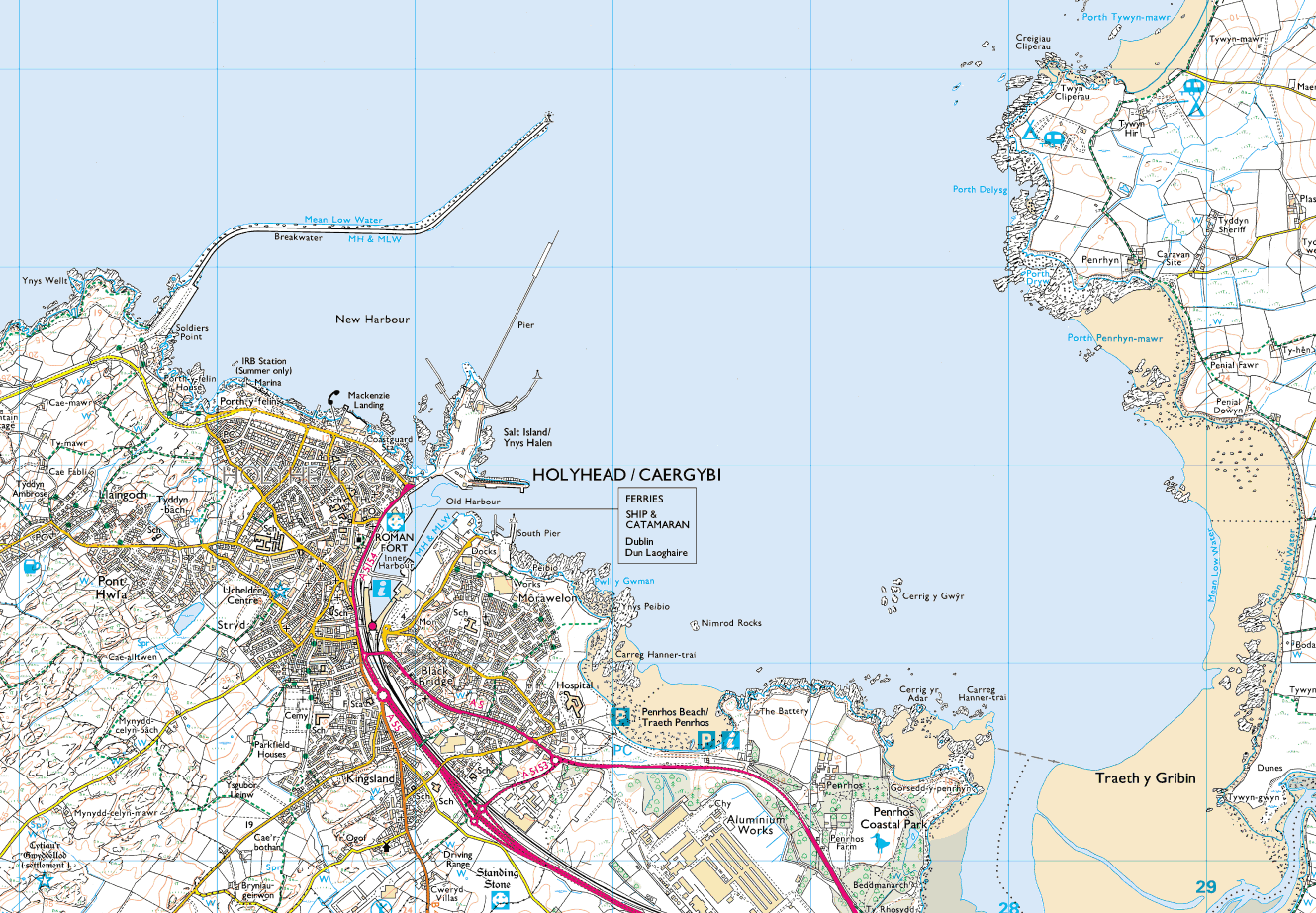
It might also be worth saying that at 9.3km, the round trip will be quite a long walk or cycle ride. To give some idea how big it is, both the maps below are to the same scale. The breakwater at Holyhead is only 2.5km long.


Electricity Generation

One thing that I found rather odd about the TPSB scheme is that the turbines will have an installed capacity of 250-350 MW, but that the TEL scheme had an installed capacity of 60 MW.

Although there is a big difference in installed capacity, it isn't all that significant. The amount of electricity that can be generated from a lagoon depends on the area of impounded water and the height difference between low and high tides. Having more (or bigger) turbines produces more electricity, but over a shorter period, by filling or emptying the lagoon more quickly. In overall terms the total electricity produced is going to be the almost same.

The area of the TPSB scheme is just short of double the area of the TEL scheme, and the tidal range is obviously the same, so it should generate about twice the electricity. But it is harder to figure out why the installed capacity of the TPSB scheme should be so much greater. My best guess is that TPSB are proposing two separate sets of turbines, one set to generate on the ebb tide and one set to generate on the flow. TEL's scheme envisaged bi-directional turbines, and uni-directional turbines might well be more efficient. The question is whether the greater efficiency of two sets of turbines would justify doubling the cost of the turbines and turbine house. It might do, for these are much less significant elements of the overall cost than the sea wall.

TEL estimated the output of their scheme at 187 GWh/yr. So with just under double the area of impounded water but more efficient turbines, TPSB's claim of 400 GWh/yr is probably justified. This equates to about 2% of the 20 TWh of electricity Wales needs to produce each year to meet our current needs. It would be the equivalent of a 130 MW offshore wind farm ... say 36 turbines rated at 3.6 MW each, which is the size of the turbines proposed for Gwynt y Môr.

 
Conclusions

When I first saw looked at TPSB's scheme in detail, I was disappointed to see that the TEL concept had been abandoned. Yet although I have grave reservations about attached tidal lagoons in general, I think that this scheme probably can be justified because no natural stretch of coastline is affected.

In terms of its contribution to our energy needs I have no doubt whatsoever that a lagoon of this sort, generating some 400 GWh of renewable energy a year, is exactly what we need. Given the fact that we are blessed with the second or third largest tidal range on the planet, not to make use of it would be recklessly irresponsible. I would hope that this is the first of many tidal lagoons.

I am a little less convinced by what I described as the "icing" on the cake. Not because I don't like icing, but because a project in which the sea wall is built high enough and strong enough to take a roadway and be safe as a visitor attraction for the public is going to be very much more expensive than a project that is only designed to produce electricity. But if someone can put together a business plan to justify it, why not? It will certainly put Swansea on the map.

I think we should have built the scheme proposed by TEL, and I can't think of any good reason why their offer was refused. But this scheme is an opportunity to build something that, at least in terms of generating electricity, is substantially similar. We must grasp this opportunity.

Bookmark and Share

Ysgol Gymraeg y Cwm

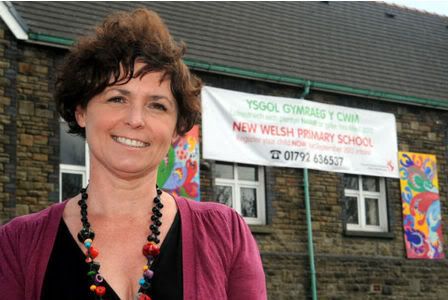
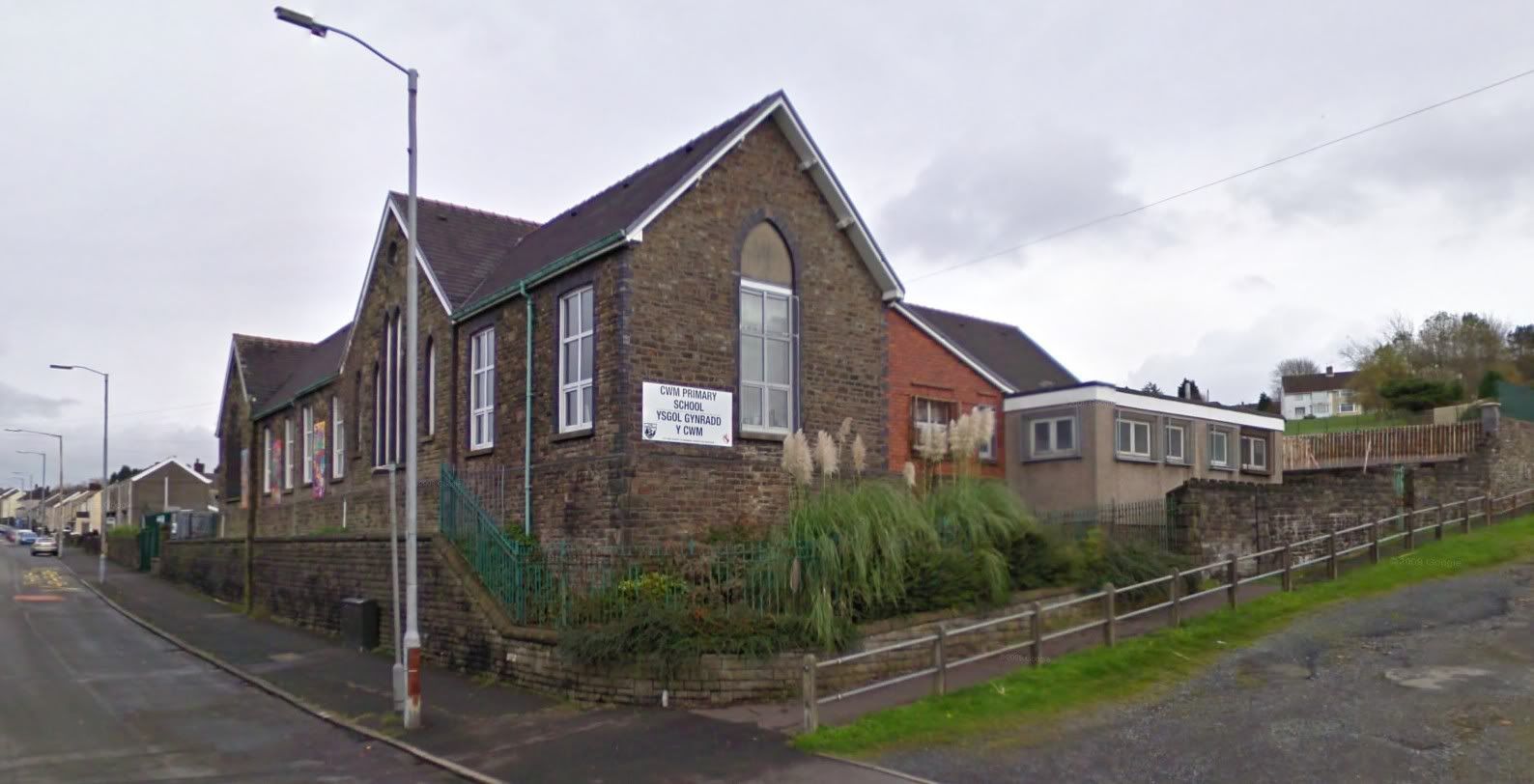
Those who read this blog regularly will already know about Swansea's decision to open a new Welsh-medium primary school in Bon-y-maen in the east of the city in the buildings which were used by Cwm Primary before it was closed in 2010. But today Swansea has announced what the school will be called and who the new head teacher will be.


     New head teacher to take the helm at Welsh-medium school

I'd like to add my congratulations to Rhian on her appointment as head teacher of the new Ysgol Gymraeg y Cwm, and wish her and the new school all the best for the future. If anyone can't quite read the banner in the photograph, it says that it's still not too late to get your child into the school this September. Just ring 01792 636537.

-

Swansea Council will want to make a lot of the fact that there are now eleven WM primary schools in the city, and that the overall number of WM primary places has risen by 735 since 2004, as it says here. But that is not a particularly large increase (in terms of intake, it is just over a hundred) and some of this increase is just a paperwork exercise. Three of Swansea's existing WM primaries—Gellionen, Pontybrenin and Tirdeunaw—had already increased the intake of these schools over the previous five years to the point where they were more than 25% over their official capacity, and therefore had to apply for permission to continue to take in more children, even though they were not physically increasing the space available for them. Details are in this Consultation Paper, and the decision was approved (although the increase was slightly reduced, Swansea seem to have simply ignored it) here.

So even with this new school, Swansea's other WM schools are bursting at the seams, and they appear to have no firm proposals for increasing capacity by opening another WM school elsewhere. There has been talk about building a new WM primary at Morriston and it is obvious that more provision will be needed there because Tan-y-lan, which was opened in September last year, is being forced to take in far more children than will be sustainable in the long term. As I noted here, in its first year it will take in 35 children, but only has room for 113 in total [see footnote].

-

It goes without saying that money is in short supply, and we need to recognize that Swansea has other schools which are in desperate need of repair or replacement. So even though I would love to see a brand new building to house a new WM school in Morriston, it would be some rabbit to pull out of the hat.

Swansea need a plan B, and I'd like to remind them of a solution that I put forward at the same time as I proposed turning Cwm Primary into a new Welsh-medium school.

     A proposal for two new Welsh-medium schools in Swansea

Cwm Primary was one of three schools that Swansea closed in July 2010 because of large numbers of surplus places in their English-medium provision, the other two being Llanmorlais on the Gower and Arfryn in Pen-lan. RhAG in particular tried hard to get Swansea to open a new WM school at Llanmorlais, but their efforts fell on deaf ears and the building has now been sold anyway. But I have always thought that Arfryn was a more viable proposition, and the building still lies empty and in relatively good condition.


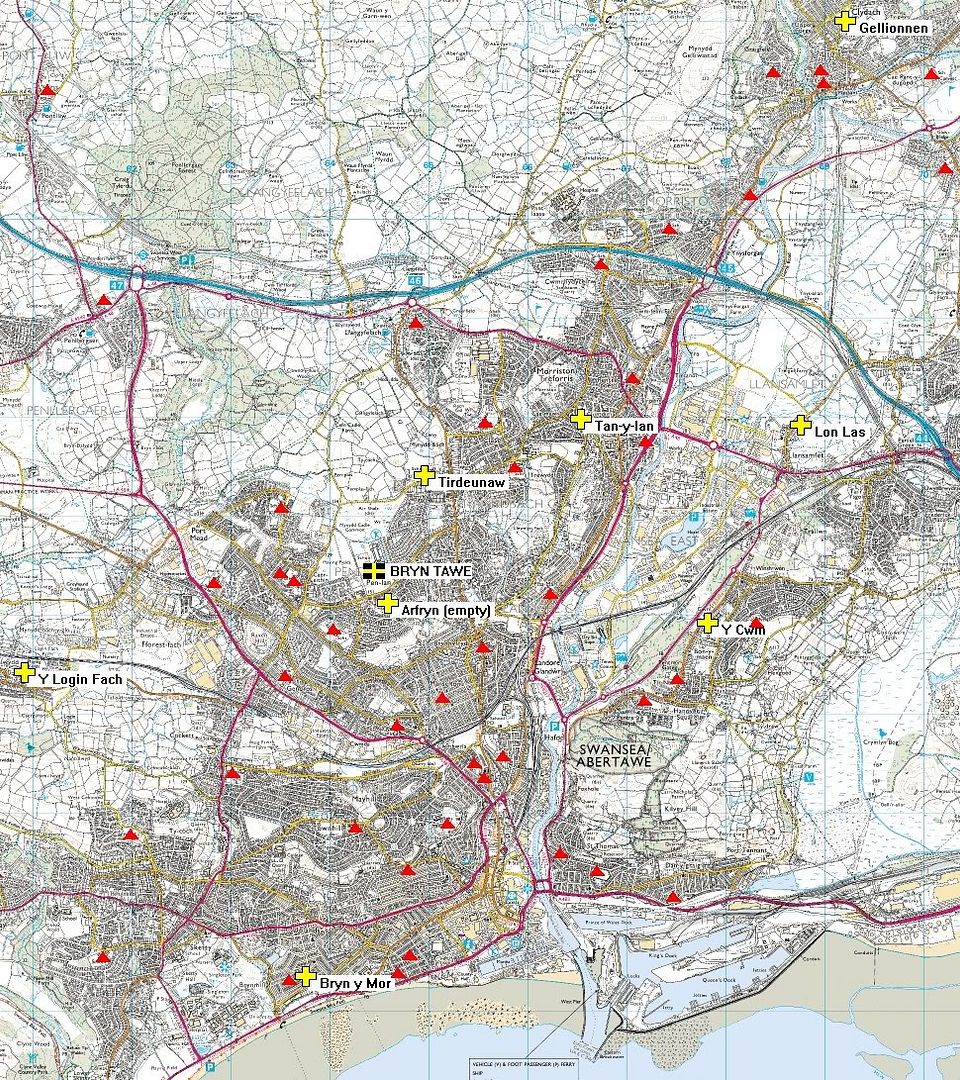
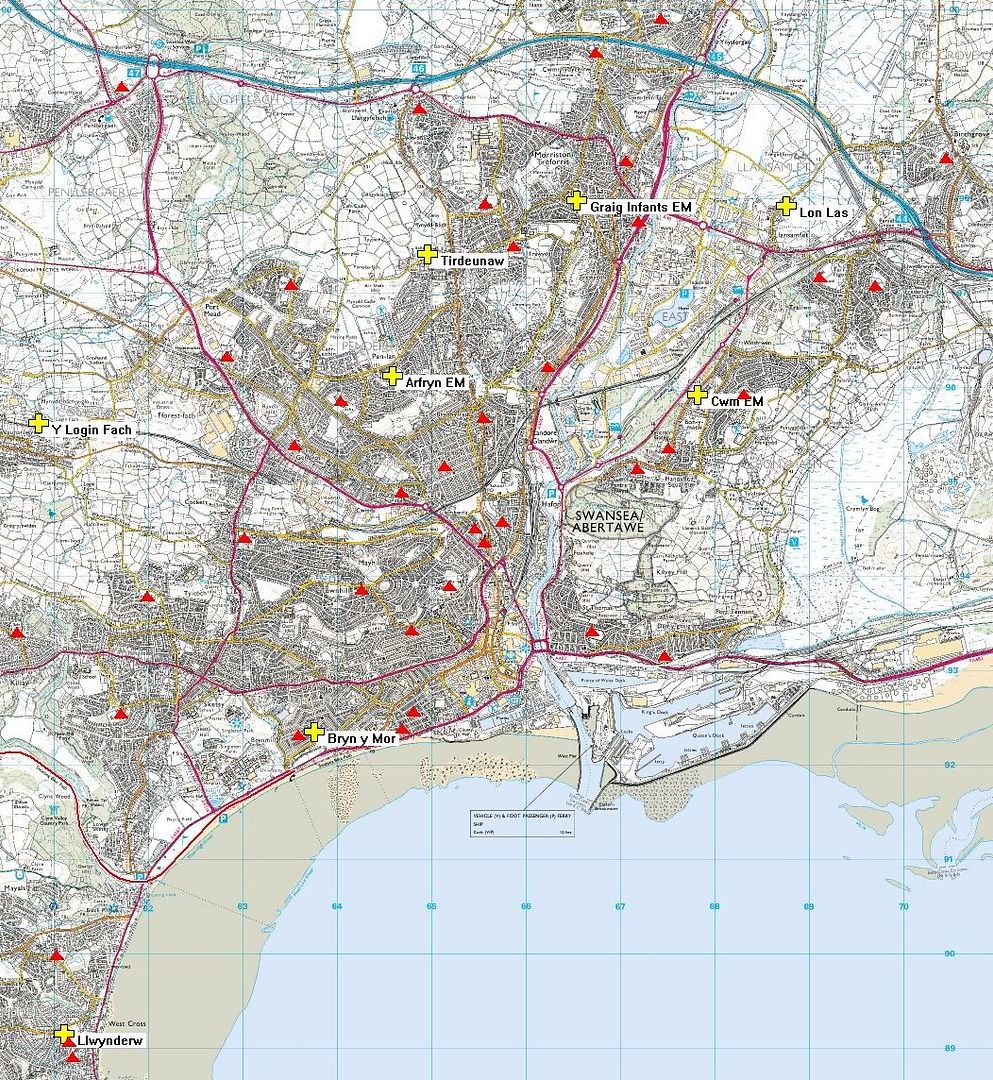
Although opening a new Welsh-medium school in the Arfryn building doesn't provide a direct solution to the problem of demand in Morriston, it does offer an indirect solution which is almost as good. As we can see from the map below (click the map to enlarge it) Tirdeunaw is drawing pupils from Morriston to the north-east as well from the areas to south; so if a new WM school is established at the Arfryn building, it will ease the demand on Tirdeunaw from the south to enable it to provide more places for children from Morriston, something that Tan-y-lan cannot do on a sustainable basis because it is so small. It also helps fill the all-too-obvious gaping hole where there is no WM provision at all.


So having got half of what I proposed before, it would be very satisfying to get the other half too. A new WM primary at Arfryn can be implemented quickly and at minimal cost. There is no reason why it can't be up and running by September 2013.


Footnote added 14:45, 21 April 2012

Looking at the Schools Census Data, Tan-y-lan has 15 children in Year 2, 13 in Year 1 and had 10 in the Reception Year in January (there will probably have been a further intake after Easter). It is unusual for a school to start with a triple intake, normally the first intake is just for Reception and Year 1.

This means that Tan-y-lan does have an intake that is sustainable in the long term. Sorry for the misinformation.

Bookmark and Share

Four more Welsh-medium schools

As this is the start of a new school year, I thought it would be good to celebrate the new Welsh-medium schools that are opening their doors for the first time.
 

Ysgol Tan-y-lan, Swansea

This is the first new WM school to open in Swansea since Llwynderw in 2002, and it is long overdue. Morriston is one of the parts of Swansea with the where the demand for WM education is strongest, but this is the first school in the area.


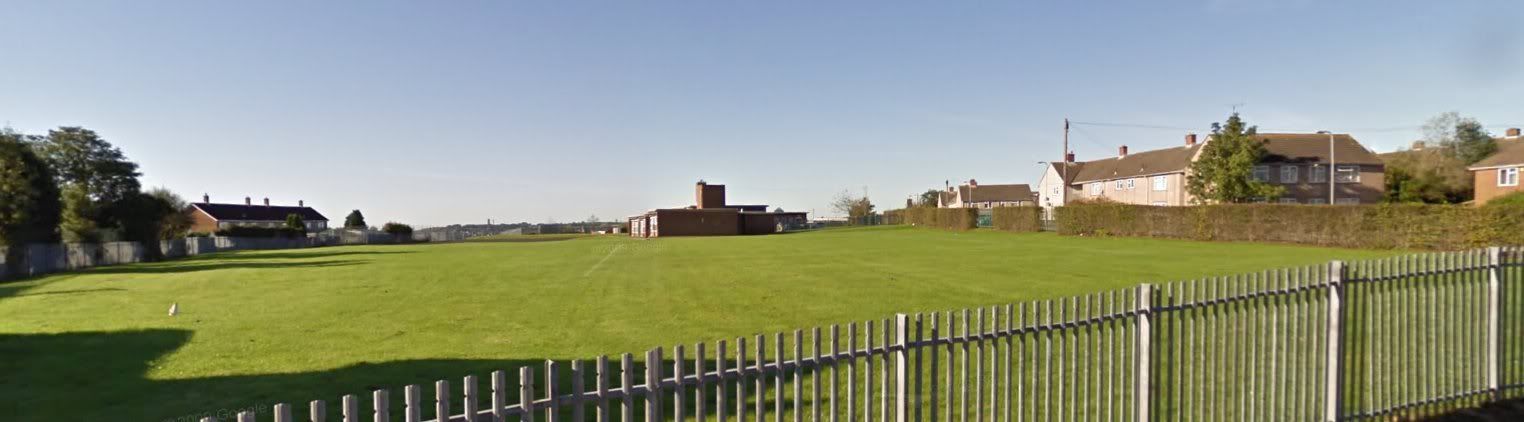
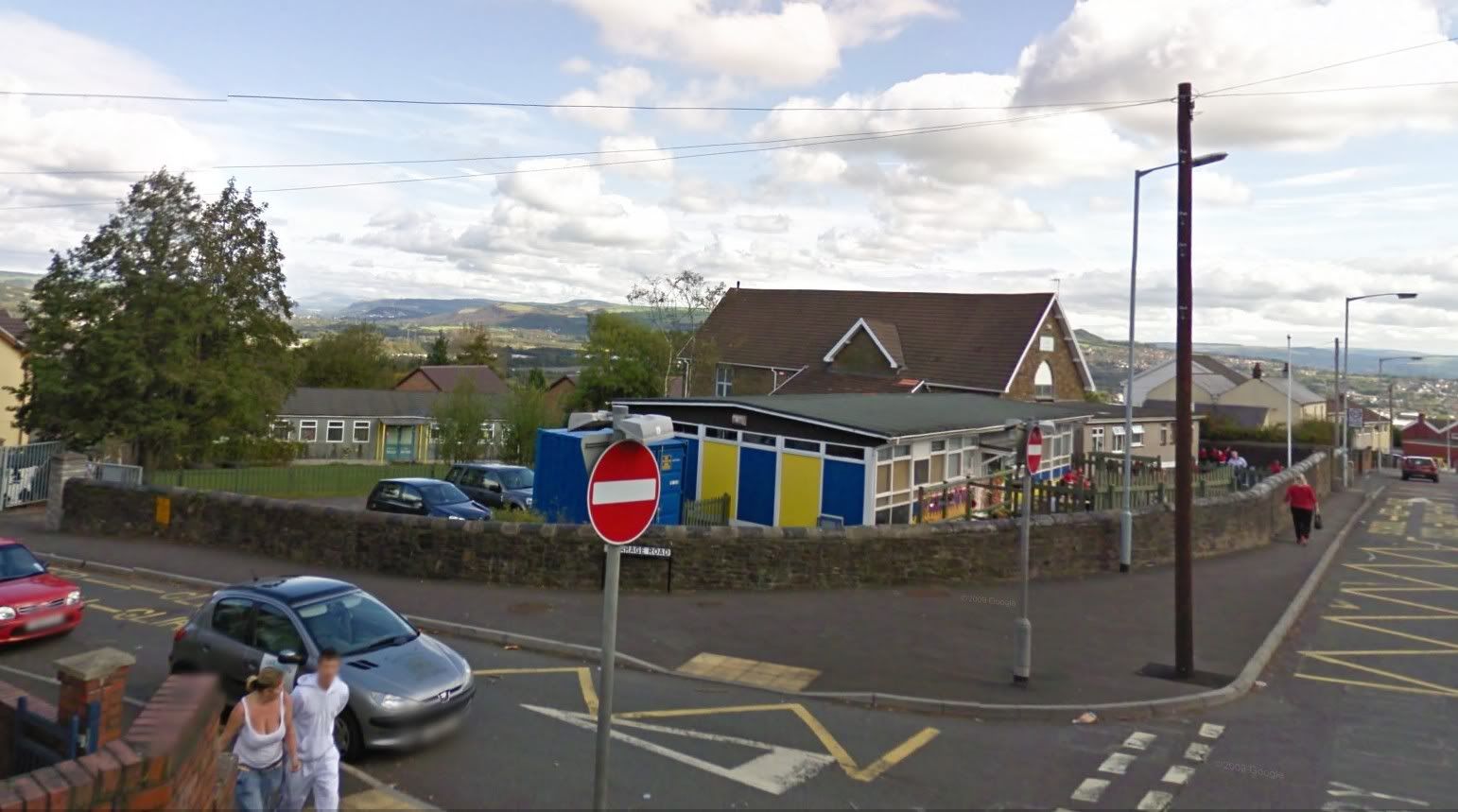
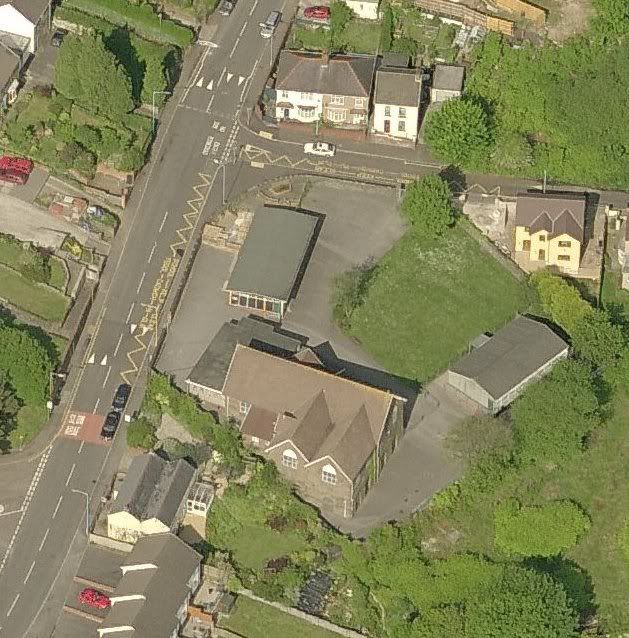
As we can see from the photographs, it is by no means a large school. When it was home to Graig Infants, it had a capacity of 113 which would imply an admission number of about 14.

But the demand for places at the school far outstrips that. As we can read here, the school will start with 20 children, and another 15 are due to start after Christmas and Easter. So it seems very clear that Swansea are having to admit children on a basis that will be unsustainable in the long term. They will therefore need either to open another school or find new premises for this school within about three years.

Swansea are set to open another new Welsh-medium school in Bon-y-maen on the east side of the city next year. However I still think that the best solution to meet the demand in and around Morriston will be to re-open Arfryn Primary as a WM school and adjust the catchment areas accordingly.
 

Seedling School at Maindee Primary, Newport

This new school is Newport's third WM primary and is being housed within Maindee Primary, just behind the Rodney Parade rugby ground, which has a very large number of surplus places. The school at Bettws, Ysgol Ifor Hael, was only opened in 2008.


There will be space for an annual intake of 17 children, although I'm don't know how many are starting this week. Eventually Newport will have to find a permanent location for the school, probably within three years.
 

Ysgol Dewi Sant, Llanilltud Fawr, Vale of Glamorgan

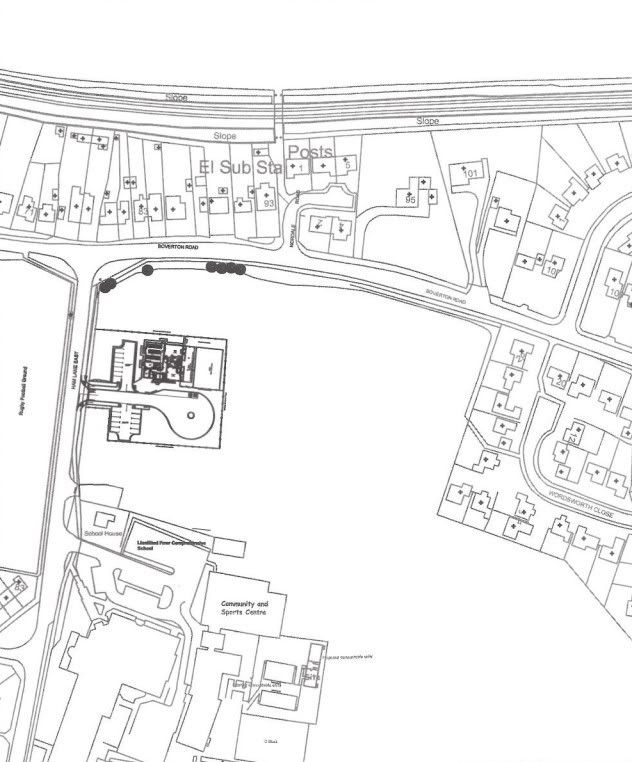
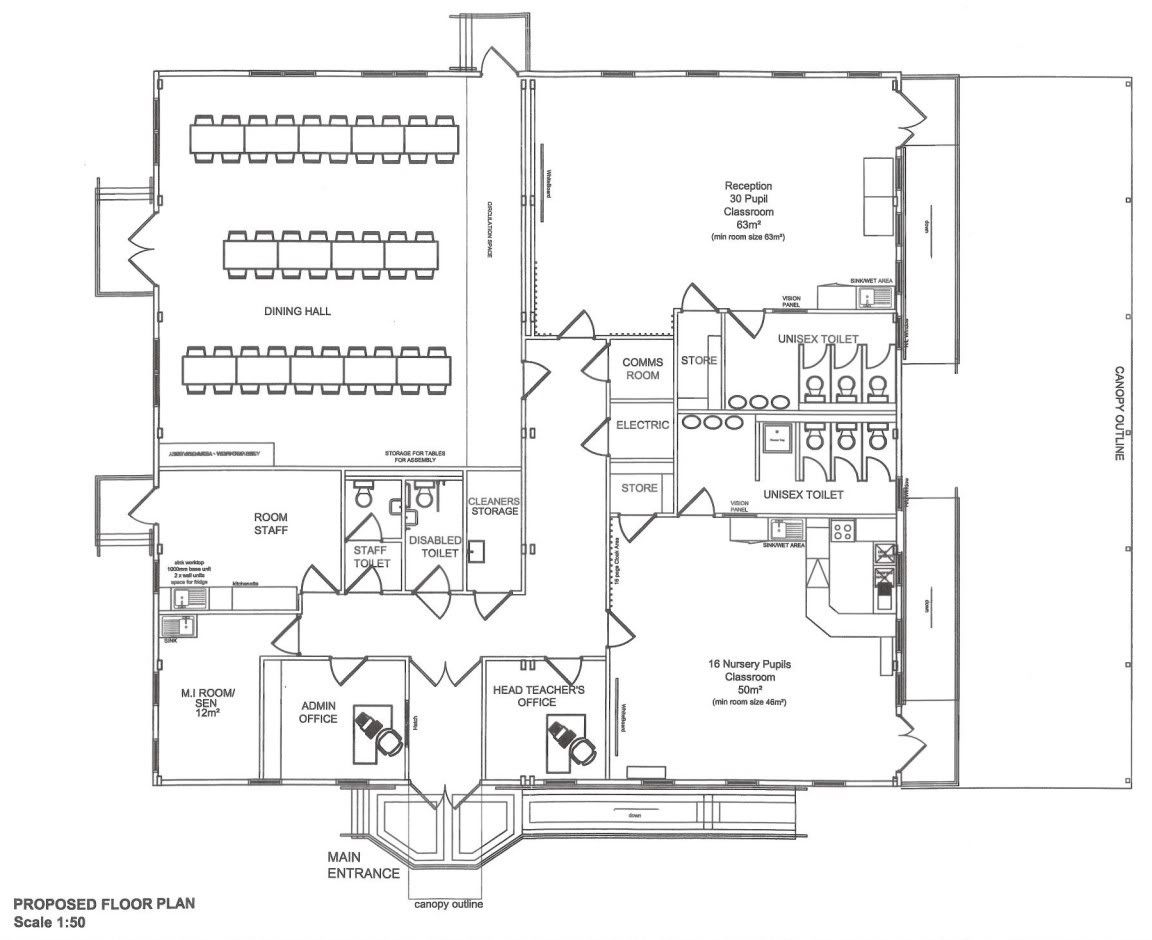
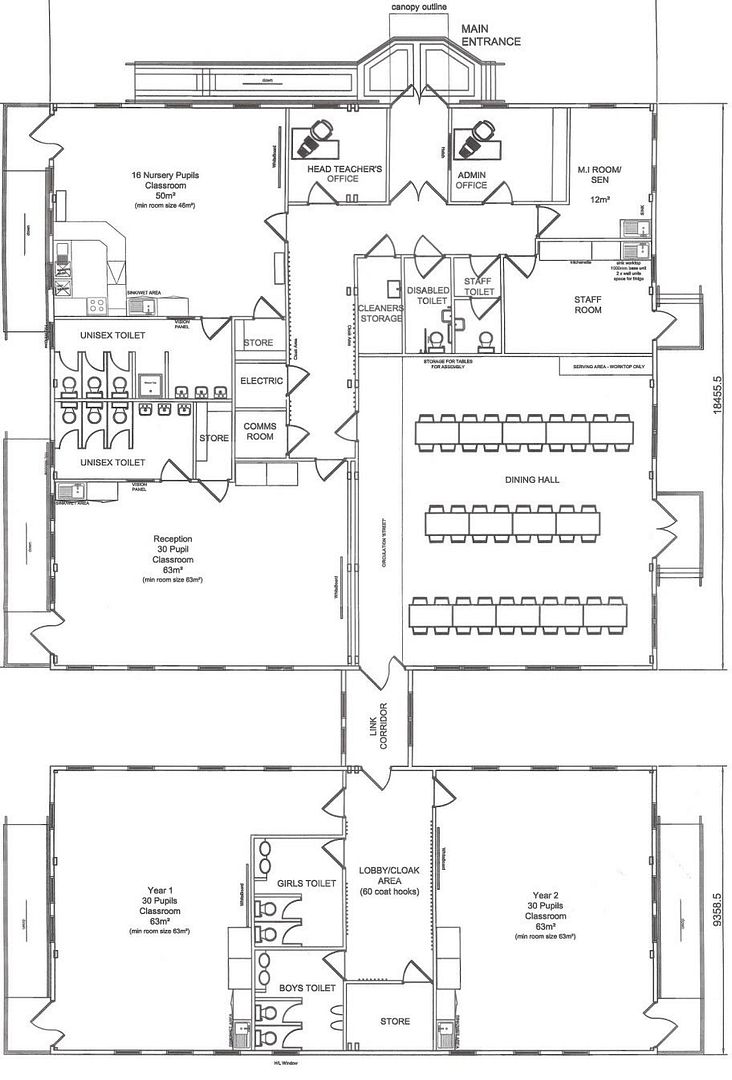
This is one of two new WM schools established in the Vale of Glamorgan this year. They are both described as "Starter Schools" and are in temporary buildings. This one is just next to the comprehensive school and leisure centre in Ham Lane East. No photographs as yet, but these are the plans:


I have to say that, as temporary buildings go, the quality is very much higher than would usually be expected. The layout is good, and I've been told that everybody is pleased with how light and airy the space inside is. There are 18 children starting this week, and if the numbers grow as expected it will need to be extended in a couple of years time.

It's perhaps worth noting that this sort of solution can be implemented very quickly. Only ten weeks ago, local MP Alun Cairns and headteacher Helen Jennings were standing in an empty playing field. Then the new school arrived on the back of six lorries.


Ysgol Gwynfor, Y Barri, Vale of Glamorgan

This starter school is the grounds of Ysgol Gyfun Bro Morgannwg. The design is identical to Dewi Sant, except that an additional double classroom unit has already been added, and the plan is for a further extension to be added in due course. As with Ysgol Dewi Sant, headteacher Sian Owen is very impressed with the standard of accommodation.


There are 17 children in the reception class, and another 10 in the nursery with more expected after Christmas and Easter.

The school has been given the temporary name of Ysgol Nant Talwg, but I'm sure that this is only because it isn't yet housed in a permanent building worthy of Gwynfor Evans' name.

-

Although the quality of both these demountable buildings is very high, they will eventually need to be replaced by permanent buildings, almost certainly on the same site. But when this happens, there is absolutely nothing to stop them being moved to a new site to start another new school, either in the Vale or somewhere else.

A few years ago, the Vale of Glamorgan undertook a comprehensive survey of parental wishes regarding Welsh-medium education, found that the demand was much higher than their current provision and, to their credit, then acted quickly to meet the need. This is an innovative solution, and other local authorities could learn from what they've done.

-

Maybe four new schools are not as many as we'd like to see, but every one is a step forward. They represent the hard work of those who have campaigned for them, often for many years, and that's something to thank them for and celebrate.

Bookmark and Share

Swansea 4, Reading 2

They were close to throwing away a three goal lead, but came good in the end. It was an emotional rollercoaster, but Swansea are now the first Welsh side to grace the Premier League. Well done.


Bookmark and Share

More about Ysgol Gymraeg Bon-y-maen

A couple of weeks ago in this post I welcomed Swansea's decision to go out to consultation on a proposal to open a new Welsh-medium school in the old Cwm Primary School in Bon-y-maen, on the east side of Swansea. Since then the consultation document and the Cabinet Report on which the Council based its decision have been published, and I'm quite pleased with what they say.

     Consultation Paper
     Cabinet Report

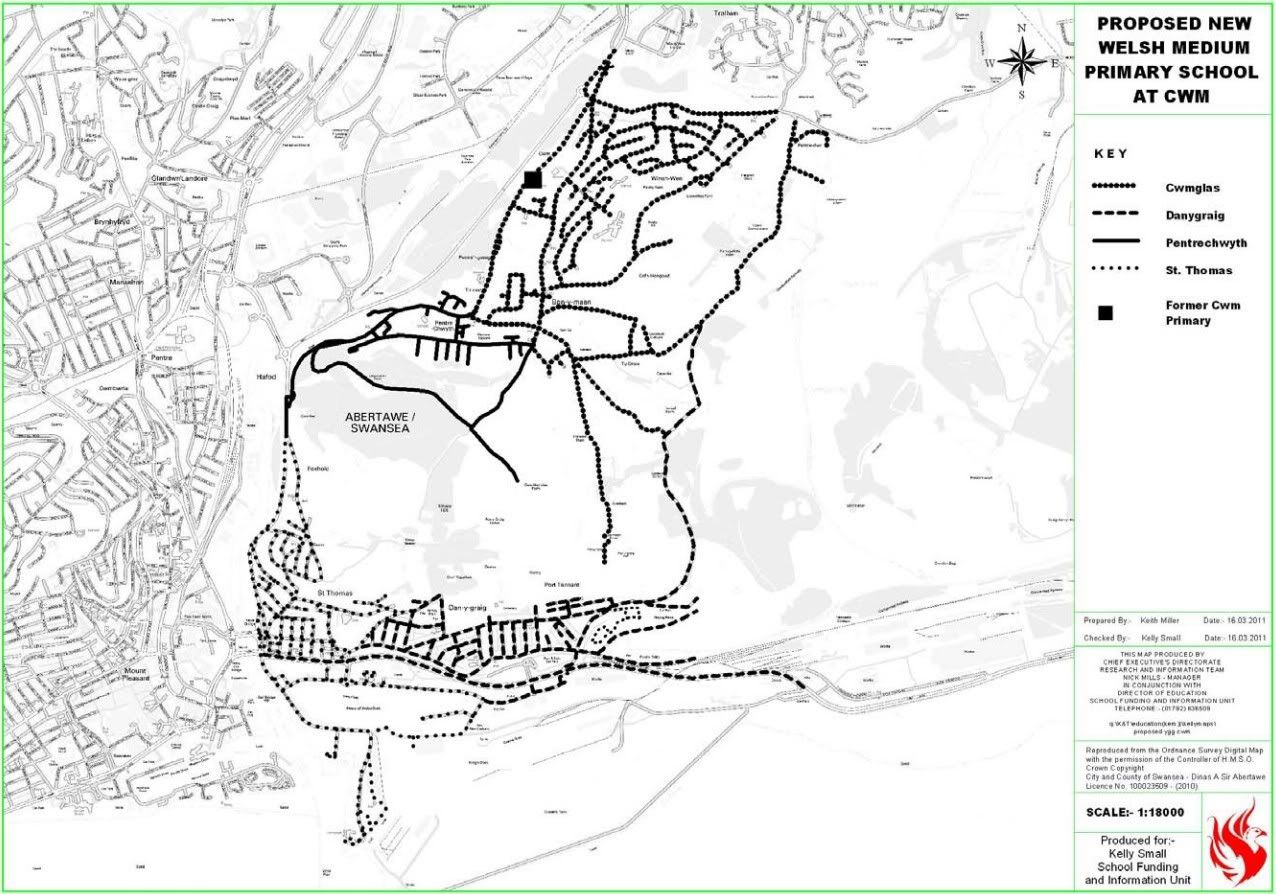
The Consultation Paper is relatively straightforward. It includes this map showing that the catchment area is the southern half the current catchment area of Ysgol Gymraeg Lôn Las, and says that the admission number will be at least 23.


The Cabinet Report (the proposal is in the third part of the document, starting at page 27) gave some interesting information on Swansea's thinking. One of the questions I asked before was why the proposal was to set up this school for September 2012 rather than for September of this year, since the demand is obviously there. On the question of demand, the report says this:

As at January 2010 there were 38 surplus places at YGG Lôn Las (9.0%) ...

YGG Lon Las currently has an admission number of 60 but the local authority had to admit over this number ... As demand continues to grow at YGG Lôn Las there is simply no scope to admit them at the school, nor in the next nearest Welsh medium school, nor indeed, the next nearest either. Under existing Council policy transport costs are incurred where a pupil has to travel more than 2 miles to attend the nearest appropriate school.

So the pattern of growth at Lon Las is such that, even though there is space in the older year groups, the current intake in the early years is now much greater than Lôn Las can sustain. The school had to admit 15 children more than the admission number of 60 last September, and it is fairly obvious that this number is going to go up again this coming September. But it does appear that Swansea have thought that one through:

It was previously considered that a possible way forward could be to establish a starter class in one of the two buildings on the former Cwm Primary site from September 2011. As long as this remained temporary accommodation (for no more than 3 years) it would not be necessary to undertake any formal statutory consultation process. It would then have been necessary to undertake a full statutory consultation to establish a new Welsh medium primary school on a permanent site once this had been determined. The possibility of setting up early years provision on the site from September 2011, linked with an existing school, is still under consideration.

This formal consultation is in fact to establish a permanent school in its own right with a separate headteacher and governing body. However there is nothing to stop Cwm Primary coming into use in September this year as overflow accommodation which is officially still a part of Lôn Las. As it happens, this is exactly what Cardiff did at Gabalfa, which for a year operated as overflow accommodation to Melin Gruffydd, but then became Ysgol Glan Ceubal in its own right. Obviously I wouldn't expect Swansea to commit to anything now, but they will know if the proposal has been approved by summer, and the Junior Block of the old Cwm Primary is sitting empty and ready to be used at short notice. The only alternative would be to put up more temporary accommodation at Lôn Las; but that would cost money, so the decision should be a no brainer.

The other thing that had concerned me was that the Cwm Infants Block is now home to the Bon-y-maen Family Centre. But it appears that this is temporary and it will be rehoused in Cefn Hengoed when refurbishment there is complete. That means that both blocks at Cwm will eventually be available for the new WM school, with a capacity of 167. It may well not be a permanent home if money becomes available to build a new school or if, as the most telling part of the report states:

Once the school has been established it will be possible to determine whether the Cwm site is the most appropriate permanent location for the new school or whether the wider rationalisation of English medium provision might provide a more suitable permanent location. This decision will need to reflect the natural catchment area that develops for the school and also the implications of wider housing developments in Neath Port Talbot.

I guess that means that as future phases of the Coed Darcy development get completed, either a second new WM school will open there which might attract children from around Port Tennant; or maybe that a new EM school there might do the same, leaving an empty EM school building which could house a larger WM school. I wouldn't mind betting that the latent demand will result in it being another WM school, rather than a replacement for this one.

Bookmark and Share

Swansea to take a step forward

I have on several occasions criticized Swansea Council for their unwillingness to expand Welsh-medium education in line with the parental demand for it. In particular I have called for them to set up new starter schools in some of the old English-medium schools that were closed last summer because they had too many surplus spaces. The articles are here:

     New Welsh-medium schools in Swansea ... 8 March 2010
     A proposal for two new Welsh-medium schools in Swansea ... 11 April 2010
     Ysgol i Ogledd Gwyr - A School for North Gower ... 28 August 2010

This is an extract from what I wrote in the first of these, just after confirmation of the decision to close Cwm Primary:

No school closure decision is easy, but what has happened does open up a solution to Swansea's problem of where to open at least one much-needed WM school. At present there is no WM school at all in East Swansea, at least not until you get as far north as YGG Lôn Las in Llansamlet. The RhAG report I linked to shows that a considerable number of children from Bon-y-maen have to travel 2km or more to get to YGG Lôn Las, and that some even travel 6km or so from St Thomas:

74 children from Bonymaen attend Lôn-las and 20 from St. Thomas. 9 children from St. Thomas attend Bryn-y-môr. 103 children from these areas suggests that there are sufficient numbers here to support a Welsh medium school, and quick growth could be anticipated.

So we have the bizarre situation where some parents are up in arms because their children will have to travel a maximum extra distance of just over 300m to get to Cwm Glas, while there are easily enough local children in Bon-y-maen who are currently having to travel many times further by bus or car to get to the closest WM school, but who would be able to walk if the Cwm buildings were to become a WM school. And for the community as a whole it's surely better for the buildings to remain in use, for they will be just as much available for community use outside school hours as they are now. To me, it's an obvious solution to a pressing problem.

Cwm Primary is closing simply because the numbers wanting EM education do not justify two EM schools with so many surplus places in such close proximity to each other ... but its closure opens up the opportunity for Swansea to provide more WM places in accordance with the wishes of the 28% of parents that want it for their children.

So it was rather a pleasant surprise to read this in the Evening Post yesterday:

Welsh language school plan for closed primary

A primary school which was closed last year because of falling pupil numbers and crumbling buildings could reopen – as a Welsh language school.

Cwm Primary School in Bonymaen, Swansea, closed its gates for the last time in July after 150 years, despite protests from pupils, parents and governors. But it has now emerged that the junior block of the Eastside school could reopen as a Welsh "starter" school by 2012 because of growing demand for places – though this would only be until a permanent site could be developed.

Swansea Council said the new use for Cwm Primary would help to plug the growing gap in Welsh language education – it forecasts that by 2016 there will be a shortage of some 73 places.

Mike Day, Swansea Council's cabinet member for education, said: "The demand for Welsh-medium primary school places is continuing to rise, and our existing schools simply haven't got the room to meet the demand from parents. While we need to consider further the longer-term options, we have to provide a shorter-term solution because demand is outstripping supply.

"Cwm's former junior block in Bonymaen is the most appropriate site for a starter school. This will help us meet the demand for places and also prevent local children having to travel out of their community to get to the nearest Welsh-medium primary school." He added: "This proposal would also bring the former junior block back into education use, which will hopefully be welcomed by the community."

Plans for a temporary Welsh school in Bonymaen are due to go to the council's cabinet on Thursday – if they are approved, a formal consultation process will begin.

South Wales Evening Post, 5 March 2011

I'd call that a win!

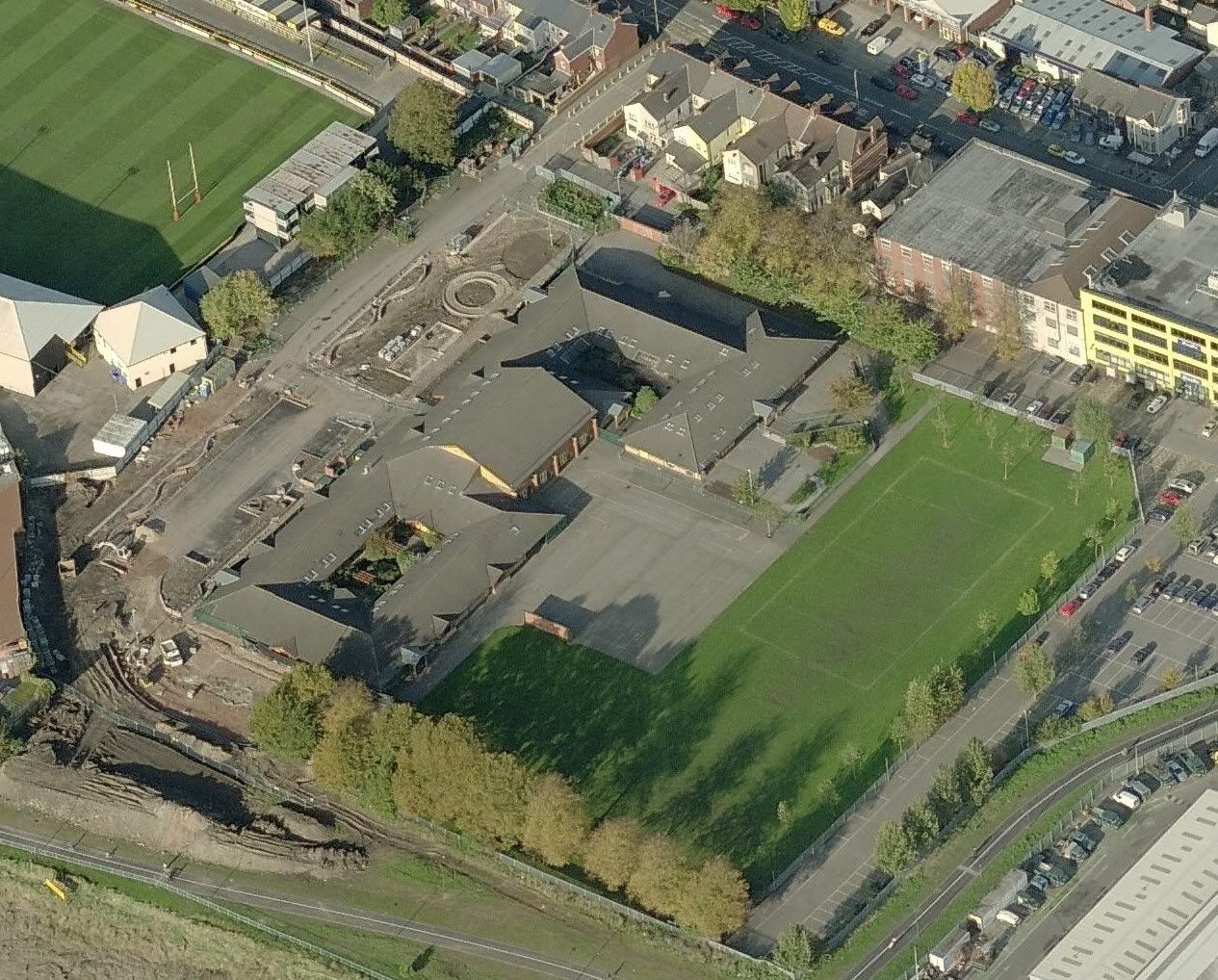
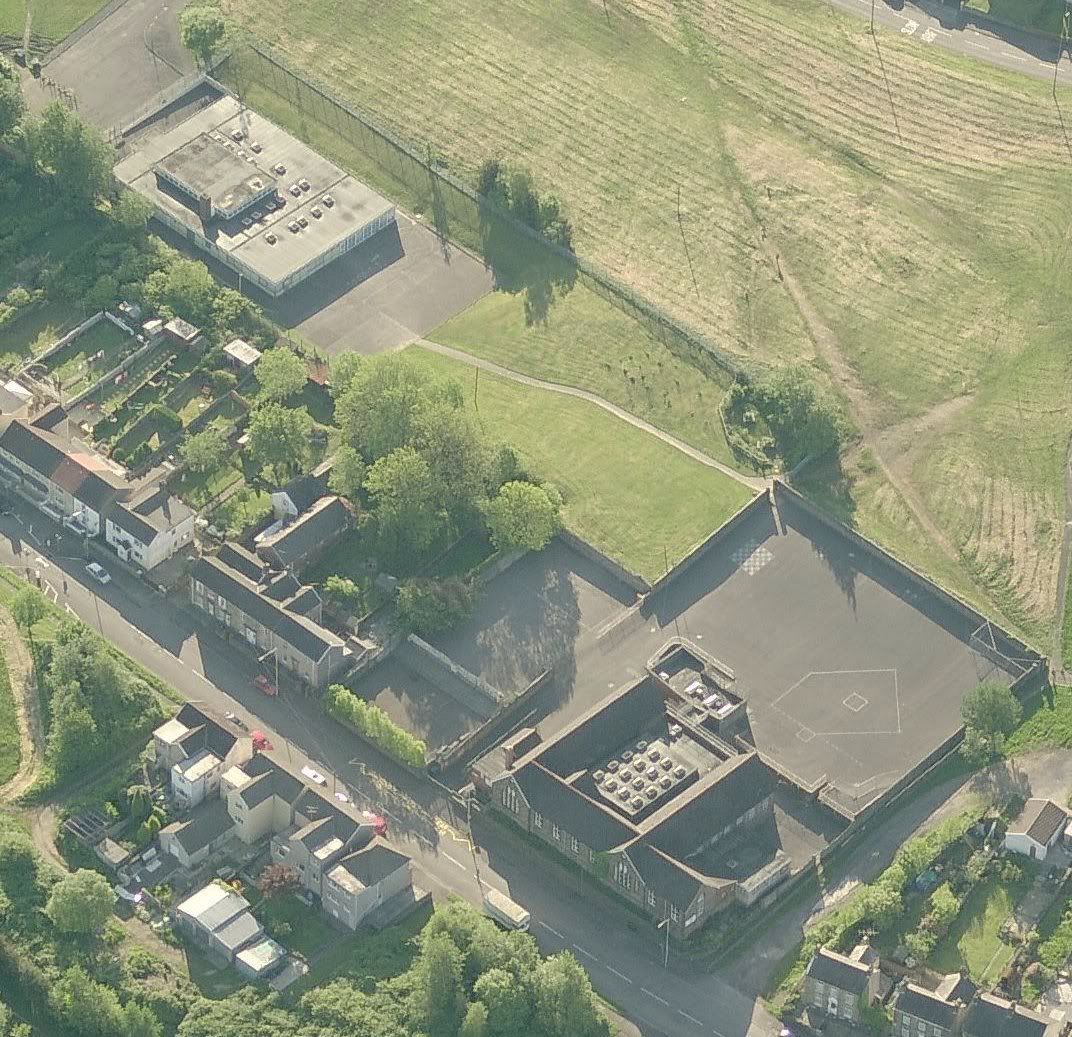
As the aerial picture shows, the school has two separate blocks, with the older Victorian building at the bottom right and what looks to be a seventies building at the top left.


Now I do think it's fair to say that these school buildings are not in the best of condition, but I'm not sure they are in so bad a condition as to be described as "crumbling". When putting together the case for closing a school, there is a tendency to overstate things in order to justify the decision. But the essence of a starter school is that it begins with one or two classes, and then grows. That means there is plenty of opportunity to refurbish one building while the other is being used, or even to knock one of them down and rebuild a new school. Yet, with the current financial situation being what it is, I'm sure things can be patched up for a few years until a long-term decision—which will obviously depend on funding—can be made.

But what is important is that Swansea makes a commitment that if the numbers justify it (and the evidence from RhAG shows that they will) they will either refurbish or rebuild on the same site or very close to it. If Swansea can't do this, then parents will naturally be reluctant for their children to start their primary education in one place, but then have to travel miles to a new, unknown location in two or three years.

-

The other obvious question to ask is why Swansea are not thinking of opening the new starter school until 2012. Why should a building that is already sitting empty have to sit empty for another year, when there is plenty of demand for Welsh-medium education from the east side of Swansea right now? There can be no reasonable grounds for objections, since the EM school has already been closed, and no planning objections because the buildings already exist. On top of that, a building standing empty is much more likely to deteriorate or be vandalized than a building that is being used.

So I would urge Swansea to aim to open this starter school this coming September rather than in September 2012.

-

But these reservations aside, I wholeheartedly welcome Swansea's decision ... and I only wish they would apply the same logic and reconsider what to do with the school buildings at Arfryn and Llanmorlais.

Bookmark and Share

Swansea and Cardiff

It looks like Leighton Andrews makes decisions in batches, for hot on the heels of yesterday's announcement that a new WM school has been given the go ahead in Swansea comes the decision to allow Cardiff to reorganize schools in Whitchurch.

     Whitchurch schools shake-up gets go-ahead

The basic issue was that Whitchurch did not have enough children in the area to support both Eglwys Wen and Eglwys Newydd as two-form entry English-medium schools, and that these were only the size they were because of children coming from outside the area. Coupled with that, Melin Gruffydd—the WM school that currently shares a site with Eglwys Wen—was continually expanding resulting in an intolerable situation for both schools. Something had to be done, it was a question of what.

As I've said before in much more detail, I thought the ideal solution would have been to keep Eglwys Newydd as it is, but to build a brand new one form entry school at Heol Don for Eglwys Wen to move into, leaving Melin Gruffydd to use the whole site they currently share. As I read the situation, the main objection to that is that Cardiff prefer fewer, larger schools. The cost of building a new school would probably not have been that much greater than the extensive rebuilding work that will be necessary to convert the Eglwys Newydd building into a two-form entry WM school.

But we don't always get what we want, and even though the plan now approved by the Welsh Government is not as good as it might have been, it will do. It doesn't do anything to increase WM provision, for Melin Gruffydd's intake is already over 60, but it achieves the main goal of reducing the overcrowding on the shared site, allowing a each school a stable, sustainable future that doesn't rely on inadequate temporary accommodation.


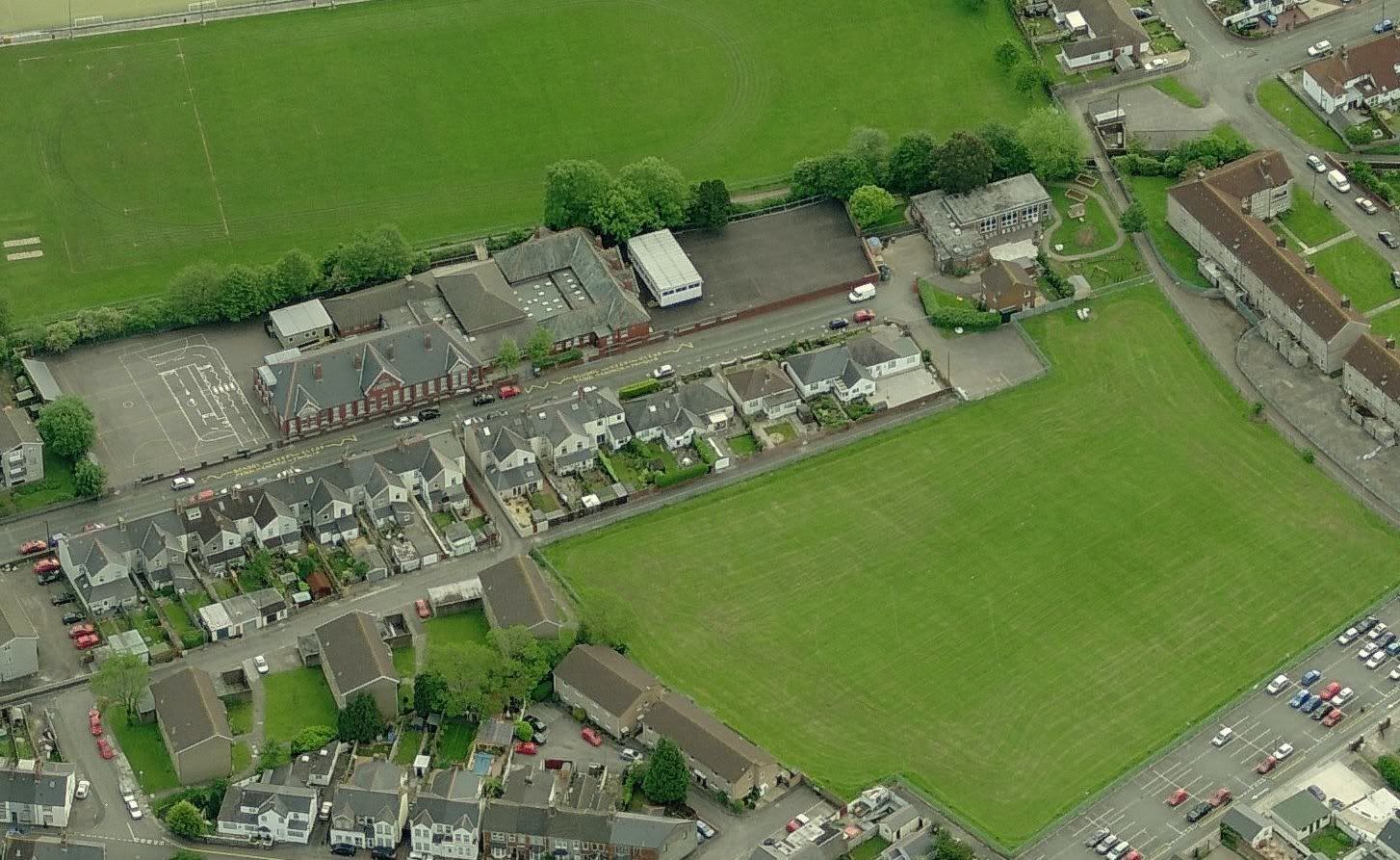
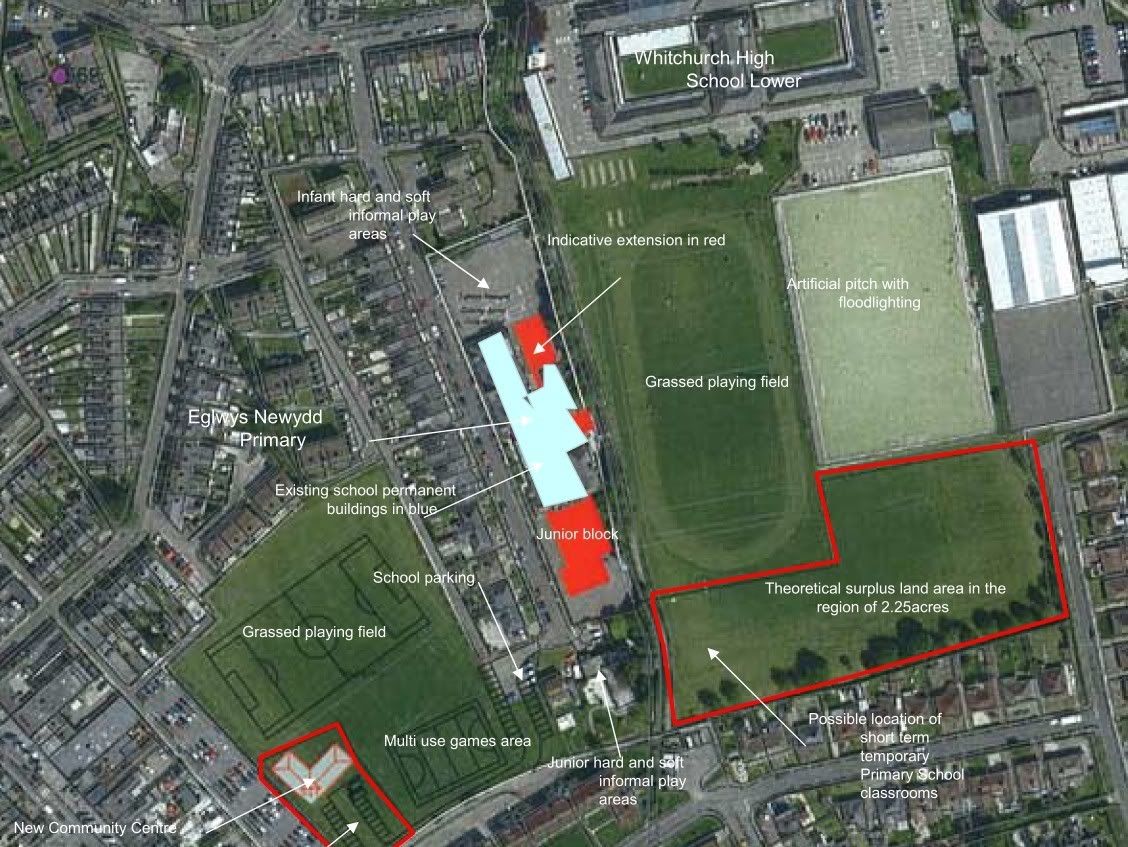
As we can see from the aerial photo above, the Eglwys Newydd building is on a long, narrow site. The plan, as shown below, is to take down the temporary accommodation and build a new junior block which will take up all the hard play area to the south. It's all a lot tighter than I would like, but perhaps the detailed plan will not be so bad. I hope to be pleasantly surprised.


As these two decisions have come at the same time, it provides an opportunity to look at the difference in attitude between Cardiff and Swansea Councils towards the expansion of WM education.

Swansea started by doing the right thing. They were one of the first local authorities to commission a proper survey of parental wishes, and if they had got their way Llwynderw would have been built as a 2 FE rather than 1.5 FE school. It was the Welsh Government that refused to allow a larger school to be built. But since then Swansea have sat on their hands and done nothing to increase the provision of WM places to meet the parental demand for it. The new WM school at Graig is their first new initiative for years, even though their own survey showed that 36% of parents would choose a WM school if there was one near them.

My greatest criticism of Cardiff is that they have never bothered to commission a survey of parental preferences. Yet they know that the demand must be there, and have taken steps to continually increase WM provision anyway. Although they've had problems with their proposals for Canton and Whitchurch in particular, their proposals for other parts of the city have been implemented without any real problems. Because of that, the number of WM places in Cardiff is continually growing. However, when they eventually do commission the survey, I'm sure they'll find they need to increase WM provision much more than they have to date.

In short, Cardiff's attitude has been to push forward proposals and to keep coming up with more if any of them fall though. It's sometimes messy, but it gets a result. Swansea's attitude for the past few years has been to ignore the wishes of parents, and do as little as they can get away with.

Bookmark and Share

Swansea's small step forward

It was in March last year that Swansea put forward plans to close the half-empty Graig Infants school in Morriston and convert it into a new Welsh-medium school, while at the same time amalgamating the nearby Pentrepoeth Infants and Junior schools into a new English-medium primary. The news today is that these plans have been approved and that the new schools will open in September.

As highlighted by RhAG in this paper in 2009, Morriston has long been the area of Swansea with the biggest demand for WM education but with no provision for it. So this is definitely a step forward ... but I have to say that it is not such a big step.

-

Graig Infants is a small school with a capacity of 113. As an infants school it would be one-form entry, but as a WM primary with seven year groups and a nursery it will be a less than half-form entry school with a maximum intake of only 14 children a year.


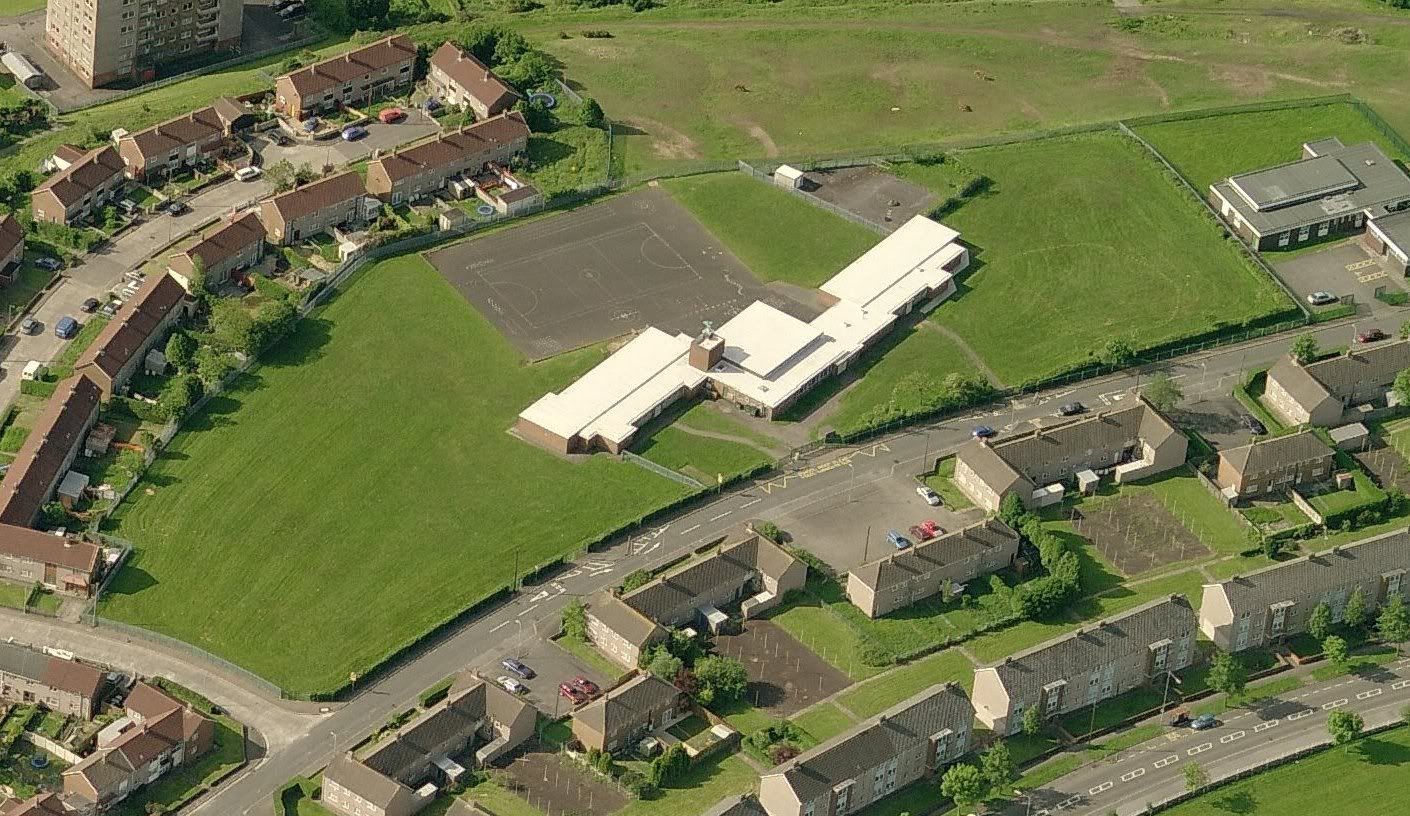
As we can see from the pictures, it already has two temporary classroom blocks which have probably been there for so long that they might as well be thought of a permanent accommodation. And what looks as if it should be a hard play area is in fact used to park about ten cars. Nor does the site have any room for expansion, for the wooded area in the bottom right of the aerial photo has now been developed as housing. So it's far from ideal, though obviously it's a lot better than no WM school in Morriston at all.

-

Perhaps this wouldn't be so bad if Swansea were planning to expand WM education elsewhere. But they're not. They are currently going through a paperwork exercise to increase the capacities of three WM primaries at Gellionen, Pontybrenin and Tirdeunaw ... but are not planning to increase the physically space available in these schools. To put it bluntly, they want to squeeze more children into less space than the regulations allow. A local authority is allowed to overcrowd a school by 25% without needing permission to do so, but Swansea have already done that, and now want to go even further.

This is a tragedy because for the past few months Swansea has had three empty school buildings which could easily become new WM schools. I put the case for opening new starter schools in the old Cwm and Arfryn buildings here. And RhAG presented a proposal for a WM school in the old Llanmorlais building, which I mentioned here.

It's still not too late for Swansea to put together proposals to set up starter schools in these buildings in time for them to open in September this year. There cannot be any reasonable objections, because they are currently sitting empty and unused.

Bookmark and Share

Dai Lloyd in full flight

Dai Lloyd was in full flight in yesterday's short Senedd debate on Welsh-medium education in Swansea. Here are the untranslated and translated versions. It's worth watching the first because no translation could quite do justice to his introduction ... and for the delight of once again seeing Leighton Andrews delivering his response as Education Minister in Welsh. Well done, Leighton.


OK, it might just be fair to say that Dai majored on the rhetoric at the expense of some of the detail ... but this was a speech; and the details, facts and figures will mean nothing to most people unless a politician can convey why they matter so much, and rouse others to share that vision and take action to make sure it is fulfilled.

And to show that he's not alone, let me do my bit to appeal to our sense of outrage at the scale of the injustice of what was done in the past:


But that was the past. The point at issue is what we do now. As far as Swansea is concerned, Leighton Andrews said that Swansea's commitment is to provide 500 additional WM places by 2011. The new building for Llwynderw has a capacity of 315 (it should have been bigger, but Jane Davidson restricted it to a 1.5FE rather than 2FE school) which was an increase of about 200 on the temporary accommodation Llwynderw used to be in. That still leaves Swansea to find another 300 places by September next year to meet their own previous commitment, irrespective of the much greater demand revealed by the surveys.

But as I said in this post, Swansea's present proposal—currently on Leighton Andrews' desk—is just a paperwork exercise to make out that the three WM schools have more capacity, but without actually doing anything to physically increase the space in these schools. As such it is nothing more than a sham by which the council can say they've increased WM capacity while actually doing nothing at all. For this reason, I'd again urge Leighton Andrews to reject it, or to set a condition that the admission numbers cannot be increased unless enough additional physical space is provided so as to prevent further overcrowding.

Of course, providing that additional space will cost money, even if it takes the form of additional temporary accommodation in portacabins. That is why I think it is better to save that money, and use the three existing empty buildings that used to house the schools at Arfryn, Cwm and Llanmorlais instead. This doesn't mean a commitment to new schools, for they can legally be part of the existing WM schools at Tirdeunaw, Lôn Las and Pontybrenin, sharing the same headteacher and governors. This is exactly the mechanism used by the LibDem/Plaid administration in Cardiff for Gabalfa, so why can't the LibDems in Swansea do the same thing as their colleagues in the capital have done?

-

As regards local education authorities elsewhere, I was pleased to hear Leighton Andrews talk tough about getting the more reluctant of them to properly survey parental demand for WM education and act on it. And that they would each be required to set up a Welsh-medium Education Forum and present an annual strategic plan.

I hope that will be enough, but past experience shows some local authorities to be very resistant to giving parents a choice. There now needs to be a sharp change of attitude; and if there isn't, it is encouraging to hear that legislation will be introduced to make it happen.

Bookmark and Share

Welsh-medium education in Swansea

If any of us have time to watch it, Dai Lloyd is going to lead short debate in the Senedd on the state of WM education in Swansea at 6pm today. It will be on senedd.tv and the BBC's Democracy Live both live and on demand later.


I don't know exactly what he'll say, but I'm sure he won't disappoint me. I've written about the situation in Swansea on several occasions, for example here, here and here. I would highlight these facts:

•  Swansea have surveyed the demand for WM education, but have not acted to make provision for it

•  that there are three currently unused school buildings (Arfryn, Cwm and Llanmorlais) that could be used for new WM starter classes now, with the aim of making them new schools in due course

•  but that Swansea have instead embarked on a paperwork exercise to cram more children into the existing buildings when there clearly isn't the physical space available in them to do so

Something else to look forward to is a report by the Assembly's Enterprise and Learning Committee entitled "The teaching and acquisition of Welsh as a second language". It will be published tomorrow and will be downloadable from here. For a taste of what it will say, read this.

Bookmark and Share

Ysgol i Ogledd Gwyr - A School for North Gower

In April this year, Leighton Andrews confirmed that three primary schools in Swansea could be closed because they had large numbers of surplus spaces, and alternative schools which also had spare space were available within easy travelling distance.

At the time, I wrote posts showing how two of them, Arfryn and Cwm, would be ideal locations for Welsh-medium schools. I still think that. And I have to admit that I didn't think that the third school, Llanmorlais, would be as suitable as the other two. But that only shows my lack of detailed local knowledge, or at least my knowledge of how determined local people would be, because they definitely have other ideas about it.
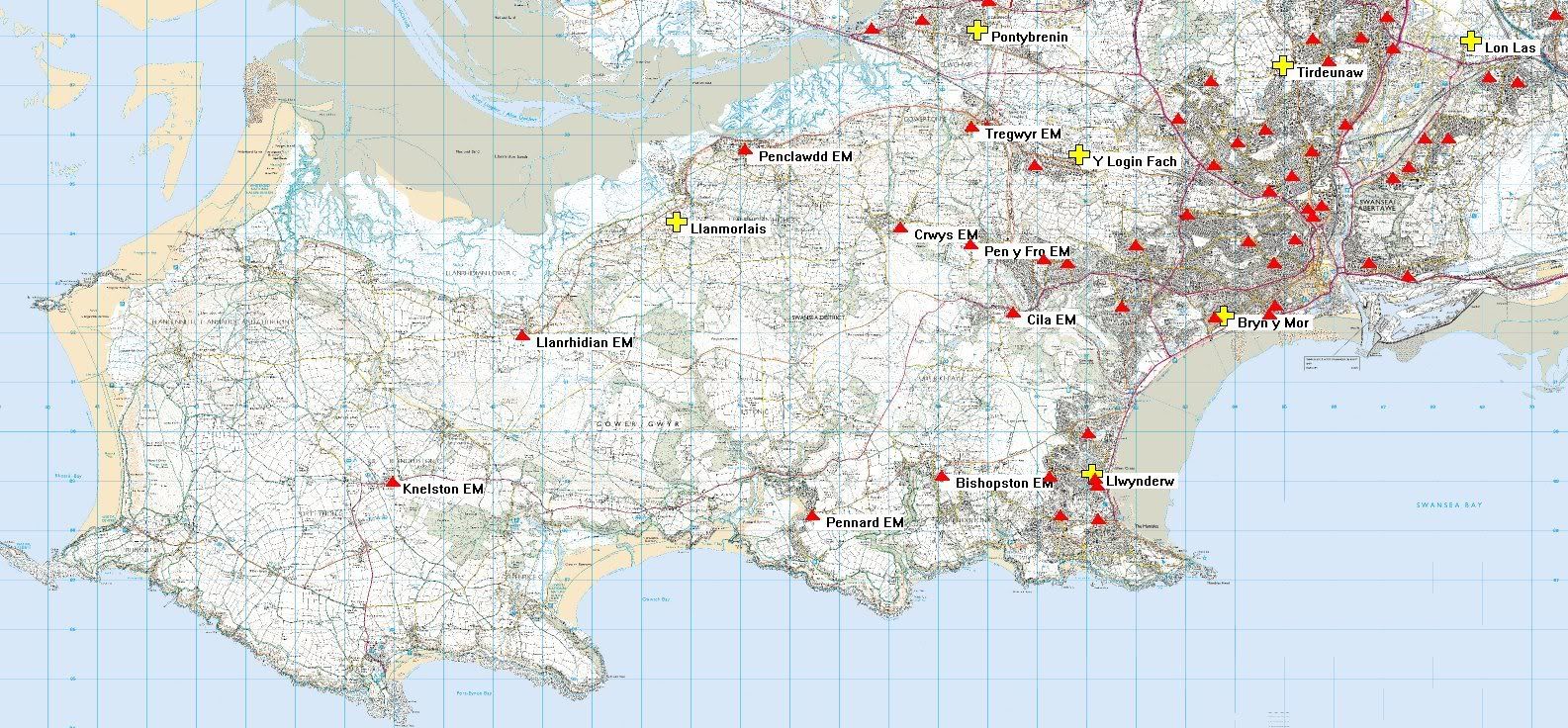
     

The map above shows the location of the primary schools on the Gower. Click it for a larger version. It is by no means a densely populated area, as can be seen from the relatively low number of red triangles for English-medium schools on the Gower compared with the western outskirts of Swansea. It should also be noted that north and south Gower are quite distinct, each with its main east-west links, but with comparatively few north-south links.

For south Gower, getting to a Welsh-medium school means travelling to Llwynderw. For north Gower, the school is Pontybrenin, since Y Login Fach has to take children from Swansea due to the lack of more WM schools in the centre of Swansea. That results in a one way journey of over 20km for children living in Llanmadoc. Even for a rural area, this is a ridiculous distance to have to travel, even if transport is provided. The equivalent journey for children going to an EM school is only a third of that, just over 6km, to Llanrhidian.

-

When it was clear that Llanmorlais was to close, Heini Gruffudd of RhAG put together a proposal to use the Llanmorlais building as a new WM primary school. Rather than repeat what he said, the proposal itself can be downloaded directly in either English or Welsh:

The case for a Welsh-medium Primary School for Llanmorlais

English  •  Cymraeg

The school building isn't big, but it has capacity for 106 children, plus a nursery of 15. Although that may be small by urban standards, a school of that size is perfectly viable in a more rural setting. In fact only this year Swansea have invested in work to Llanrhidian School, which is only fractionally larger with 111 pupils, plus a nursery of 20. We can read about it here. So there is nothing intrinsically wrong with a school of this size in north Gower. The only reason Llanmorlais was closed is because there weren't enough children wanting go to Llanmorlais and Penclawdd to justify keeping both open, so the smaller one was closed.

But RhAG's proposal didn't seem to cut any ice with Swansea's education department.

So what then happened is that a local parent, Menna Jenkins, actually went out to other parents of pre-school age children in north Gower, and collected signatures from the parents of 45 children who wanted them to have a Welsh-medium education. This was reported in the local press on Tuesday.

Parents take Welsh school call to council

Parents and children calling for a Welsh-medium school in North Gower took their plea to Swansea Council today. This morning, campaigners handed a petition to cabinet member for education Mike Day and head of education Richard Parry at the Civic Centre.

Welsh speaker Menna Jenkins is part of campaign group Ysgol y Ogledd Gwyr/Welsh Primary for North Gower (YOG). The mum of two from Llanmadoc said:

"Despite now having a list of 45 names of children aged up to 4 years old, who would attend a Welsh- medium primary in North Gower, the director of education is refusing to open a school in the area. We actually have more names for one school year than most of the existing Gower English-medium schools. We feel this is grossly unfair."

Swansea Evening Post, 24 August 2010

To me, the case is quite clear. But let's consider Swansea's response:

Swansea Council plans to increase capacity at Welsh primaries at Gellionen, Pontybrenin and Tirdeunaw. There are also plans to use Graig infants in Morriston as a Welsh school, if the Assembly approves council proposals to close the school and merge with the nearby Pentrepoeth.

I commented on the Morriston proposal in the second half of this post. And yes, it is true that Swansea Council have plans to increase capacity at Pontybrenin, as well as two other WM schools. But what they say is misleading. Each school in Wales has a defined capacity, and there is a certain amount of leeway for schools to take in more pupils. But there is a limit to how much this can happen. If a local authority wants to increase capacity by more than 25%, it needs statutory approval. This is what Swansea is in the process of trying to get, as we can read in this document:

     Consultation on proposal to increase capacity of three Welsh-medium schools

But this is just a paperwork exercise. They are going through the legal process of formally increasing the capacity of the school, but they are not planning on increasing the physical space available for children in these schools. As the consultation document makes clear, there is going to be no capital expenditure on the school accommodation in order to increase space. The situation is that they have been squeezing more and more children into the original school premises, and things have finally reached the point where they cannot continue to do that because it takes them over that 25% limit.

What is happening at YGG Pontybrenin is quite clear from the StatsWales figures:

Nursery 1 ... 7
Nursery 2 ... 72
Reception ... 47
Year 1 ... 52
Year 2 ... 50
Year 3 ... 37
Year 4 ... 28
Year 5 ... 32
Year 6 ... 22

Total statutory ... 268
Total ... 347

Years 4 to 6 reflect the fact that this was a one form entry school with a capacity of 230 in 2006. Because of the increase in demand, they increased the admission number because, at that time, the older year groups were smaller and there was therefore room to do so. So Swansea currently present the capacity of the school at 331 (i.e. 47 x 7). They now want to increase the admission number to 60, which would equate to a standard two form entry school with a capacity of 420.

But look at the way they've worded the statutory proposal:

YGG Pontybrenin, Loughor Road, Gorseinon, Swansea

The number of full-time pupils at the school in January 2010 was 268. The present capacity at the school is 331. After the enlargement the proposed capacity at the school will be 420. The number of pupils to be admitted to the school at age 4/5 in the first school year in which the proposals have been implemented is 60.

Statutory Notice, 21 May 2010

I venture to suggest that any person reading this without being aware of the situation on the ground would conclude that the proposal is to physically enlarge the school. It isn't. For that reason I would urge the Education Minister, for I'm sure this will be referred to him, to set a condition that the admission numbers cannot be increased unless enough additional physical space is provided so as to prevent further overcrowding. I only wish that Swansea Council would do this at their own initiative. But they haven't, and they show no sign of doing so.

But even an admission number of 60 will not be enough. The figures show that the nursery currently has well in excess of even that admission number. In physical terms, this school is going to be so jam-packed that even the parents of children at Treganna will think that their accommodation is spacious ... and in comparison with what Swansea are proposing to get away with, it will be!

-

If Swansea were thinking of building a new extension block at Pontybrenin, I might have some sympathy with their intransigence to RhAG's proposal. But they're not. Or they might claim—as other local authorities have done—that it is not a good idea to have small schools, and that it is better for children to attend a larger school because of the greater range of educational opportunities it might offer. But Swansea obviously don't think that ... otherwise they would not have spent money improving English-medium Llanrhidian only this year. The whole thing smacks of double standards.

And what if Swansea did decide to build more WM space? Why would anyone in their right mind spend money on a new building or extension block, especially in times like these, when they already have a suitable building that is now going to stand idle? Yes, I'm sure that if the intention were to build a brand new school, people probably wouldn't build it where Llanmorlais Primary is. It is rather isolated from the village, a couple of hundred metres off the main road, with the road to it not being particularly wide. But it has been quite good enough up to now. At the very least it could be used for the next few years, until a better site for a new school closer to Llanmorlais and Crofty is found. It's done that job for over a hundred years, so why can't it do the same for another ten?

I would urge Swansea Council to carefully reconsider RhAG's proposal. They have got nothing to lose by setting up a new WM school in this building, even if only on a short-term basis to begin with. Local people have worked hard to prove that a Welsh-medium school for north Gower is both wanted and needed. Does their hard work count for so little?

Bookmark and Share

A proposal for two new Welsh-medium schools in Swansea

About a month ago, I wrote this post about the need for expansion of Welsh-medium education in Swansea, especially in the light of the decision to close Cwm Primary. A week later, Leighton Andrews approved the closure of Llanmorlais Primary, and this week he confirmed that Arfryn Primary (shown below) would also be closed.


To my mind, these were each very obvious decisions. Llanmorlais is a smaller rural school, which sadly was in the same situation as many rural schools across Wales; but in the case of Cwm and Arfryn there are other schools very close by that have enough surplus spaces for the children concerned. No child is going to be very inconvenienced by having to travel what is only a few hundred metres further, and indeed for some children the journey to the alternative school will be shorter.

The decisions mean that there are now no outstanding matters awaiting Welsh Government approval (the proposal to amalgamate Pentrepoeth Infants and Juniors and convert Craig Infants to a small WM primary is still in the early stages of consultation) so I thought it would be good to see what possibilities these decisions open up for the much needed expansion of WM education in the city.


The map above shows the existing WM primaries in the Swansea urban area (there a a few outlying WM schools off the map) together with the positions of Craig Infants, Cwm Primary and Arfryn Primary. From the survey conducted by Swansea in 2007 we know that there is considerable unmet demand for WM education, and Heini Gruffudd of RhAG identified five areas of the city where new WM schools were needed in this document. These were:

•  Morriston (the top priority)
•  St Thomas/Bonymaen
•  Cwmbwrla/Landore
•  Townhill/Mayhill (not Mayals, it must be a typo)
•  Killay/Dunvant

So how do these areas of need match the school premises which will otherwise be vacant in September? Well, it's not 100% perfect, but there are some very good matches.

The most obvious match is that the Cwm Primary site will meet the demand from Bon y maen, and will make it very much easier for children from St Thomas, who would otherwise have to travel nearly twice as far to Lôn Las. All the details and numbers were in the previous post, so please click here to read it.

The picture for Morriston is more complicated. At present children from Morriston mainly go either to Lôn Las to the east or Tirdeunaw to the south west. This is an extract from the RhAG report:

Morriston is special because it has a large number of children attending Welsh medium school, without a Welsh medium school in the area.

The call for Welsh medium education in Swansea originated in Morriston in 1947, but although this is still the largest Welsh speaking ward in Swansea, there is still no Welsh medium school there.

The Council’s recent statistics show that nearby Welsh medium schools have the following numbers of children from Morriston ward:

Gellionnen ... 15
Lôn-las ... 51
Tirdeunaw ... 38
Felindre ... 2
Total ... 106

There is every sign than Morriston will be able to sustain a Welsh medium school successfully. 39% of people asked in Morriston said they wanted Welsh medium education for their children.

In total, there is the equivalent of seven primary schools in the Morriston area: Ynystawe, Glyncollen, Cwnrhydyceirw, Pentrepoeth Infant and Junior and Graig Infants, Llangyfelach, Morriston and Clase ... all are EM schools. So if 39% of parents want WM education, this means that about two and a half of these schools would need to become WM schools.

Swansea's recently announced plan is to make Graig Infants a WM school – which is effectively the "half" school (less, in fact, since its capacity is only 115 ... the equivalent of a 0.5 form entry school). Although that is a welcome development, it is obvious that it is a long way short of what is required. We also know that it won't happen quickly. Swansea are not envisaging it happening until September 2011, but it is almost certain that there will be objections which make it highly likely that it won't happen until September 2012. Things need to happen before then.

Looking again at the map, it should be obvious that Lôn Las is drawing pupils from both Morriston to the west and its more immediate catchment area to the east and south. If a new WM school is established at the Cwm building, Lôn Las will be able to provide more places for children from Morriston. Similarly Tirdeunaw is drawing pupils from Morriston to the north east as well as the areas to south, so if a new WM school is established at the Arfryn building, Tirdeunaw will be able to provide more places for children from Morriston.

That's not a complete solution, but it's half of the solution. The other half of the solution would be to either build a new WM school in Morriston, or to convert one of the other EM schools to a WM school. But the timescales for that are obviously much longer, irrespective of the matter of finding the money to build a new school.

-

Timing is an important factor. Both Cwm and Arfryn are going to be vacant from July this year. Because of the statutory procedures, it takes time to establish a new school ... even if there are no objections. A good example of this is what has happened in the Vale of Glamorgan. In November last year, they produced a very good plan for expansion of WM education, and intended to set up new starter schools for September this year as I mentioned here. But the red tape involved has meant that they have now had to delay things for a year, as detailed here. So it's fairly obvious that Swansea will not be able to establish two new WM schools in their own right at Cwm and Arfryn for September 2010.

But the key is "in their own right". Schools need things like boards of governors and head teachers, as well as their own budget ... so it is understandable and right that this isn't done at the drop of a hat. But there is a better solution.

Cardiff Council wanted to set up a new starter class at Gabalfa last September, but couldn't go through the procedures in time. So instead they set up a class at Gabalfa, but not as an entity in its own right. Instead they set it up as temporary accommodation for Ysgol Melin Gruffudd ... which just happened to be on a separate site. The very same could happen in Swansea. Cwm Newydd could be set up in the first instance as temporary accommodation for Lôn Las, and Arfyn Newydd set up as temporary accommodation for Tirdeunaw.

This strategy has other advantages. It means that Swansea can adopt a "suck it and see" approach to both. Because it is a temporary arrangement it can be set up for, say, two years in the first instance. If the demand proves to be real, then they can be set up as permanent schools in their own right, with plenty of time to go through all the statutory procedures. But if the demand isn't there nothing much has been wasted, because the school buildings would only have stood empty otherwise, and the current economic climate means this is hardly the right time for selling off the land. If that is Swansea's intention, they would get a much better price if they waited a couple of years.

-

So all in all, setting up temporary starter classes in the two vacated buildings—but administratively part of Lôn Las and Tirdeunaw respectively—will be a win-win situation for everybody concerned. But it is a decision that Swansea needs to take and announce quickly, because parents are already planning what primary schools to send their children to this September ... and they can't make the choice unless they know that these options are available to them.

This is an opportunity that is too good to be squandered. Councillor Mike Day is Swansea Council's Cabinet Member for Education, and his email is mike.day@swansea.gov.uk. He's a LibDem, but this isn't a party political issue and shouldn't be made into one. It is simply a matter of respecting what parents in Swansea want for their own children, something which all politicians would surely agree on. The proposals I've set out here are intended as a practical way of meeting the demand that Swansea Council's own survey has already identified.

Bookmark and Share