Showing posts with label Climate change. Show all posts

Vacuous stupidity

I can usually ignore the vacuous stupidity of some of the posts made by the LibDems on Freedom Central, but this morning's offering was so bad that it deserves to be highlighted.

William Powell is calling for the Labour Government to commit to reduce greenhouse gas emissions in Wales by 100%, supposedly to "meet Wales' obligations on the world stage".


Does he, or do the LibDems in general, really think it is possible for Wales to have a "zero emissions target"? Do they have the faintest idea what this would mean?

-

The two major greenhouse gases are carbon dioxide and methane. CO2 emissions are produced by burning hydrocarbons as fuel, generally to generate electricity, for heating, for transport, and for various industrial processes.

Yes, it would certainly be possible to generate all our electricity from renewable sources without the need to burn any hydrocarbons; that's quite an easy target to hit, and much sooner than by 2050. It's also quite feasible switch from gas to electricity for general heating and cooking, supplemented by solar thermal panels and ground source heat pumps.

Transport is slightly more problematic. Trains can easily be electrified, and I would expect most road vehicles to be powered either by electric batteries or hydrogen fuel cells far sooner than 2050, but air travel won't be so easy. It's hard to imagine any real alternative to burning hydrocarbons for long distance air travel.


Fireflash was powered by six atomic engines but nuclear was never a very clever idea, then or now. To quote the Wikia entry:

"the shielding around the reactor requires servicing at the end of every flight, limiting its flight time to around 3-4 hours before everyone aboard is exposed to lethal levels of radiation."

Then, when it comes to industry, it's again hard to imagine how we could produce something like steel without burning hydrocarbons. But perhaps the LibDems are not expecting countries like Wales to manufacture things like steel in the future.

-

The absurdity of the LibDem's aims is even more apparent when it comes to methane, which is a very much more potent greenhouse gas than carbon dioxide. In order to achieve this "zero emissions target", we would need to completely abandon livestock farming in Wales, since the natural processes of farm animals account for some 14.5% of anthropogenic greenhouse gas emissions, according to the FAO.

So perhaps Carwyn Jones shouldn't be so worried about the UK's potential exit from the EU destroying farming in Wales ... the real danger to farming in Wales is going to come from the LibDems instead.

And of course, humans are subject to the same natural processes, so to avoid the release of any anthropogenic methane, we would have to completely depopulate Wales.

-

More seriously, climate change is important, but the aim is to reduce our greenhouse gas emissions to limit the global rise in temperature ... not to do away with them completely. The LibDems are making what they know, or at least should know, is an impossible demand. It's an old political trick. They're probably saying it because they think it makes them look "green", but over-simplistic statements actually detract from any meaningful discussion of how we live sustainably.

Bookmark and Share

No Need for Nuclear

With a hat tip to Paul Flynn, I'd like to draw people's attention to a new website set up to demonstrate why Britain, and of course Wales, does not need a new generation of nuclear power plants. Click the image:


Most regular readers of Syniadau will know that I am against nuclear power in Wales, but might also have noticed that I have not taken advantage of the ongoing crisis at Fukushima to make an argument against nuclear power based on understandable but largely unreasonable fears. For me, the reasons for being against nuclear power in Wales would be the same whether a large earthquake and tsunami had hit the east coast of Japan or not.

On a world scale, nuclear might still be part of the answer. I would agree with George Monbiot that it is far better for countries like China or India to generate the ever-increasing amount of electricity they need from nuclear power rather than from fossil fuels such as coal. My argument is simply that neither Wales nor Britain as a whole needs it.

Put simply, we can generate more than twice as much electricity as we need from the renewable sources we have in abundance, and can use renewables to meet our entire fuel needs, including transport and heating. Although Wales and Scotland have the lion's share of renewable resources on and around this island, Britain as a whole can do without nuclear, as I noted in this post on the Zero Carbon Britain report last June.

I'm pleased to say that the No Need for Nuclear site—at least what I have seen by skimming though it—puts the case against nuclear in rational way that relies on research and hard evidence. Yet would be foolish not to admit that Fukushima has brought nuclear power to the forefront of political debate, and foolish not to take advantage of the fact that the public are now more interested in the nuclear debate than they otherwise would be. We were in danger of passively resigning ourselves to nuclear power because successive UK governments were not doing enough to make the alternatives a reality ... now we have a much better chance of showing that there is a better way. Take this opportunity. Sign up.

Bookmark and Share

Welsh Government at odds with Westminster over nuclear energy

There was a story in Golwg360 on Tuesday which was eventually picked up by the Western Mail today. The Western Mail's version focuses on Jane Davidson's call for a public inquiry into proposals for a new nuclear power station in Ynys Môn.


     Gwrthwynebwyr ail Wylfa'n hawlio buddugoliaeth
     Jane Davidson calls for public inquiry into nuclear power

However that is only one element in the story. The issue is about much more than whether there should be a public inquiry or not ... as if it were just a question of going through all the right procedures. The focus of Golwg's story was much more revealing. This part of what it said:
 

Mae gwrthwynebwyr ail atomfa yn yr Wylfa yn Ynys Môn yn hawlio buddugoliaeth ar ôl i Weinidog Amgylchedd Cymru ddweud nad oes angen pwerdai niwclear newydd yng Nghymru ...

Yn ôl Jane Davidson, roedd modd i Gymru gynhyrchu digon o drydan o ffynonellau eraill heb droi at niwclear.
 

Opponents of a second atomic power station at Yr Wylfa on Ynys Môn are claiming victory after the Welsh Environment Minister said there was no need for new nuclear power stations in Wales ...

According to Jane Davidson, Wales was able to produce enough electricity from other sources without turning to nuclear.

So far as I am aware, this is the first time the Welsh Government has made a definitive statement on the need for nuclear energy in Wales. So I fully agree with Dr Clowes that this development is particularly important.

-

For those of you who don't know my position on the issue, I am against nuclear power in Wales. However I have never based my argument on safety, because nuclear is relatively safe enough provided that large sums of money are spent on making and keeping it safe. But that does make cost an issue, not only for the expected life operating life of nuclear stations, but long into the future.

For me the argument is much simpler. The point I have always stressed is that Wales does not need nuclear power. But I accept that it might be different for other countries, not least England. I think that there might well be circumstances in which nuclear power is a lesser evil compared with doing nothing to slow the rate of climate change.

It is primarily a matter of population density. Countries like Wales, Scotland and Ireland have far greater renewable energy resources relative to the size of their population than England ... therefore it is possible for our three countries to meet CO2 emissions targets without resorting to nuclear. We in Wales can in fact do better, because we are blessed with a share of huge tidal energy resources.

-

So it is not a matter of ability to generate electricity, instead it simply boils down to politics. Both Ireland and Scotland have made the political decision to refuse any new nuclear development. In Wales the situation is different because any energy project over 50MW is not devolved. However there is a remarkable unanimity of agreement between three parties in Wales on the issue ... which was reflected in the All Wales Accord in 2007 (which would have formed the basis of the Rainbow coalition between Plaid, the Tories and LibDems) that contained the policy goal that all electricity in Wales would be produced from renewable sources.

Obviously that did not get reflected in the One Wales Agreement, because at the time Labour's policy was identical to that of Labour in London. That is why this statement from a Labour minister is so groundbreaking.

-

Of course the big question is whether it will make any difference. As things stand, the decision is not ours to make, it is Westminster's. The cynical part of me wondered if Jane Davidson was just saying she wants a public inquiry to look good, knowing that she will be over-ruled anyway. But if that were the case, why would she need to go further and say that Wales does not need nuclear?

So I'm inclined to think that this is not only a genuine statement on her part, but a courageous one too.

The worst thing we can do is simply ignore such boldness. Yes, we most certainly do need a public inquiry, but not for it to be, in the words of Lord Hunt, a "regulatory justification process" ... as if the whole thing were a foregone conclusion.

The bottom line is that at least 75% of the electricity the proposed new nuclear station at Yr Wylfa will produce will be for export to England. Wales is a net exporter of electricity, and is set to export even more when Severnpower and Pembroke come on line.

If England decides it needs nuclear power, that is of course England's decision to make ... but it should build those nuclear stations in England, not Wales. What happens in Wales should be for the Welsh Government to decide.

Bookmark and Share

Toyota's Hybrid Auris

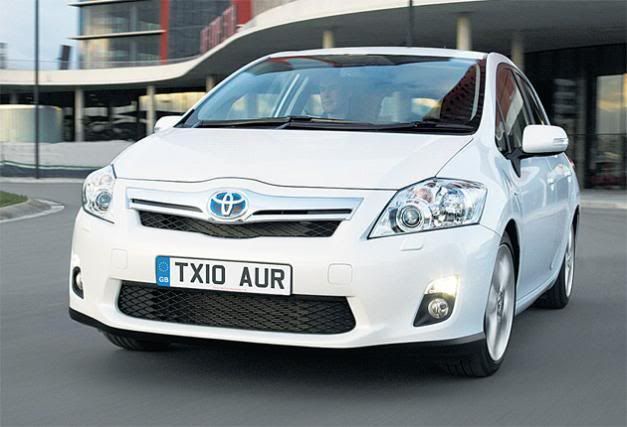
Although a little late, I want to say something about Toyota's decision to build the new Hybrid Auris in Britain, and especially the fact that the engine is going to be built here in Wales.

     BBC website, 17 July 2009

Although I am very much in favour of a radical shift in transport away from cars and onto public transport—and even more in favour of work, shopping and leisure being located close enough to communities to enable people to walk or cycle to them—the simple fact is that most people need cars for some things, and it is therefore better that we have greener cars to use on those occasions when they are needed.


Negotiations between Toyota and the UK government have obviously been going on for some time, and it is a coup to have ensured that Toyota build the car in Britain rather than anywhere else in Europe.

However the news was leaked by the Sunday Times a few weeks ago, and the quote I've highlighted is particularly interesting:

Britain is to make hybrid cars for the first time after a decision by Toyota to start production of the high-tech vehicles at its Burnaston plant near Derby.

The UK is the first European country the Japanese car giant has chosen for hybrid production, and only the third outside Japan. Toyota makes nearly all its hybrids in Japan, with small numbers produced in China and America. The best known of these cars is the Prius.

The introduction of the new vehicle to Burnaston—a hybrid version of the Auris hatchback—follows intense negotiations with the government in recent months. It is understood that Britain will provide financial assistance to help the move ...

Burnaston makes the Auris and the larger Avensis in their entirety, using engines built at Deeside, North Wales, but the hybrid’s drive system (engine, motor, batteries and electronics) will be imported from Japan.

This will be the first hybrid based on an existing production model that Toyota has sold in Europe.

The Sunday Times, 28 June 2009

Now of course it's possible that the Sunday Times got hold of the wrong end of the stick. But they seem to have been right about the rest of it, so I'd be more inclined to think that the decision to build the engine/drive system in Wales rather than import it from Japan was the result of some skillful negotiation in the last couple of weeks.

The real technological advance is the hybrid drive system, and it is good to see that Wales will be at the cutting edge of this part of the new low-carbon manufacturing sector.

Bookmark and Share

Green ... Green with envy

I want to praise Scotland for the decision they took in Holyrood today over reducing greenhouse gas emissions. They have introduced new tougher targets which are reported here:

     MSPs get power to fine over climate change, The Scotsman


     MSPs pass 'landmark' climate laws, BBC website

There are some very interesting new ideas, because as well as doing the things that we might expect only government can do, the new laws will eventually be able to compel companies and even individuals to improve their energy use by, ultimately, imposing fines for failure to do so.

Not just energy use will be dealt with. The measures could also force reductions in the overuse of packaging, and better recycling targets.

The intermediate target is for a 42% reduction by 2020, and for an 80% reduction by 2050. It is also pleasing to see that the bulk of the reductions must be made in Scotland, with no more than 20% of the target met by offsetting and trading outside the country.

But there will be carrots before sticks, such as £50 reductions in Council Tax.

-

In the article in the Scotsman one sceptic is reported as saying:

"As far as reducing emissions by 80 per cent, banning the internal combustion engine, and coal-fired power stations from Scotland would not get close to doing it. This is clearly unobtainable."

Well, let's think about it. Our use of energy splits into three chunks: power generation, transport and heating.

• Scotland can easily generate all its electricity and more from renewables. I can virtually guarantee they won't have any-coal fired power stations in 2050.

• I am also sure that the only petrol or diesel internal combustion engines will be found in museums or at vintage car rallies. I'm sure we will still have cars, buses and trucks, but they will be either electric or hydrogen (fuel cell or internal combustion) and that the hydrogen will have been produced using "surplus" power from intermittent renewable sources such as wind.

Those two will achieve a reduction of say 65%. Most of the rest will depend on how we deal with buildings. It's relatively easy to deal with new buildings either through tougher building regulations or through the planning process. The more intractable problem is how to deal with the large stock of existing buildings, many of which have very little insulation. That's where the Scottish model is strong.

-

I'm envious because we in Wales should be doing the same things. To our credit we have done some clever lateral thinking, but we simply don't have any powers to legislate in this way. We can't even put a 5p tax on plastic bags ... let alone deal with large scale power generation!

The final irony is that what Scotland has done is entirely uncontentious. It had all party support and was passed unanimously ... the only voices of disquiet were from those who would have preferred the targets to be even tougher.

Bookmark and Share