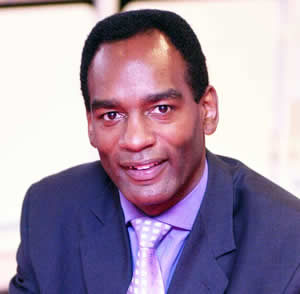
More by accident than design, I came across a series of interviews this week with AMs from the four parties in the Senedd on a website called New Political Centre.
Huw Owen has asked each of them the same set of questions which, in brief, are:
• How does the Welsh section of your party differ from its UK counterpart?
• What do you see as the biggest issue or issues in Welsh politics?
• As Welsh politics evolves separately from politics in England and Scotland, where will things be in ten years' time?
• Should Welsh MPs be barred from voting on English-only issues?
• What role and profile should Wales start to build in the EU?
• How important is the Welsh language to Welsh politics?
I rather like those questions, and found the answers quite interesting. I trust others will too, so click the links below to read them.
In his blog today, Peter Black made some comments about the Cofnod, the official record of what is said in the Assembly, that illustrate the major problem with the Assembly Commission's position on translating it.
As I'm sure most people reading this will know, the Assembly Commission, of which Peter is a member, made the decision only to translate contributions made in Welsh to English, but not vice-versa. A few weeks ago they published a paper outlining options for translating it, one of which was to use Google Translate to provide a rough translation that would then be corrected by professional translators.
I want to make it clear that I'm not particularly interested in some of the words used in the letter which prompted his comments. However I am concerned about what his response revealed about his attitude because of his membership of the Commission. He said:
... because 76% or so of the Welsh population do not speak the language then any contributions in Plenary by Welsh speakers need to be translated for the record.
But do these contributions need to be translated? As a record of proceedings the Cofnod would be perfectly complete without any translation, either way. If anyone happened to want a version in the other language, they could get a translator to translate it for them ... or even, dare I say it, cut and paste the original into Google Translate and get the results for themselves.
However I think it is a very good idea for the Assembly to translate it, for these reasons: it obviously saves a lot of time and duplication of effort to translate it just once rather than for everybody to get their own translation made; and more importantly, it means there is one official version, not a few dozen that are more or less the same but with lots of minor differences. Sure it costs money, but I think it's money well spent.
So why does it only apply one way? Peter's rather tortured double negative shows his lack of clear thinking. He says:
I am not saying that this is not the situation in reverse. In principle I support a fully bilingual record but it is at this point that priorities have to be applied.
But why do priorities have to be applied "at this point"? In particular, why does the greasy slide from it being a matter of "principle" to it being a matter of "priorities" come after the decision to translate from Welsh to English has been made, but before taking the decision to translate from English to Welsh? If you treat both languages equally the decision must be to translate either both ways or not at all.
There are good reasons for wanting a translation from English to Welsh ... and in fact they are exactly the same as the reasons for doing it the other way, especially when someone is writing about, reporting or discussing what was said in a Welsh language setting: whether this is on-air, on the internet, in a newspaper, in a debate in the village hall or in a discussion in the pub. Yes, just as with those who want an English translation, it's perfectly possible for people who want a Welsh version to get a translation made or to do it for themselves. But why does it need to be done dozens of times when it could be done just once, and isn't it better to have one official version rather than dozens of different ones? It cuts both ways.
-
The blind spot in Peter's thinking is obvious. He and the Commission he is part of consider translation from Welsh to English as an unquestionable "given". It doesn't even enter their heads to question whether it is needed or not, nor even to take the same compromise position that it's somehow important in principle ... but only if we can afford it. For Peter and his colleagues translation from Welsh to English manages to be important in principle ... irrespective of how much it costs.
Now if I wanted to, I could take his rather fatuous argument and say that the money saved by not making translations from Welsh to English could also be better used in developing the language across Wales. But putting it that way only serves to show how silly an argument of that sort is. Or I could take his equally silly remark that:
"decisions taken in support of the Welsh language ... have to be balanced against competing demands for that money"
... and point out that if translating from English to Welsh is considered to be a decision "taken in support of the Welsh language" then translating from Welsh to English must equally be described as a decision "taken in support of the English language". Neither is true. The money is spent to make the workings of the Assembly as transparent and easy to access as possible, to as many people as possible, irrespective of the language used.
A day after I posted this article on the subject of the majority of Labour MPs reneging on their party's manifesto commitment for a Yes vote in a referendum on the Alternative Vote, Peter Black followed it up with his copy of it.
But he didn't like it when I said that most LibDem MPs were equally untrustworthy for reneging on their pledge over tuition fees. He claimed that Plaid Cymru were just as bad because we "introduced tuition fees" in Wales.
When I reminded him that we actually didn't introduce them, he claimed I was just being pedantic, and that what he said was our "broken promise" was just as bad as the what the LibDems had done. Though of course, he couldn't bring himself to say that the LibDems had broken their word on the issue ... it was, as he put it, merely a "claim". Bless.
But after that he put his fingers in his ears and went into a sulk. He's refused, twice now, to publish what I said in reply. So, for the record, this is it:
Isn't it odd that you criticise me for what you get wrong, Peter?
But I'm happy to look at what happened in detail. The situation in Wales changed because of the increase in top up fees imposed by the Westminster government. It became pretty obvious that Labour in Westminster were going to do it, and in anticipation of that the One Wales Agreement pledged that the overall level of support by the Welsh government would not be reduced ... which is what happened.
I wasn't particularly pleased with the way Plaid handled it when the time came. Plaid AMs gave the impression of simply "going along with" Labour on the matter. I think we should have debated the matter more openly in Plaid and come to a decision as a party rather than just let ministers in government make it. Who knows, the process might have resulted in us finding a better solution.
But that hardly compares with the magnitude of what the LibDems have done over tuition fees. Firstly, Westminster is sovereign and can do what it likes, but we in Wales had no control over what the government in Westminster did.
Secondly, we maintained the level of support we had been giving to students from Wales. But what you have done is increase the level of tuition fees up to threefold. Moreover, this has not been done (as might have been the original intention of "top-up" fees, although I suspect that it was only the thin end of an inevitable wedge) to supplement HEI income from government, but instead is going to all but replace HEI income for all except a few subjects of study. You are accomplices to a wholesale marketization of higher education, taking it out of being a public service predominantly funded from the public purse and turning it into something private instead.
So I'm more than happy for voters to compare Plaid and the LibDems on this matter. And I have no doubt, as evidenced by the opinion polls, which of our parties will do better in next year's Assembly election because of it.
I haven't yet said anything on this blog about the row over translation of the record in Plenary into both Welsh and English. But I think it's time to say something now, in the light of this statement from the Assembly Commission, taken from the Politics Cymru blog:
As Wales’s principal democratic institution, the Assembly has a duty to enable all citizens and Assembly Members to be informed about, and contribute fully to, the democratic process in their chosen language – through Welsh or through English. The Government of Wales Act 2006 stipulates that “In the exercise of the functions of the Assembly Commission effect must be given, so far as is both appropriate in the circumstances and reasonably practicable, to the principle that the English and Welsh languages should be treated on the basis of equality.” (Schedule 2 Section 8(3)). Since 2007, the Assembly Commission has significantly developed and extended the bilingual services provided by the Assembly ...
In June and July this year the Commission considered its strategic priorities in relation to the draft budget which will be laid tomorrow. Our aim was to limit the budget increase for 2010-11 as far as possible, so as to make as much of the Welsh block as possible available to support public services, while still delivering effective services for the Assembly. One of the options that was considered related to the translation of the Record of Proceedings. At the Commission meeting today we took account of the representations that have been made to us by Assembly Members and others. We concluded that we should take four main steps ...
Firstly, we will continue to translate the Record of Plenary Proceedings from English into Welsh so that a fully bi-lingual written record is produced, but to do so within 3 to 10 days of each plenary meeting.
Secondly, we will introduce the facility for all proceedings related to legislation (i.e. all proceedings at Stages 2, 3 and 4 as well as committee scrutiny) to be translated.
Thirdly, we will establish an independent review to examine our delivery of bilingual services prior to the formal review of the Assembly’s Welsh Language Scheme in 2010.
Fourthly, we will take steps to bring forward legislation to put the status of the two languages used in the business of the Assembly on a sound statutory footing.
The Welsh Language Act 1993 was never intended to provide a framework within which a national legislature operates ... but the Legislative Competence Order (LCO) on the Welsh language, when made, will provide us with the power to do so. The Commission intends to consider the options which will be open to the Assembly when the LCO in question becomes law.
I would start by saying that what the Commission originally proposed went against its own Welsh Language Scheme. WLSs are generally misunderstood, and the Assembly Commission seems to have done its best over the last few weeks to add to that misunderstanding.
In particular, the Welsh Language Board does not dictate—and does not have the power to dictate—what any WLS contains. It can persuade, based on the principles laid down in the 1993 Act and the grounds of reasonableness. But in the end, it is up to the public body concerned to set out the specific things it will do in relation to the Welsh language. In the case of the Assembly, it made the commitment to translate the Plenary record into both Welsh and English (and, pointedly, the decision to only translate the record of non-Plenary sessions into English). What the Assembly Commission proposed a few weeks ago was against its own WLS, and the WLB only stepped in because it is their statutory duty to monitor how well WLSs are implemented.
So when Dafydd Elis Thomas said this on The Politics Show on Sunday:
... we don't want to be in a situation where the legislature is being told by bodies answerable to government ministers how it should operate ... and that's the basis of my deep constitutional unease about what the Welsh Language Board has been doing over the past months.
... he was being entirely disingenuous. He was just trying to muddy the waters, by deliberately confusing a simple issue of sticking to commitments into one of "constitutional principle". I'm reminded of the attitude of some parliamentarians in Westminster who take the attitude that they, as members of the body in which sovereignty ultimately rests in the UK, think it puts them above the law. Look at where such arrogance led them over the issue of MPs' expenses!
No, the truth is that any person or organization is answerable to the law. A WLS is essentially a contract, and you cannot break such contracts with impunity any more than a government can renege on a treaty.
Now of course it is open to the Assembly to renegotiate the terms of a contract, and they are quite free to do so and agree a brand new WLS. But no, the Assembly Commission thought their lawyers could argue that their WLS was just a good-will exercise and not binding on them. They were always completely wrong about that, and now they have backed down ... which is only sensible, seeing as it would have cost them more than the money they hope to save to actually take the matter to law.
-
The compromise is that they will take a few days longer to produce the record. Under the terms of the WLS there is no specific mention of a precise timescale, so what they propose does fall within the letter of what they agreed to do in their WLS. This compromise means there are no grounds for the WLB to step in. And it shouldn't make too much difference to most people, because all the sessions are on Senedd.tv
I'm only left wondering what the precise logistics will be, because they surely won't publish one version of the Record with the English translation immediately, then publish another version with both translations a week later. That would just be more work and money wasted. So I'd be willing to bet we just have the same version as we have now, but published after three days. If they leave it any longer, then those who need the translation into English will start complaining loudly enough.
But that's only the headline issue. The second point in the statement is actually very positive because it addresses the obvious question of why Plenary sessions were treated differently from non-Plenary session in the first place.
My only query is what "we will introduce the facility for all proceedings related to legislation to be translated" actually means in practice. The facility already exists, the question is whether they will use it or not! Peter Black, who is the LibDem member of the Commission, is very definitely of the opinion that:
... we also extended the present service by agreeing that in future all committee records in which legislation is discussed and scrutinised will also be bilingual.
But Peter has a habit of not using words as precisely as he should. Even so, I hope his understanding is right and I'm sure it will be clarified in due course.
As for point three, it looks like the Commission is trying to have another little dig at the Welsh Language Board. As if they are hoping that someone they appoint as "independent" might just be a little less scathing than the WLB are likely to be. The fact remains that it is the WLB's job to monitor and review whether the Assembly has abided by its own WLS.
A point four is just a statement of the obvious. When the Language LCO gets through, there will be a new Welsh Language Measure.
So where does all this leave us? I think the Assembly Commission can only have been shocked at the outcry their proposal raised. And to me it is heartening to see this outcry from people in all parties in the Assembly.
Providing the statement on translation of non-Plenary sessions into both languages is actually made watertight, I think we probably come out of this wholly unnecessary mess with more than we might have hoped for.
One would expect someone like Nick Griffin to deliberately misunderstand the difference between nationality and race:
But even I would have expected someone like Peter Black to understand the difference. However, from what Cynical Dragon brought to our attention today, he obviously doesn't:
Don't think that just by calling yourself 'The Party of Wales' you are actually the 'Party of Wales'. At the end of the day you are just a bunch of politicians like all the rest of us. And actually the difference between racial nationalism and civic nationalism is not that great! But yes Wales is a lot bigger than any political movement.
As for Plaid they define their nationalism by their Welshness thus their race forms part of their identity as a party.
I'm reminded of the time I enjoyed on the WalesOnline forum making fun of their BNP poster. I didn't think it needed saying again, but it evidently does. So I'll repeat one of the shorter posts I made then:
I too "want to live in my own country, amongst my own people, in my own way". My countrymen and women include:
Anyone who regards race as a component of nationality is a racist.
I'd be more inclined to think that Peter Black has let the recoil from another of his cheap snipes knock him back into a hole ... which he could yet climb out of if he chose to reframe his words. But to judge by his attitude on Facebook, he seems to want to stand by what he said. That makes him a racist.
And if he or anyone else thinks I'm being harsh on him, my answer is that woolly thinking from people who should know better is one of the things that allows racism to take hold. Being Welsh is a matter of nationality, and the things that define one's nationality (in Wales, as in the rest of Europe and the Western world) have nothing to do with race. If you mix the two things up, you can never hope to stand against racism.
The book particularly focussed my thoughts on present Liberal Democrat policy which has been for some time the sort of federal state that David now advocates that the Tories should support. Our policy has been based on the regionalisation of England, which of course is a valid option but does not seem to have any support amongst voters and would be difficult to implement. David makes an excellent case for an English Parliament and argues that checks and balances could be written into the constitution to ensure that England would not overly dominate a Federal Union. This would include the House of Lords becoming an elected Federal second chamber.
It is clear that it would make sense to revisit Liberal Democrat policy along these lines by updating our commitment to federalism so as to make it fit into where we are now starting from. It also appears that it would be far easier to get general acceptance for an English Parliament within a reformed UK constitution than we would for regional parliaments.
Quite frankly, I'm amazed. To me this has always been a blind spot for the LibDems, as it was for the Liberals before them.
The UK is an over-centralized state, both politically and economically. Indeed I believe that one perpetuates the other in a vicious circle. To their credit, the Liberals have always (at least in my political memory) favoured a more federalized state as a means of breaking that circle. But their problem was that their thinking was based on the UK as a whole. Therefore, devolution for Wales and Scotland was fine, but England was simply to big to be devolved in the same way. So the only solution they could see was to break England up into smaller pieces roughly equal in size to Wales or Scotland.
Although this might be seen as a "logical" solution in terms of utility, it completely failed to address people's sense of self identity. It worked for Wales and Scotland because people saw themselves as Welsh or Scottish (whether or not they also saw themselves as British) but it could never work for England because people put any identity as "North West Englanders" after their more fundamental identity as simply "English". Indeed it is impossible to describe yourself as being from "the North East" unless it is understood that this means "North East England".
But the Liberals, and then the LibDems, stuck with it as a policy. And when they managed to persuade Labour of the merits of it, Labour tried to set up directly elected regional assemblies (unelected regional assemblies already existed, consisting in the main of appointees from local councils) but people in England didn't want them. They probably saw the attempt to break up England as some sort of sinister EU plot to divide and rule.
Yet, equally, people in England are very well aware that Wales and Scotland now have a measure of self government that they do not have. Rhodri Morgan might flatter himself that the English are "jealous" of us because of things like free prescriptions, but anyone who gives the matter any thought would realize that the only thing they would really be jealous of is the ablity we have to make some decisions about our own priorities for ourselves.
-
Peter Black's conversion appears to have come about by reading David Melding's book. However the chances of David Melding's views becoming Conservative Party policy are virtually nil. The Tories seem set on tinkering at the constitutional edges rather than ever doing anything so radical. Their policy seems to be to keep things as they are as much as possible, so long as they deny Scottish MPs the right to vote on English issues.
But Peter Black probably does have some chance of getting the LibDems to change their policy, and I wish him luck in getting it adopted. After all they have nothing to lose, since no-one was much interested in their old policy. But would it make any difference? Would the LibDems ever have the opportunity of being in power in order to implement it? Hardly.
But maybe, just maybe, the LibDems will find themselves holding the balance of power in a hung Westminster. And even if they don't they might find themselves pleasantly surprised at the increased support they get in England ... since at present the only parties that support an English Parliament are confined to the fringes. It won't make any difference to their support in Wales.
-
Of course for us in Wales, the advantages are obvious. If the English decide that they want their own Parliament (or Assembly, or whatever) we can guarantee that they will not give themselves fewer powers than the Scottish Parliament has. And that means that we in Wales would get the same powers as both instead of the half-baked mishmash we have at present ... and still will have, even after a referendum that will leave us a long way short of the powers and responsibilities the Scottish Parliament has had for the last ten years.
This blog has been set up to complement the Syniadau Forums.
Much of what will appear on this blog will also appear in the Syniadau Forums, but the emphasis on this blog is slightly different. The forums are focused more on the structures and institutions that Wales will need to develop in order to become a successful independent nation, arranged on a subject by subject basis, but the blog will have more of an emphasis on day to day political news and developments.
People are welcome to reply or leave comments either here or on the Syniadau Forums. If anyone wants to initiate a new subject they are very welcome to do so there.