Showing posts with label Defence. Show all posts

The right decision on NATO

The Scottish National Party's conference is taking place this weekend, and it has proved to be quite significant. The big issue to be decided was the SNP's position on NATO, and I was very impressed with Friday's debate about it. The end result was quite close, and it was political drama of the highest order. The full debate is here, though it was rather spoilt at the beginning by the BBC's comments drowning out what Angus Robertson had to say. For those with less time, the report is here.

The resolution delegates were asked to vote in favour of was:

"On independence, Scotland will inherit its treaty obligations with NATO. An SNP government will maintain NATO membership subject to an agreement that Scotland will not host nuclear weapons and NATO continues to respect the right of members to only take part in UN-sanctioned operations."

Although this was amended (amendment B) to:

"On independence, Scotland will inherit its treaty obligations with NATO. An SNP government will maintain NATO membership subject to an agreement that Scotland will not host nuclear weapons and NATO takes all possible steps to bring about nuclear disarmament as required by the Nuclear Non Proliferation Treaty of which all its members are signatories, and further that NATO continues to respect the right of members to only take part in UN-sanctioned operations."

Two other amendments were rejected, as was a vote to remit the motion for further consideration. Sadly that's a device that Plaid Cymru have used rather too often for my liking in the past few years, and as events unfolded (I was watching it as it happened) I began to think it likely that the SNP would do the same. But I'm very pleased that they came to a firm decision ... though no-one could be quite as pleased, or relieved, as Angus Robertson was.


I think what the SNP have decided substantially answers the concerns I raised about NATO membership in this post in August. If I were nit-picking, the only problem I have with the resolution is that it might, in very rare circumstances, be right to make a military intervention that is not sanctioned by the UN; for example when there is widespread consensus that action needs to be taken, but one permanent member of the UN Security Council has exercised their veto.

-

That all took place on Friday, leaving Saturday free for hard-hitting, rousing speeches in the style we would expect from a televised party conference. Alex Salmond is a master of that art, and once again lived up to expectations. Enjoy.


A written version of the speech is here.

Bookmark and Share

Should an independent Scotland be in NATO?

One of the big policy debates within the SNP is whether they should change their position about not seeking to be a member of NATO if they were in government in an independent Scotland.

So people might be interested in two documents that have just been produced by SNP CND arguing against the proposed change:

     Q & A – NATO and Nuclear Weapons
     NATO, Trident and Scottish Independence

I thought it would be useful to compare Scotland's situation with that of Wales. In principle, I have never had any objection to an independent Wales being a member of NATO. For me, the argument that by being part of this alliance we are therefore relying on nuclear weapons for our defence has never held water. My reasoning is that it is impossible to use such weapons for defensive purposes, and therefore they are irrelevant to our defence irrespective of what other countries might believe. No country is required, or expected, to see eye-to-eye with its allies on every issue. It is sufficient for the alliance to have a common purpose—namely that of mutual defence—but not necessary to agree on the type of weapons needed to implement that defence.

     

I do, however, have grave reservations about the direction NATO has taken in recent years, particularly over Afghanistan and Libya. So I'd like to repeat what I said in March last year, when NATO decided to intervene in Libya:

... The issue I want to focus on is why NATO as an organization should become involved. I don't think anyone could read the North Atlantic Treaty of 1949 as anything other than setting up an alliance for mutual defence in response to an attack on any of its members. Yet NATO seems to be inexorably changing into a force that is openly being used for offensive purposes.

Perhaps, but only perhaps, one could claim that the security of some of NATO's member countries was threatened by Afghanistan. I would call it an indirect and at best a very tenuous link. Yet NATO is there, halfway across the world from the legitimate sphere of concern set out in its founding treaty. However in the case of Libya, there is absolutely no threat to the security of any other country, let alone one that is a member of NATO. It is a purely internal matter.

So it is perhaps legitimate for countries such as the USA, France and the UK ... plus others such as Belgium, Canada and Qatar to conduct attacks in Libya in their own right, as an "alliance of the willing". But it cannot be legitimate for a defensive organization to conduct such attacks, even if all 28 members were to agree that they want to be involved in the operation.

NATO has served us well over the past 60 years, and all organizations need to adapt over time; but to my mind these fundamental changes are now taking NATO way beyond its intended purpose and can only weaken it. In Afghanistan we have already seen the reluctance of some members to contribute their own forces to operations they aren't keen on. Albania, Bulgaria, Croatia, Iceland and Luxembourg have not contributed to the NATO led forces in Afghanistan, other members only contributed limited logistic support and others seem only to have made a nominal contribution on condition that their armed forces were as far out of harm's way as possible. In this new operation in Libya even fewer will take part. This is quite understandable, but by setting the precedent of only taking part if you want to, NATO runs the risk of countries taking the same attitude if any member were actually to be attacked ... and that's what it's really there for.

Syniadau, 28 March 2011

In short, if NATO remains a defensive organization I have no objection to an independent Wales being a member. But if NATO continues to get involved in operations that have nothing to do with defence, we should not seek to be part of it. At the very least we should be given cast iron guarantees that we could opt out of any operation which we consider not to be for defensive purposes.


If I'm any judge of the general opinion within the SNP, I think they would take exactly the same view ... if it were not for the fact that the UK's nuclear weapons are currently based in Scotland. So we need to look at that issue.

One of the things highlighted in the documents I linked to is how difficult it has been for other countries in NATO to get rid of the nuclear weapons that are based in their countries. There are nuclear weapons in Belgium, Germany, the Netherlands, Italy and Turkey ... and the first three want to get rid of them, but can't. This is an extract from the SNP CND report:

Successive parliaments in Belgium have, since 2005, called on their government to put forward proposals for the withdrawal of US nuclear weapons. In April 2010 the Dutch parliament adopted a resolution urging their Foreign Minister to tell the US Government that the weapons in Holland should be withdrawn. Most political parties in Germany, including the Free Democratic Party (FDP), are opposed to the presence of these weapons. Since 2009, the FDP have been part of the coalition government and have filled the post of Foreign Minister. The FDP insisted that the coalition agreement includes a clause calling for the removal of US nuclear weapons from Germany.

The question of what to do with these bombs had been a topic of discussion within NATO for many years. In 2010, a concerted move was made by Germany, Belgium and the Netherlands to urge NATO to rethink its nuclear policy. However, this initiative has run into the sand. The alliance set up a Deterrence and Defence Review. The final drafting of the report from this review was dominated by a Quad of four countries, three of which were the states with their own nuclear weapons (Britain, France and the US). The report, agreed at the Chicago summit in May 2012, not only failed to recommend any significant change in nuclear policy, but it endorsed America’s plan to spend $11 billion modernising the B61 bombs. This B61-12 programme will turn these freefall nuclear bombs into precision guided weapons.

Germany, Belgium and the Netherlands could insist that the US must remove nuclear weapons from their soil. However, in each case, the democratic will of the population has not been carried out, because it was in conflict with the desire to maintain cohesion and consensus within NATO.

SNP CND – NATO, Trident and Scottish Independence

If these three countries have had so much difficulty in getting a fellow member of NATO to remove its nuclear weapons from their soil, the precedent has been set for the RUK to be equally intransigent over the removal of its nuclear weapons from Scotland. Bear in mind that the B-61 bombs are small and therefore there is no real technical difficulty in moving them elsewhere. That isn't the case with Trident.

I think a very good case could be made for saying that if Scotland is serious about getting rid of the nuclear weapons based there, they will find it harder to do if they become a member of NATO for purely political reasons.

-

There is a second factor which complicates matters even further. It hardly needs saying that CND as an organization is committed to getting rid of all nuclear weapons. It is clear that they regard getting rid of nuclear weapons from Scotland as a way of forcing the RUK to get rid of its nuclear weapons completely, because there is no obvious place to build alternative facilities.

I'm not at all comfortable with this. It is one thing for the government of an independent Scotland to decide to get rid of nuclear weapons, but it isn't right to exploit that situation to force what is left of the UK to get rid of its nuclear weapons too. Like it or not, the UK has democratically elected governments which have consistently chosen to retain nuclear weapons.

The government of an independent Scotland could no more say to the government of the RUK that it's their problem and they have to deal with it than the Dutch government could say it to the Americans. What can the Dutch do? Put the B-61s onto a barge, tow it to the middle of the Atlantic and tell the Americans to come and get them? Governments need to act in a rather more responsible way where nuclear weapons are concerned.

And that's the nub of the problem. Like it or not, there is currently nowhere else for Trident to be based. The weapons will have to stay in Scotland until the RUK builds new bases for the missiles and submarines or decides to decommission them. Either course of action will take time. Therefore the only practical option is for the RUK to retain a ten or fifteen year lease on the Faslane and Coulport bases, and the test of their good faith in removing the submarines and missiles when the lease expires will be whether they start to build alternative bases for them within the next few years.

However that has nothing to do with whether an independent Scotland is a part of NATO, which removes the argument that not being part of NATO is the only way to ensure that the weapons are removed from Scotland.


Which brings me back to the point from which I started. Nuclear weapons have nothing to do with membership of NATO. The real issue is the nature of NATO itself, and specifically what direction it might take in future.

If the SNP believes that NATO's aggressive operations in places like Afghanistan and Libya are not going to become the norm then NATO is an organization that is worth joining. If it's good enough for Norway, Denmark and Iceland, friendly countries that Scotland's armed forces will need to work with to defend themselves and Europe against any threat from the north, then it makes good sense for Scotland to be part of that defence structure. Besides that, NATO could do with another voice arguing to prevent it becoming involved in non-defensive operations such as Afghanistan and Libya.

So to my mind, the only reason to retain the policy of not joining NATO is if the SNP is convinced that NATO has moved irreversibly beyond its stated treaty aims to become an organization by which the USA and other countries (including, sadly, the UK) can seek to impose their will on other parts of the world through the use of force.

Bookmark and Share

Don't get mad, get equal

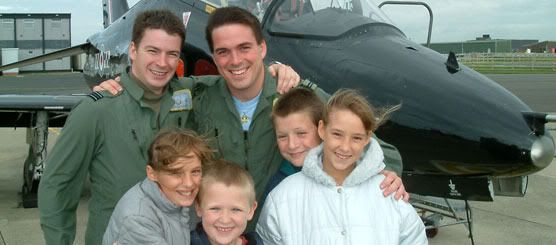
In some ways the RAF is a very prejudice-free organization. It is highly commendable that they should put a picture of a very obviously gay couple and their children on the page of their website that gives information about schools near RAF "Valley" at Rhosneigr:


Unfortunately, that admirable lack of prejudice doesn't extend as far as their attitude to Welsh. As we can read in this story, they may now have corrected this outrageous claim:

The Day School Allowance (North Wales) (DSA (NW)) is a unique opportunity for Service personnel to educate their children in North Wales.

DSA (NW) is available for the education of children of Service personnel based in North Wales who would otherwise be disadvantaged, academically and socially, by the bilingual teaching policy adopted within the Gwynedd and Isle of Anglesey Local Education Authorities. DSA (NW) is provided as an alternative to Boarding School Allowance (BSA) and assists towards the costs of the independent day schooling in the local area. In common with the principles adopted in other areas where English is not the teaching medium, no parental contribution is required towards the cost of school fees. Also travelling costs 'by the cheapest method appropriate' are also covered within this scheme.

Two independent day schools are available in Bangor, Hillgrove and St Gerard's and are both in use by Service families.

Thanks to Google's cache, I've saved a copy for all to see both as an mht file and as a jpg. The revised page is here.

But has removing the offensive sentence made any real difference? Of course not. The scheme is still being offered. And I have to say that I wouldn't want it to be ended, for there are much more important concerns the other way round.

What about air force personnel from Wales stationed in England or Scotland? Do they get a special allowance to continue their children's education in Welsh, or with at least some Welsh ... or are they expected to go to local schools where no Welsh is taught? What sort of financial help do they get to make sure their children can continue to be taught some Welsh in school?

The answer to that is so obvious that it hardly needs answering. Try searching the air force website for one word of Welsh. Yes, making that money available to one group of parents but not to parents in the opposite situation is a blatant example of the double standards that are still being applied to English and Welsh, but we must be cleverer than to say that this allowance is wholly inappropriate and needs to be stopped. Look at it the other way: if the air force is prepared to pay this sort of money so that some children can avoid any exposure to Welsh, it is better that we fight for similar sums of money to be made available to ensure that children from Welsh families in the armed forces can get some teaching in Welsh if they are based outside Wales.

-

Now I don't expect there will be any schools outside Wales and close to army, navy and air force bases in which Welsh is taught; but what steps do the armed forces take to ensure that the children of personnel from Wales are able to maintain the standard of Welsh they would be taught if they were based in Wales? For I'm quite sure this is the standard they apply with regard to English. I'd have thought the armed forces would have some code of practice with regard to education, and Welsh needs to be addressed as part of it. Our politicians need to start asking questions to make sure it is being properly addressed.

As for answers, one way forward is to ensure that the Boarding School Allowance mentioned on the website is available for any armed forces personnel from Wales, but based outside Wales, to educate their children in Wales. This seems to be the only way to ensure that their children can get a Welsh-medium education.

Or, in much the same way as the Athrawon Bro service provides specialist Welsh language teaching once or twice a week for English-medium schools in Wales without the staff to do it for themselves, another possible solution would be for the same sort of service to be provided by a flying squad of Welsh teachers (Athrawon Hedfanog?) travelling between schools near bases outside Wales, backed up with interactive resources and video conferencing.

Bookmark and Share

NATO ... going beyond

I am rather concerned by the statement yesterday that NATO is to take control of the military operation in Libya.

Statement by NATO Secretary General Anders Fogh Rasmussen on Libya


NATO Allies have decided to take on the whole military operation in Libya under the United Nations Security Council Resolution. Our goal is to protect civilians and civilian-populated areas under threat of attack from the Gaddafi regime. NATO will implement all aspects of the UN Resolution. Nothing more, nothing less.

This is a very significant step, which proves NATO's capability to take decisive action.

In the past week, we have put together a complete package of operations in support of the United Nations Resolution by sea and by air. We are already enforcing the arms embargo and the No Fly Zone, and with today's decision we are going beyond. We will be acting in close coordination with our international and regional partners to protect the people of Libya.

We have directed NATO's top operational Commander to begin executing this operation with immediate effect.

NATO, 27 March 2011

In my view, it is probably possible to justify the United Nations' resolution to take military action in Libya. However I think we need to ask very serious questions about why the UN should permit such military action in one country while not taking the same position in other countries where attempts have been made to overthrow its leader. But a change in the general policy of not intervening in the internal affairs of countries is in itself not a bad thing.

I also think that Western governments have made a mistake in thinking that the population of Libya detests Gadaffi to the same extent as they do. Gadaffi seems to have considerable support among sections of the population of Libya, so we are taking sides in a civil war, but without any real idea of what elements we are fighting to bring to power instead. For there is a big difference between a popular uprising that involves only civil protest and therefore offers the possibility of a democratic solution in an undivided country, and a military solution by which an alternative faction will take control and perhaps make things no better.

In a very real sense the governments of the attacking countries are following the pattern of shooting first and leaving the questions until later. They are doing little more than trusting to luck.


However, those are different issues. The issue I want to focus on is why NATO as an organization should become involved. I don't think anyone could read the North Atlantic Treaty of 1949 as anything other than setting up an alliance for mutual defence in response to an attack on any of its members. Yet NATO seems to be inexorably changing into a force that is openly being used for offensive purposes.

Perhaps, but only perhaps, one could claim that the security of some of NATO's member countries was threatened by Afghanistan. I would call it an indirect and at best a very tenuous link. Yet NATO is there, halfway across the world from the legitimate sphere of concern set out in its founding Treaty. However in the case of Libya, there is absolutely no threat to the security of any other country, let alone one that is a member of NATO. It is a purely internal matter.

So it is perhaps legitimate for countries such as the USA, France and the UK ... plus others such as Belgium, Canada and Qatar to conduct attacks in Libya in their own right, as an "alliance of the willing". But it cannot be legitimate for a defensive organization to conduct such attacks, even if all 28 members were to agree that they want to be involved in the operation.

NATO has served us well over the past 60 years, and all organizations need to adapt over time; but to my mind these fundamental changes are now taking NATO way beyond its intended purpose and can only weaken it. In Afghanistan we have already seen the reluctance of some members to contribute their own forces to operations they aren't keen on. Albania, Bulgaria, Croatia, Iceland and Luxembourg have not contributed to the NATO led forces in Afghanistan, other members only contributed limited logistic support and others seem only to have made a nominal contribution on condition that their armed forces were as far out of harm's way as possible. In this new operation in Libya even fewer will take part. This is quite understandable, but by setting the precedent of only taking part if you want to, NATO runs the risk of countries taking the same attitude if any member were actually to be attacked ... and that's what it's really there for.

Bookmark and Share

The Goddess of Health and Safety ... Gone Mad

To me "soteria" has always meant salvation or, in the Greek of the New Testament, to be made whole or in other words healed. But the Greek word is feminine—as with most abstract concepts—and so I don't much mind that the consortium that will tomorrow be announced as the PFI contractor to run search and rescue services around Britain say "Soteria is the Greek goddess of safety, deliverance and preservation from harm" ... although the more mischievous side of me thinks that in this age she might be better called the Goddess of Health and Safety.

-

But leaving the name to one side, this is yet another example of the privatization of what used to be a public service. And although it's been brought to fruition under the ConDem government, I'm afraid it was the Labour government before it that set the contract up back in February of this year.

     Private firm to run search and rescue helicopters

The party that is now making so much noise about what is happening to public services is the very same party that is in fact responsible for this privatization. And if there are question marks over the level of service—and of course there are, as we can read here—any blame must lie with the Labour party that instigated this privatization rather than anywhere else. That should be a sobering reminder for anyone who is still thinking of voting for the Labour party in the Assembly elections next year in response to what the ConDem coalition is doing in Westminster. Don't be fooled. There is no difference between them.


Now I don't know to what extent the rescue services that we rely on in Wales, based at RAF Fali and RAF Chivenor in Devon will be affected. Things should be clearer tomorrow. But this much is certain: the PFI contract will be for 25 years; so even though the cut backs might arguably be necessary in the present economic crisis, the chances of restoring the levels of service back to what they were after the economic situation improves are going to be severely limited by the terms of the PFI contract. For, as with any contract, things are fine when the service required can be clearly defined, but any subsequent variations to the contract that change the level of service will not come cheap.

And although the offer from Soteria looks attractive in technical terms, do we really want to be stuck with a level of service in 25 years' time that is state-of-the-art today? Of course not. That would be as silly as saying we would today be content with the same level of rescue service that we had 25 years ago. Times change and technology improves. So it is complete folly for a government to tie itself into an arrangement in which any improvement will be at whatever extra price the PFI consortium cares to name.

-

So why on earth are we doing it? In part it is the fetish of privatization so loved by first the Tories, then Labour, and now by the Tories and LibDems together ... but only in part. Up until now we have generally relied on our armed forces to provide the backbone of such a service, at least in terms of the equipment and facilities. There is an obvious synergy between the two, for when our island is not threatened by war we have trained pilots whose skills on the battlefield will be just as valuable when used for rescue. And our armed forces also have the flexibility to respond to any disaster without being followed by a set of accountants eager to work out how much the PFI consortium should be billed.

But the UK can now no longer follow a model that has worked well for decades. Because the UK government prefers to use our armed forces not for our defence, but to attack, invade and maintain a military presence in other countries, our armed forces are stretched to breaking point. This privatization is necessary because of that, and is in fact a direct result of the UK's foreign policy.

Now of course it is up to government to decide what our foreign policy should be. I would simply note that a very large chunk of the £6bn that this contract was due to cost back in February (or whatever the revised cost turns out to be when announced tomorrow ... and whatever the inevitable additional costs will be because of the factors I explained above) will be directly attributable to our continued presence in Afghanistan ... and whatever country the US invites us to invade next.

Whom the gods would destroy, they first make mad. The UK has gone mad.

Bookmark and Share

He's not the real MH

On today's Politics Show, Michael Heseltine said that Liam Fox's letter preparing the way for the ConDem government to break its word about not making the defence budget immune from spending cuts was "written to be leaked".


As this is exactly what I said in this post at the time Dr Fox leaked it—which of course he did, otherwise he would not have written it in that way—some people have started wondering whether I am Michael Heseltine.

I would like to make it clear that I'm not. I post, he's an impostor.

Bookmark and Share

Designed to be Leaked

I've just read Defence Secretary Liam Fox's letter to the Prime Minister on the subject of cuts to military spending. The full text is here in the Telegraph.

One thing seems very obvious to me: that this is not the "private letter" it purports to be. Sections like this:

If [the SDSR] continues on its current trajectory it is likely to have grave political consequences for us, destroying much of the reputation and capital you, and we, have built up in recent years. Party, media, military and the international reaction will be brutal if we do not ...

and

This will be exacerbated by the fact that the changes proposed would follow years of mismanagement by our predecessors.

... are clearly designed for media consumption. These are things that spindoctors say. Anybody who only intends to drop a quiet note on his leader's desk on the eve of a key meeting can make the point much more succinctly and without turning it into a party political broadcast.

-

So what is its purpose? The first signs of open rebellion? The idea that some services are too important to be cut? Maybe. But it certainly isn't a surprise that a Tory is going to pick the military as something that is too important to cut back on rather than the front line public services our society depends on.

Yet I have to say that cutting military spending at the same time as the UK is in the middle of a war does strike me as being a particularly stupid thing to do. So Liam Fox is probably making a good point by saying:

Frankly this process is looking less and less defensible as a proper SDSR (Strategic Defence and Strategy Review) and more like a “super CSR” (Comprehensive Spending Review).

More than anything seen so far (though I expect other rebellions to come to the surface before too long) this clearly exposes the folly of a government which has set out to cut public spending as its main, probably only, policy. Financial cost seems to be the only yardstick by which they know how to measure anything. What they should do first is ask what it is they want to achieve, assess how much it will cost to do it, and then raise the money to do it through taxation. It is ridiculous to do it the other way round. And this applies to every area of public spending, not just the military.

-

The idea of a Strategic Defence and Strategy Review is sensible, but it needs to look five, ten or twenty years into the future. To cut £4bn or more a year out of a £37bn budget right now, in the middle of a war, is ideology gone mad. The sensible thing is surely to get out of Afghanistan as soon as we safely can ... and by that I mean the safety of our servicemen and women rather than the stability of the country, for the attempt to fight for one corrupt government just because we think it's slightly better than the alternative has been doomed to failure from the very start. And of course we need to make sure that we don't get dragged into the USA's next military adventure which currently looks like it's going to be in Iran, Yemen or Somalia. If we can but do that, we save money.

I am certainly not against maintaining strong defences, and I would want an independent Wales to do exactly that, as I outlined here a few years ago. But whatever decisions a government takes need to be framed in the context of what we want to achieve. As I see it, the priority must be to defend ourselves first, and be prepared to use the armed forces necessary to do that elsewhere in the world on UN or similar missions when our own security is not immediately threatened. But the one thing we should not attempt to do is maintain the sort of armed forces that are necessary to invade or occupy other countries half way round the world. If we get those principles right, we get effective and affordable defences. It concerns me greatly that NATO, which was set up to be a mutual defence organization for Europe, is fast becoming a tool for fighting aggressive wars in other continents.

I only wish the UK shared this sort of attitude, but it doesn't. Successive UK governments still hold on to the idea that it's the UK's job to be a major world power, and to project military might all over the world whether the world wants it or not.

Bookmark and Share

Hats off to them

Thanks to Politics Cymru for highlighting the vote in the Commons yesterday on an SNP amendment that would have included nuclear weapons in the scope of the forthcoming Strategic Defence Review:

To add ... "but respectfully request that your Government includes as part of its Strategic Defence and Security Review a full examination of the Trident nuclear missile system and any possible replacement."

Hansard, 8 June 2010

As would be expected, Plaid Cymru's MPs and Caroline Lucas of the Greens supported the amendment, along with the SDLP MPs and Naomi Long of the Alliance party, who defeated Peter Robinson in East Belfast.

I'm pleased to see that they were joined by a few Labour MPs, four of whom are Welsh Labour. Paul Flynn comes as no surprise to me, as he is one Labour politician who I agree with on many of the big issues. The other three were Siân James, Nia Griffith and Dai Havard. As I've been critical of the last two on this blog on other issues, I thought it would be right to take my hat off to them and their colleagues for their stance on this.

-

As for the Welsh LibDems, my contempt for them can't be expressed too strongly. Even though they presented themselves as being against Trident before they were elected, both Mark and Roger Williams voted against the amendment, and Jenny Willott did not vote at all.

Bookmark and Share

A sunny day in Merthyr

Not that much time for blogging today. I'm taking a much needed coffee break from helping at the Plaid stall in Merthyr, where Glyndwr Jones is standing for Plaid.


Not many people I've spoken to today have much time for the sitting Labour MP Dai Havard ... or Dai Basra as he's known locally. It's not meant as a complement. Going to war in Iraq was hardly our finest hour on the international stage, and the damage done to our reputation in the world will take years to heal. Nor have we treated our servicemen and women at all well. We failed to equip them properly when fighting, and fail to take proper care of them when they return.

Plaid's Elfyn Llwyd has been in the forefront of highlighting this issue, as this video from a few weeks ago shows:


I'm pleased to say that this is one of the main points in Plaid's manifesto for this election. For more details about what we want to see happen, please read our policy paper.

     Support for Veterans


Bookmark and Share

Proper Support for War Veterans

I was very impressed with Plaid's video on Channel 4's Political Slot last night:


As with pensions, it is another good example of how Plaid is making a significant contribution not just to politics in Wales but for the benefit of the UK as a whole.

However this video isn't just a soundbite. This is something that I know has concerned Elfyn Llwyd—a barrister with plenty of experience of the problems faced by ex-servicemen—for some years. As he mentioned in the video, the UK is very bad at integrating some of our ex-service personnel back into civilian life.

Even for those fortunate enough to avoid the physical wounds, no one in the services who has seen war can fail to be deeply affected by their experience, and far too many develop behavioural problems because of it. Some are left to cope on their own, for some it is taken out only on their families and friends, but for others it is taken out on society as a whole. A hugely disproportionate 10% of the UK's prison population are ex-servicemen, a figure which required a good deal of investigative work to obtain ... and perhaps unsurprisingly, as it is a terrible indictment both of the lack of support available and of how much the government has wanted to sweep the problem out of the public eye. Our ex-service personnel deserve—and we owe them—much more help than they are getting at present.

Plaid's team at Westminster has produced a detailed background paper on work in support of our veterans: the problems, what is good and bad about the current provision and some concrete suggestions about how to improve the situation. It is available from Plaid's website as a pdf here. However I have to say that the format (since it is set out for printing as a booklet) makes it very difficult to read. So perhaps people will find this version a little easier, especially if you need to print it out:

     Support for Veterans

Bookmark and Share