Oriel Mostyn

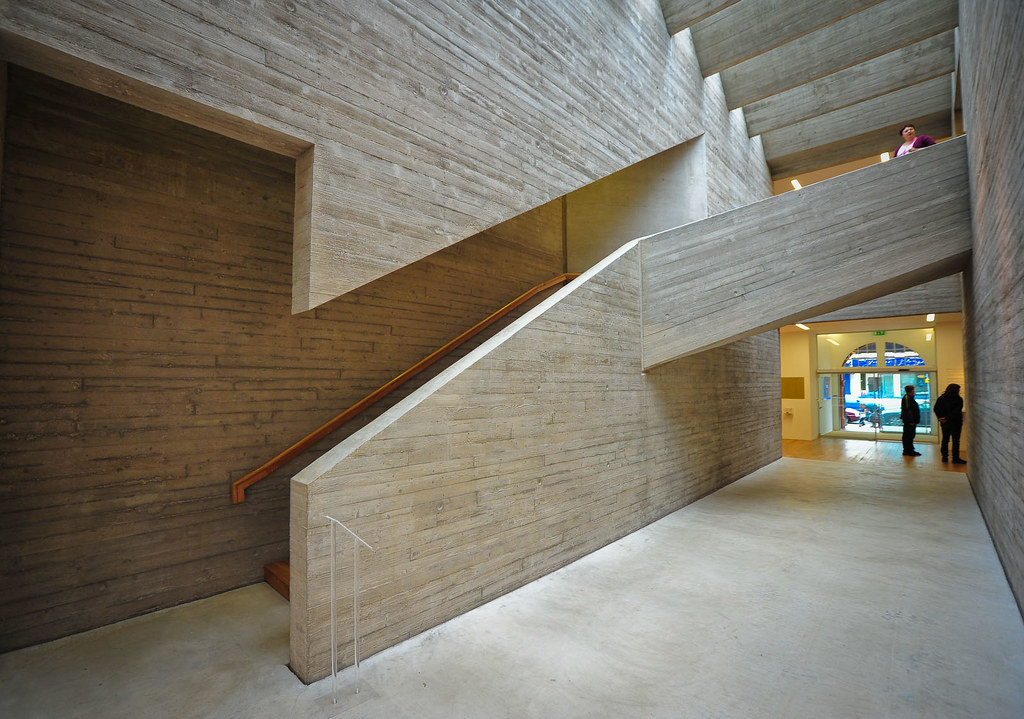
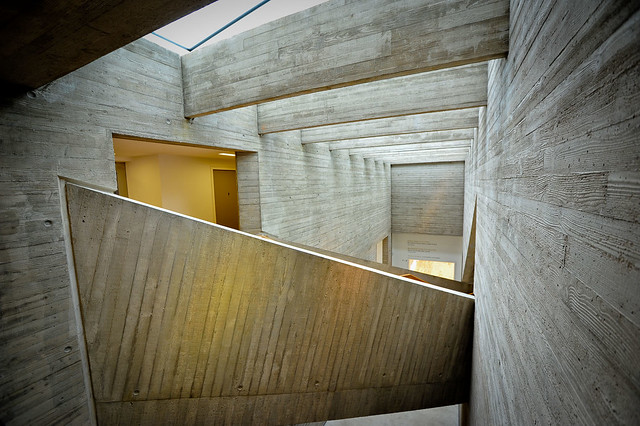
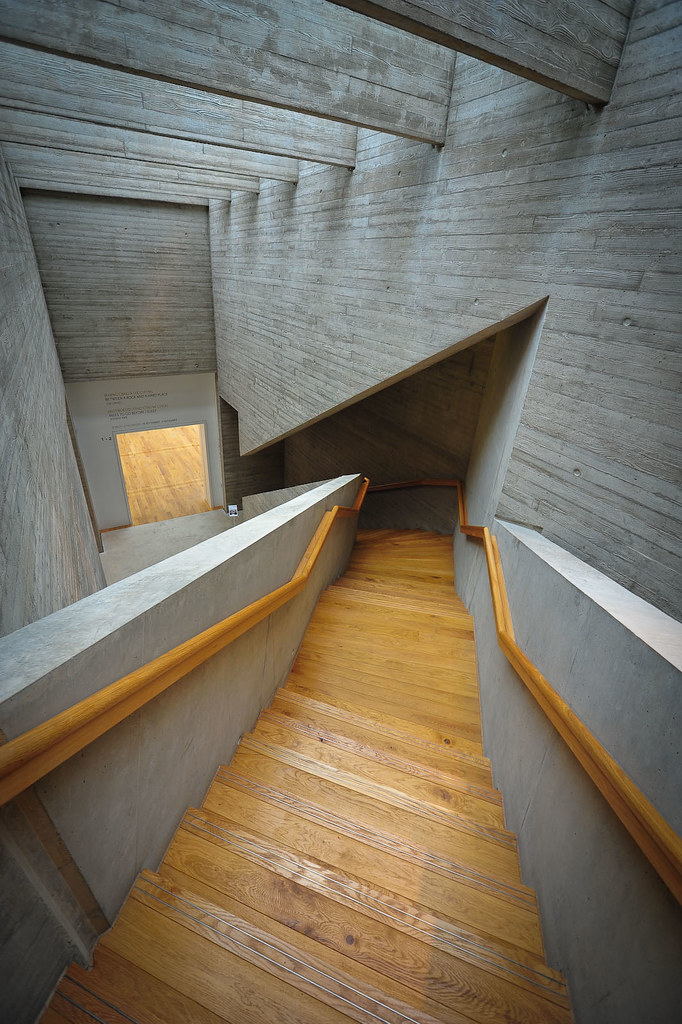
The remodelled Oriel Mostyn in Llandudno has won Ellis Williams the Gold Medal for Architecture at this year's National Eisteddfod.

The handsome but hardly spectacular façade of the original building does little to prepare you for the extraordinary dynamics of the new space inside. There are some words about it here, but the pictures tell you what words can't. These are from David Roberts Photography:


Bookmark and Share

The M4 relief road has not yet been built

I suppose that any incident that closes the section of the M4 through the Brynglas tunnels is like a red rag to those few people who still want to see a new motorway built on the Gwent Levels parallel to the M4, and I must thank Oggy Bloggy Ogwr for repeating the points I made before in this post about why it was such a bad idea and why the Welsh Government was right to reject it in 2009.

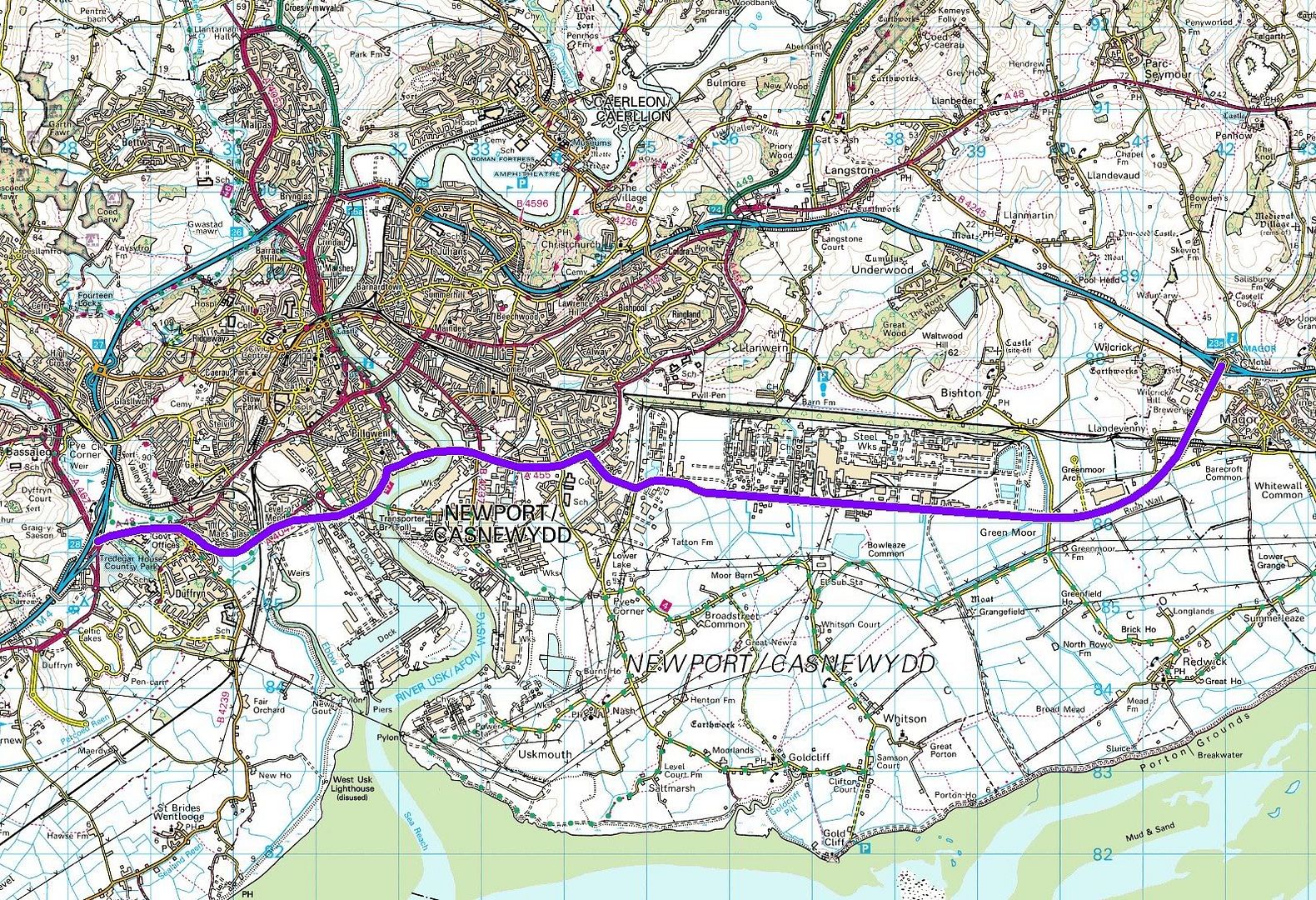
But I would emphasize one point, which is that there is a problem on that section of the M4, and that a relief road is needed both to provide a better alternative for local traffic that passes through Newport and to increase the resilience of the M4 on the rare occasions when it is closed because of an accident. However, there is all the difference in the world between a relief road and a new parallel motorway.

When Ieuan Wyn Jones made the decision not to proceed with the new motorway, he also made the decision to improve the Southern Distributor Road and the road serving the Llanwern steelworks in order to provide this much needed alternative, as shown below. Click the map for an enlarged version.


As yet these improvements haven't been made, we are still in the process of consultation. But when these improvements have been implemented, this relief road will provide an alternative which will very much reduce the impact and delays resulting from the sort of closure we have just seen.

Bookmark and Share

The WMES Annual Report

On Friday, the Welsh Government published its first annual report on the Welsh-medium Education Strategy:


It was strange that nearly all the reports in the media focused on the fact that there was a target of 30% of seven year olds being taught in Welsh by 2020, almost as if this was some sort of surprise. But this target, and the intermediate target that the figure should be 25% by 2015, is nothing new. What is much more critical is how much progress has been made towards achieving the targets, and the annual report focuses on this.

Last week, in this post, I commented on the numbers that now attend Welsh-medium schools. The numbers in Welsh-medium (and dual stream and transitional) primary schools have risen by just 0.5%—from 23.06% to 23.56% in the past two years—and this rate of increase would be nowhere near enough to meet the target.

However the numbers in WM schools are not an exact reflection of the numbers that are educated in Welsh. A more accurate measure is the number that are assessed in Welsh as a first language, and this is the basis of the WMES targets. On this measure, it's encouraging to note that the percentage has risen much faster, from 21.0% in 2009 to 21.8% in 2010. If this rate of increase were to be maintained, the targets would probably be met.

Now of course the Welsh Government could point to this as evidence that good progress is being made, but I would sound a note of warning. The discrepancy between the percentage in WM education (23.56%) and those being assessed in Welsh as a first language (21.8%) is largely a result of the fact that a significant number of smaller, traditionally WM schools have had rather patchy WM provision. What appears to have happened is that these schools have inceased the number of assessments in Welsh as a first language, and it is this which accounts for the bulk of the 0.8% rise between 2009 and 2010.

But this is a "soft target", because it represents an improvement in what is happening within WM schools. It might well be possible to get every child in a WM school assessed in Welsh, but the numbers being assesed in Welsh can never realistically be greater than the numbers in WM schools. In other words there is a structural problem which can only be solved by increasing the number of WM places available, which in most local authorities will mean increasing the number of WM schools. Unless we concentrate on this, there will be no chance of us meeting the 25% target in 2015 or the 30% target in 2020. As the potential to build new schools has been severely curtailled as a result of the Welsh Government scrapping all the work done to date on the remainder of the 21st Century Schools project, there will be no choice other than to convert existing EM schools to WM in order to meet the targets. That is a bullet that must be bitten.

-

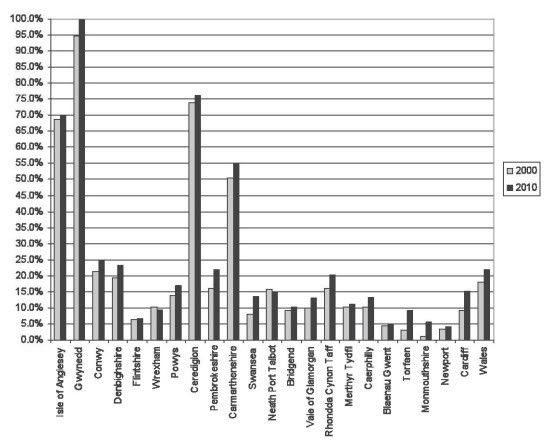
One other thing I found interesting in the report was this graph comparing the percentages being assessed in Welsh by local authority in 2000 and 2010:


Gold stars to Torfaen, Monmouthshire, Cardiff, Swansea and Pembrokeshire for some good increases. Swansea's increase is a surprise to me. Black marks to Neath Port Talbot and Wrecsam for managing to preside over falls rather than increases; and to places like Ynys Môn, Ceredigion, Fflintshire and Blaenau Gwent which have only marginally increased their provision.

As most of us will know, Blaenau Gwent has just been relieved of its responsibilities for its failure in education generally, and I can't help but think that its failure with regard to WM provision is symptomatic of its wider failings. But isn't transferring responsibility for education in Blaenau Gwent to a task force from Neath Port Talbot a case of the blind leading the blind?

Bookmark and Share

What about the other half?

The news that half of the revenue from the marine part of the Crown Estate is to be given to coastal communities is a significant step in the right direction, and I think we should give the ConDem government in Westminster some credit for that.

The most significant aspect of the decision is that this money will be distributed within the country from which the revenues were generated, although in the case of Scotland the Highlands and Islands and the remainder of Scotland will be treated separately. The total revenue from the marine part of the Crown Estate was £47.4m last year, and this table from the Treasury press release shows the breakdown:

Wales ... £2.3m (4.9%)
England ... £36.4m (76.8%)
Northern Ireland ... £0.9m (1.9%)
Scotland, Highlands and Islands ... £3.7m (7.8%)
Rest of Scotland ... £4.1m (8.6%)

UK total ... £47.4m

It's also interesting to note the breakdown of that revenue by activity:

Dredging ... £15.5m (32.7%)
Coastal ... £14.3m (30.2%)
Cables/pipelines ... £11.5m (24.3%)
Renewables ... £3.5m (7.4%)
Aquaculture ... £2.6m (5.5%)

Crown Estate Annual Report, 2011

As we can see, renewables currently accounts for a quite a small percentage of the marine revenue, but this will increase dramatically as the next round of offshore windfarms is developed.

Previously the Crown Estate had operated a Marine Communities Fund worth between £500,000 and £600,000 a year, which I'm sure they thought was very generous. The new Coastal Communities Fund will distribute forty times more of the money, and I'm sure the Tories and LibDems think that they are now being even more generous.

But when you go into a pub and order a pint of beer, what would you think of a landlord who drank half of it himself and then gave you the half empty glass? Are we expected to thank him for only drinking half of it?


It's very easy to be "generous" with someone else's money. The issue of principle is that the revenue generated from leasing and granting various rights for activities in Welsh waters doesn't belong to anyone other than ourselves. It should be for us to set the terms on under which our marine resources are are used, and what the revenue generated will be used for.

So let's give the Tories and LibDems in Westminster some credit for not drinking the whole pint and leaving us with just the dregs, which is what Labour had done when they were in power there. Acknowledging the principle that revenue from marine resources should rightly be apportioned to the country where that revenue is generated is a big step in the right direction, and has set a precedent which will make the remaining steps that much easier.

Bookmark and Share

A Senior Labour Source

It appears that a "senior Labour source" has told Martin Shipton that there's something abnormal about a person who uses both Welsh and English.

     Labour slate 'Welsh only' AM for using English in Assembly business

What the story doesn't make clear is that this source is very senior indeed ... 65 million years old.

Bookmark and Share

Geraint and Gwyneth speak out

At last year's Eisteddfod, it was announced that a new synthetic voice capable of reading Welsh text and converting it to speech had been developed by a Polish company called Ivona. However it was at that stage only a demonstration rather than a fully working product. I've checked a few times since then to see if it had been developed further, and I'm pleased to say that it has. There is now a male and a female voice, and as an example of how they sound I've taken the text from a story on the BBC's Newyddion site and recorded it in each voice:


Ysgol newydd: Pryder am y Gymraeg yn Nyffryn Tywi

Dywed rhieni yn Nyffryn Tywi na fydd ysgol uwchradd newydd yn ardal Ffairfach, Llandeilo, yn bodloni'r galw am addysg cyfrwng Cymraeg. Bydd yr ysgol newydd yn cael ei hagor yn 2015, a bydd ysgolion Tregib (Llandeilo) a Phantycelyn (Llanymddyfri) yn cau.

Dywed rhai rhieni fod angen ysgol sy'n dysgu'r rhan fwyaf o bynciau, ac eithrio gwyddoniaeth, drwy gyfrwng y Gymraeg. Ond statws 2B fydd yr ysgol newydd, lle mae yna ddewis i dderbyn yr holl wersi drwy gyfrwng y Saesneg, neu 80% drwy gyfrwng y Gymraeg.

Yn ôl rhai rhieni dylid sefydlu ysgol categori 2A, fel Ysgol Maes yr Yrfa, lle mae 80% o'r pynciau yn cael eu dysgu drwy'r Gymraeg. Bydd yn rhaid i deuluoedd sydd am i'w plant gael addysg 2A anfon eu plant i Ysgol Maes yr Yrfa yng Nghefneithin.

Dywed Dr Hywel Glyn Lewis, darlithydd mewn dwyieithrwydd, y dylai Cyngor Sir Caerfyrddin ystyried gweithio ar y cyd gyda Chyngor Powys a sefydlu ysgol 2A ar gyfer yr ardal. Byddai hynny o bosibl yn golygu gwasanaethu ardaloedd Pontsenni a Thecastell yn ne Powys. Pryder Dr Lewis yw y byddai plant sy'n mynychu ysgolion cynradd cyfrwng Cymraeg yn colli'r iaith drwy fynychu ysgolion uwchradd lle nad oes darpariaeth ddigonol.

Mae rhieni ardal Llanymddyfri hefyd yn anhapus fod yr ysgol newydd wedi ei lleoli yn ardal Llandeilo. Dywed ymgyrchwyr y dylid wedi dewis ardal sydd rhwng Llandeilo a Llandysul.

BBC, 20 July 2011

OK, it's not absolutely perfect, but it's miles ahead of previous attempts to get a natural sounding synthetic Welsh voice. If you want a comparison, try using the "Darllenwch y dudalen" feature on say this page of the Bwrdd yr Iaith website. Highlight some text and click "darllen testun".

If anyone wants to try out the Ivona voices, just put some text into the box on this page, then choose either Geraint or Gwyneth from the drop down menu to read it out. They'll even read things in English, but with a Welsh accent. That's cool.

The voices are still beta versions and not yet for sale, though I expect they soon will be, maybe in time for the Eisteddfod. When they are, the personal version of the programme should be able to read Welsh text from any computer application or web page. But I hope we will also see the BBC, Golwg360, councils and private companies install a button which will read the text on their Welsh pages automatically.

Bookmark and Share

Round and round in circles

The dithering and directionless nature of the new Welsh Government was illustrated perfectly when they decided last month to put the west Wales badger cull on hold pending a review, even though nothing had changed since the previous decision to go ahead.

When in coalition with Plaid Cymru, Labour could leave it to Plaid ministers like Elin Jones to take tough decisions like this. But it's hard to escape the conclusion that we now have a government that aren't capable of making such decisions on their own, and that they'll always need someone to hold their hand.

So, as we can read here, they have now turned to Professor Chris Gaskell to lead a review panel. But the question he must be asking is why on earth he's being asked to do something that he's already done ... and done more than once.

For example, there seems to be a sense of "how many times do we have to say the same thing over and over again" in this letter he wrote in his capacity as Chair of the DEFRA Science Advisory Council in December 2007:

It is worth stating at the outset that in the absence of new data, and we have seen none, nor has any been presented in the King report, the SAC sees no rationale in changing the advice on the current science base for bovine TB that it has already given to your predecessor as CSA. The subsequent debate would seem to us to be more around the policy options that may arise from these observations, rather than the evidence itself.

However, it is the opinion of the SAC that despite the alternative presentations of the implications of the ISG results, there is substantial agreement about the basic scientific evidence.

Specifically, in relation to the potential effectiveness of badger culling, there appears to be agreement on the following basic points between King and the ISG:

•  That simultaneous, coordinated and repeated culls of badgers in large, geographically distinct and isolated areas where there is a high prevalence of bTB in cattle should lead to a modest reduction in outbreaks in cattle within the area culled.

•  That culling badgers would lead to an increase in bTB breakdowns in cattle in the surrounding areas (“the edge effect”).

•  That culling of badgers on its own, would not eradicate bTB in cattle.

However such agreement presumes that:

•  Any culled area is sufficiently large for the benefits to offset the detrimental edge effects that follow culling. This would, in the opinion of SAC, mean culling areas preferably of at least several hundred square kilometres.

•  That natural, or ‘hard’ boundaries such as rivers and motorways at the edges of culling areas might assist in reducing the edge effect although, in practice, impermeable boundaries would be, in the opinion of SAC, difficult to achieve.

Letter to DEFRA, December 2007

Then, in only April of this year, another group he was part of said almost exactly the same thing, as recorded in this note.

-

It is ridiculous for politicians to think that if they keep asking the same questions over and over, they will magically get a different answer. And although I sure that Chris Gaskell and the others on the new review panel will be paid well for their work, I can't help wondering whether they might prefer to get on with other things rather than waste yet more taxpayers' money.

The science is clear enough, but policies must be decided by politicians ... or at least by politicians who are prepared to take the hard decisions. John Griffiths is no Elin Jones.

Bookmark and Share