For England

I don't think it's any great secret that if I didn't vote Plaid I would vote Green. The Green Party launched their manifesto in Brighton yesterday and I don't think anyone who watches the video could fail to notice how many similarities there are between their policies and those of Plaid. Not just on the obvious environmental issues, but on the fundamental principles of a fairer, more equal and more just society. The two are intrinsically linked.


What was said by the very impressive Caroline Lucas, as well as Darren Johnson and Adrian Ramsay, was music to my ears. In fact I would go so far as to say that some aspects of their policy are more radical and better than Plaid's ... but we can each judge that for ourselves by glancing through this policy list or reading through the full manifesto, for the sake of cross-fertilization of ideas if nothing else. We in Wales are sometimes prone to look at things only from our own point of view, so this should help remind us that the Wales we want to build is not unusual from a wider global, continental or even island perspective ... just that our version is tailored so that it suits what is unique to our specific circumstances.


So I would urge any Welsh exile living in England (... well anyone living in England, for that matter) who can't vote for Plaid to vote Green instead. Their main target seats are Brighton Pavilion, Norwich South and Lewisham Deptford, and they do seem to have a real chance of making a breakthrough. This is what Betfair said about the Brighton Pavilion seat:

This is the first time since betting began that a candidate in this contest has been odds-on in this election. Caroline Lucas now has a 51 per cent chance of winning the seat, say [our] customers. The Conservatives are 15-8 (a 35 per cent chance) and Labour third on 9-2 (19 per cent), whilst the Lib Dems are seemingly out of the race at 59-1 (2 per cent).

Source

If the Greens do win this and the other two seats, I think there will be plenty of common ground on which we will be able to work and vote together ... as we, and also the SNP, already do in the European Parliament.

Bookmark and Share

Labour Spread Lies and Confusion

Right at the top of Labour's promises at the launch of their manifesto for Wales today was a commitment to fair funding. Peter Hain said:

"Today's fair funding guarantee means that, with Labour, Wales will not be disadvantaged in the future."

Well, I've just read through their manifesto, and it is quite clear that this is not only the most blatant of lies, but that Labour either do not understand the basis on which Wales is presently funded ... or that they do, but want to spread confusion and disinformation about it. This is what they say:

Right now, for every £100 that is spent on schools, hospitals and other vital services in England, £114 is spent in Wales under the ‘Barnett Formula’ because of the relative sparsity, ill health, deprivation and age of our population compared with England. This formula has served Wales well these past Labour years: for example, funding for the Welsh Assembly Government’s health and hospital programmes has more than doubled, in real terms.

Welsh Labour Manifesto, page 30

This is completely wrong. The Barnett Formula has nothing whatsoever to do with the "relative sparsity, ill health, deprivation and age of our population compared with England". It is based simply on population, nothing else.

Gerald Holtham and his colleagues have recommended that the Barnett Formula be replaced with a needs based formula that would take account of these and other factors, but Labour point-blank refused to commit themselves to that sort of change, as I explaned here. And this manifesto is most certainly not a promise that Labour will change their minds and introduce a replacement for the Barnett Formula, they are just repeating the fudge that they made previously.

So in short this is deliberate mendacity—blatant lying—of the very worst kind. The manifesto is peppered with lies and innuendo, but this is simply too big a lie to be ignored.
 

     It is disgusting and shameful that Labour are telling us
     the exact opposite of what is true
 

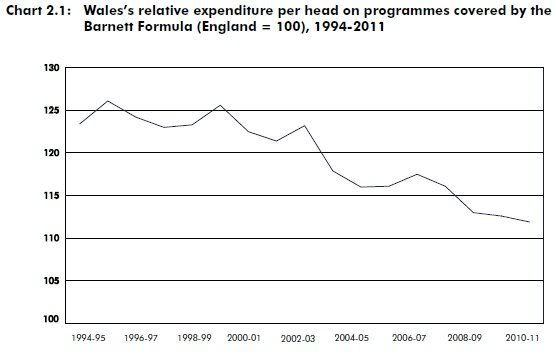
On the same page of the manifesto, Labour make much about how much spending in Wales has increased. Now it is true that public spending in Wales has increased. But what Labour don't say is that they increased spending in England and Scotland much more than they increased it in Wales. This graph, which I make no apology for showing yet again, shows just how much spending in Wales has gone down relative to the UK average:


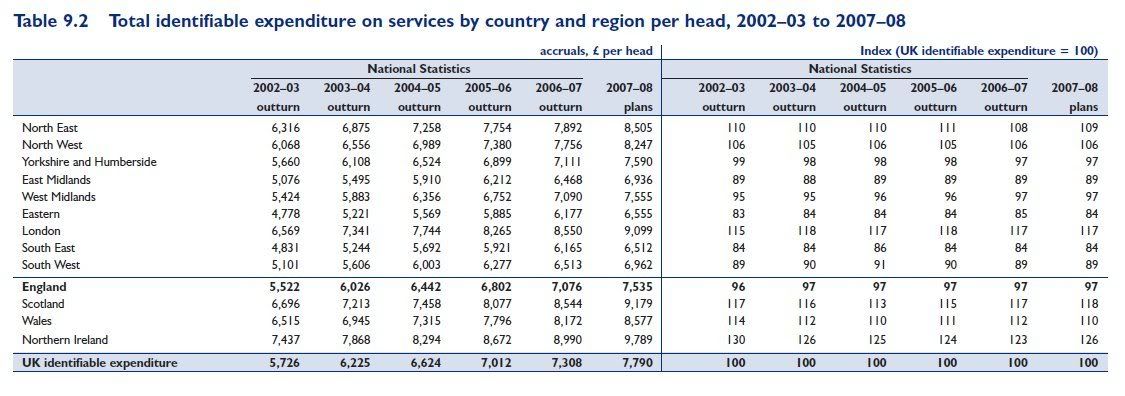
In short, Labour have deliberately and systematically used their 13 years in power at Westminster to see spending in Wales fall from about 125% to 114% relative to the UK as a whole. The biggest injustice is that relative spending levels in Scotland have been and still are much higher than in Wales. But, as the PESA figures in the table below show, over the past six years relative spending in Scotland has in fact gone up from 117 to 118, and in England from 96 to 97.


Put bluntly, we have been unfortunate to have Secretaries of State for Wales that have proved themselves completely incapable of standing up for Wales at the Cabinet table. The Scottish Secretary has managed to keep Scotland's advantageous position, but we have been lumbered with a second-rater who would rather praise himself than fight for the people he is meant to represent.

And, just in case anyone thinks that this was some sort of misprint in the Labour manifesto, Labour candidates have been putting out precisely the same lies in their leaflets. Nia Griffith in Llanelli is another perfect example of a Labour candidate lying through her teeth in the hope of trying to hold on to her seat, as I wrote about in this post.

-

But finally, I do not want to be critical of Labour without putting forward a better alternative:


Bookmark and Share

Plaid's Manifesto

Plaid's manifesto launch yesterday doesn't appear to have made it onto iPlayer, so I thought I'd put it up here.


Just click the images below to read the full manifesto in either Welsh or English. The seven key policies are highlighted first, followed by Plaid's other commitments.


Bookmark and Share

Alun Cairns' Gem

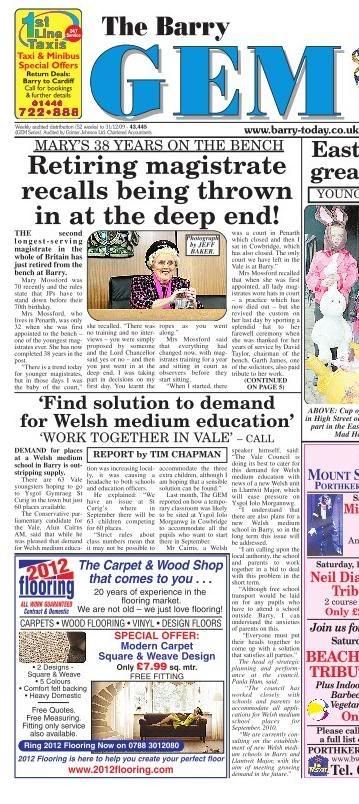
Continuing the theme of Welsh-medium education, an article about it was front page news in this weekend's Barry GEM, and was also in a number of the other local papers in the Vale of Glamorgan.

"Find solution to demand for Welsh medium education"

"WORK TOGETHER IN VALE" – CALL

Demand for places at a Welsh medium school in Barry is outstripping supply. There are 63 Vale youngsters hoping to go to Ysgol Gymraeg St Curig in the town but just 60 places available.

The Conservative parliamentary candidate for the Vale, Alun Cairns AM, said that while he was pleased that demand for Welsh medium education was increasing locally, it was causing a headache to both schools and education officers.

He explained: "We have an issue at St Curig’s where in September there will be 63 children competing for 60 places. Strict rules about class numbers mean that it may not be possible to accommodate the three extra children, although I am hoping that a sensible solution can be found."

Last month, The GEM reported on how a temporary classroom was likely to be sited at Ysgol Iolo Morgannwg in Cowbridge to accommodate all the pupils who want to start there in September.

Mr Cairns, a Welsh speaker himself, said: "The Vale Council is doing its best to cater for this demand for Welsh medium education with news of a new Welsh unit in Llantwit Major, which will ease pressure on Ysgol Iolo Morgannwg. I understand that there are also plans for a new Welsh medium school in Barry, so in the long term this issue will be addressed. I am calling upon the local authority, the school and parents to work together in a bid to deal with this problem in the short term. Although free school transport would be laid on for any pupils who have to attend a school outside Barry, I can understand the anxieties of parents on this.

"Everyone must put their heads together to come up with a solution that satisfies all parties."

The head of strategic planning and performance at the council, Paula Ham, said, "The council has worked closely with schools and parents to accommodate all applications for Welsh medium school places for September, 2010. We are currently consulting on the establishment of new Welsh medium schools in Barry and Llantwit Major, with the aim of meeting growing demand in the future."

Glamorgan GEM

The situation itself is hardly a great surprise, but I'm less than impressed by Alun Cairns' contribution. When a politician comes up with, "I am calling upon the local authority, the school and parents to work together in a bid to deal with this problem in the short term" he is in effect saying that he hasn't got a clue how to solve it, so will everybody please else get together and do it and leave him to get on with his campaigning. When a solution is found, he will no doubt claim that it was all down to his intervention. Thanks for that sparkling contribution, Alun. A gem for the GEM.

For me, the thing to do is to suggest ways of actually solving the problem.

In particular, I think it's unreasonable for him to think that parents have to make compromises for things that are outside their control. If parents want their children to have a WM education, it is up to the local authority and schools to ensure that they get it. It simply isn't the parents' problem. In the main it's down to the local authority, though the schools affected also have role.

-

As I wrote in this post last year, the Vale of Glamorgan came up with some good plans to increase WM provision in the Vale as a result of a survey of parental preferences which they conducted. Paula Ham, who was quoted in the article, deserves particular credit for working out a plan as soon as VoG recognized the extent of the parental demand ... and I have to say that this is in marked contrast to Swansea, who conducted surveys in 2007 and 2008, but who have only recently come up with a proposal to convert one very small school in Morriston to WM.

VoG proposed the introduction of "seed schools" which they intended to be set up in September this year, but their good intentions got caught up in the complicated procedures necessary to set up new schools, and therefore they had to put their plans back by a year, as I mentioned here.

-

But in spite of the administrative delays, the parental demand is of course still there, so VoG have a short term crisis on their hands. Reading between the lines, it appears that VoG have decided to set up a temporary classroom at Ysgol Iolo Morgannwg in Cowbridge as a short term measure before the seed school in Llanilltyd Fawr (Llantwit Major) starts in September 2011. What Alun Cairns said about busing children from Barry to Cowbridge seems to imply that VoG have not yet made a similar decision to set up temporary accommodation in one of the three WM schools in Barry before the introduction of the new seed school proposed for the town. They seem to be hoping that the one new classroom will be big enough to cope with the increased demand from both the Rural Vale and Barry at the same time ... and that the inconvenience of travelling can be put up with for a year.

I do not think that this is a satisfactory answer. We are still only in April, and it seems that not only is Sain Curig full, but that the two other WM schools in Barry must also be full, as it is obvious that parents would be given the choice of going to one of the two other WM schools in Barry (Sant Baruc and Gwaun y Nant) if they had spaces available, rather than having to travel all the way to Cowbridge.

But in the messy everyday world, the problem is that not all parents plan for their children's education so far in advance. In conversations I have had with RhAG, it seems that some parents will still turn up at a WM school on the first day of term expecting a place, only to be told that the school is full and that they would have to go elsewhere. Another example of this is Llanelli, where extra temporary accommodation had to be put up at the very last moment because the demand had been underestimated. So, if VoG has a situation in which applications for WM schools in Barry have already exceeded the space available in April, I think it is almost certain that the crisis will get a lot worse by September.

-

I think the only reasonable solution is for VoG to say that they will put up an additional temporary classroom in one of the Barry schools. I fully understand that space is at a premium and that some play space will be lost as a result. That is something that the school concerned will have to compromise on, but it is better than the alternative. The cost to the local authority will not be all that much, either. The new seed schools will be made up of temporary accommodation to last for a few years while new schools are being planned and built. So it's simply a question of buying or hiring one more demountable classroom a year early, and moving it to the new location over next year's summer holiday. Sure, moving it will cost money, but not that much money.

The sad reality of WM eduction in many parts of Wales is that although the local authority has a duty to provide WM education, they are under no specific obligation to provide it locally. That means that parents who want it for their children have often had to send them long distances to get it. Not every parent is willing to do that, and the VoG survey shows that 6% of all parents do not send their children to WM schools simply because of the distance and inconvenience involved. If VoG are serious about respecting parental choice, they owe it to parents to provide the necessary temporary accommodation locally in Barry itself.

Bookmark and Share

A proposal for two new Welsh-medium schools in Swansea

About a month ago, I wrote this post about the need for expansion of Welsh-medium education in Swansea, especially in the light of the decision to close Cwm Primary. A week later, Leighton Andrews approved the closure of Llanmorlais Primary, and this week he confirmed that Arfryn Primary (shown below) would also be closed.
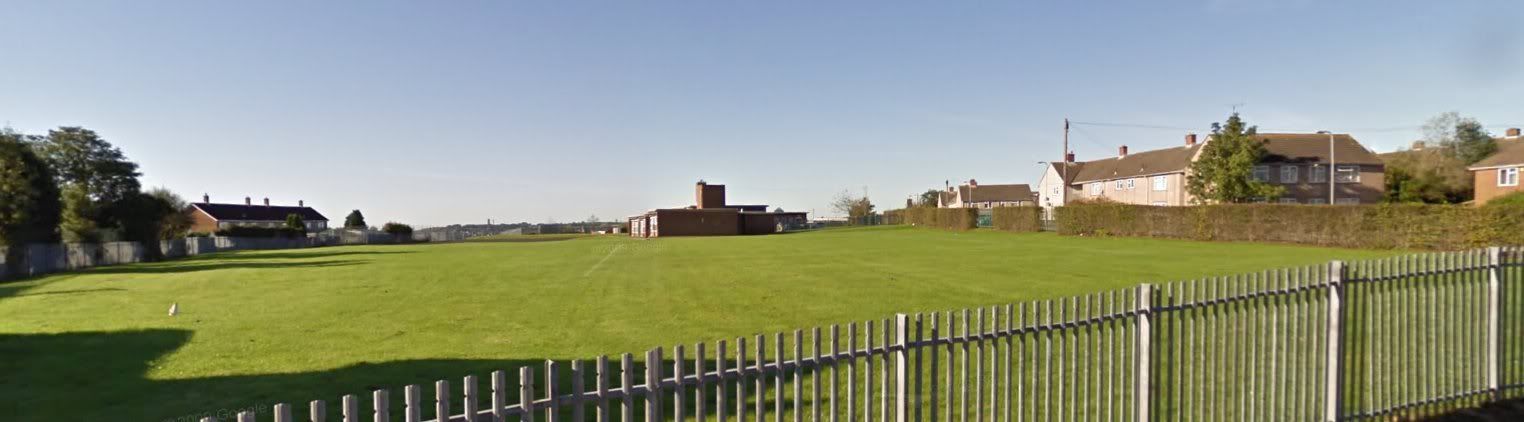
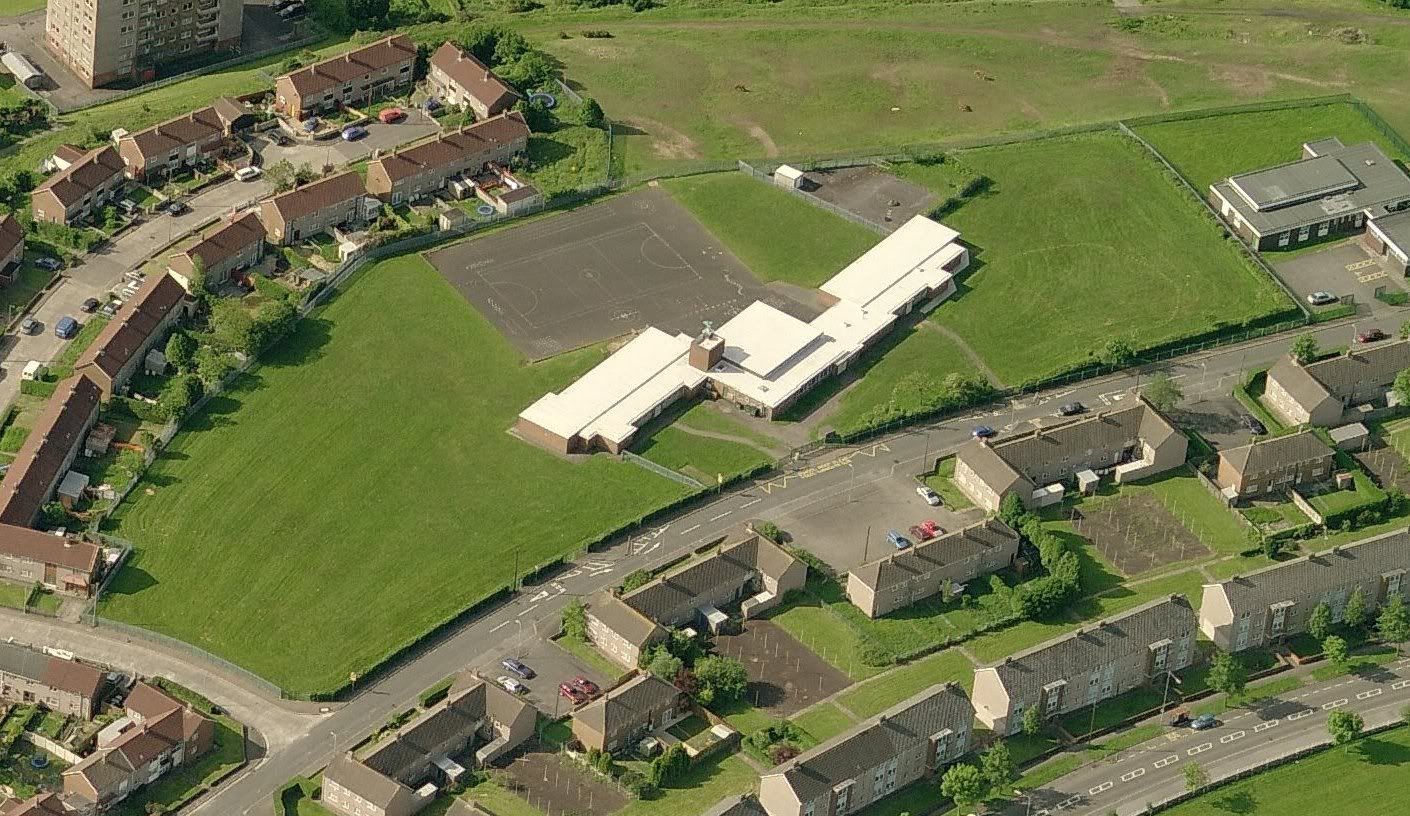


To my mind, these were each very obvious decisions. Llanmorlais is a smaller rural school, which sadly was in the same situation as many rural schools across Wales; but in the case of Cwm and Arfryn there are other schools very close by that have enough surplus spaces for the children concerned. No child is going to be very inconvenienced by having to travel what is only a few hundred metres further, and indeed for some children the journey to the alternative school will be shorter.

The decisions mean that there are now no outstanding matters awaiting Welsh Government approval (the proposal to amalgamate Pentrepoeth Infants and Juniors and convert Craig Infants to a small WM primary is still in the early stages of consultation) so I thought it would be good to see what possibilities these decisions open up for the much needed expansion of WM education in the city.
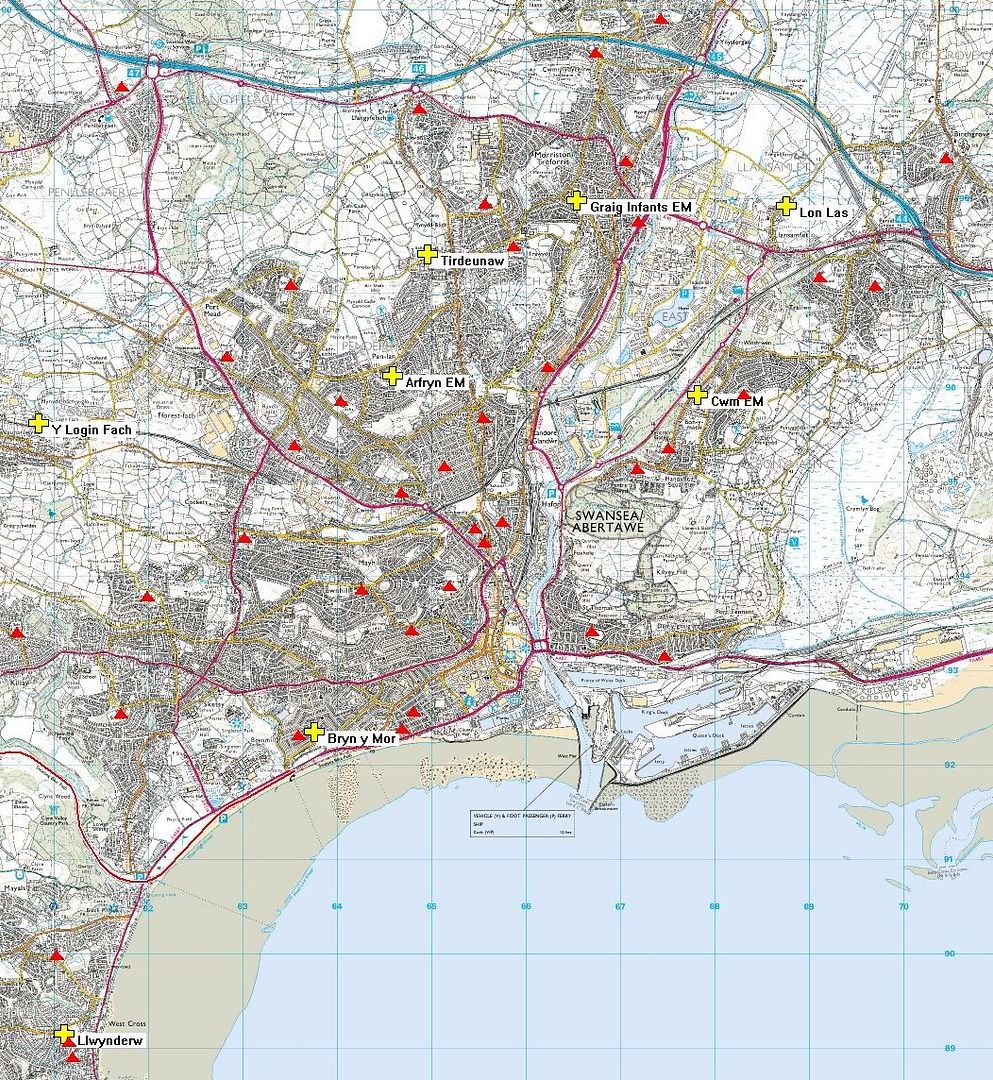
     

The map above shows the existing WM primaries in the Swansea urban area (there a a few outlying WM schools off the map) together with the positions of Craig Infants, Cwm Primary and Arfryn Primary. From the survey conducted by Swansea in 2007 we know that there is considerable unmet demand for WM education, and Heini Gruffudd of RhAG identified five areas of the city where new WM schools were needed in this document. These were:

•  Morriston (the top priority)
•  St Thomas/Bonymaen
•  Cwmbwrla/Landore
•  Townhill/Mayhill (not Mayals, it must be a typo)
•  Killay/Dunvant

So how do these areas of need match the school premises which will otherwise be vacant in September? Well, it's not 100% perfect, but there are some very good matches.

The most obvious match is that the Cwm Primary site will meet the demand from Bon y maen, and will make it very much easier for children from St Thomas, who would otherwise have to travel nearly twice as far to Lôn Las. All the details and numbers were in the previous post, so please click here to read it.

The picture for Morriston is more complicated. At present children from Morriston mainly go either to Lôn Las to the east or Tirdeunaw to the south west. This is an extract from the RhAG report:

Morriston is special because it has a large number of children attending Welsh medium school, without a Welsh medium school in the area.

The call for Welsh medium education in Swansea originated in Morriston in 1947, but although this is still the largest Welsh speaking ward in Swansea, there is still no Welsh medium school there.

The Council’s recent statistics show that nearby Welsh medium schools have the following numbers of children from Morriston ward:

Gellionnen ... 15
Lôn-las ... 51
Tirdeunaw ... 38
Felindre ... 2
Total ... 106

There is every sign than Morriston will be able to sustain a Welsh medium school successfully. 39% of people asked in Morriston said they wanted Welsh medium education for their children.

In total, there is the equivalent of seven primary schools in the Morriston area: Ynystawe, Glyncollen, Cwnrhydyceirw, Pentrepoeth Infant and Junior and Graig Infants, Llangyfelach, Morriston and Clase ... all are EM schools. So if 39% of parents want WM education, this means that about two and a half of these schools would need to become WM schools.

Swansea's recently announced plan is to make Graig Infants a WM school – which is effectively the "half" school (less, in fact, since its capacity is only 115 ... the equivalent of a 0.5 form entry school). Although that is a welcome development, it is obvious that it is a long way short of what is required. We also know that it won't happen quickly. Swansea are not envisaging it happening until September 2011, but it is almost certain that there will be objections which make it highly likely that it won't happen until September 2012. Things need to happen before then.

Looking again at the map, it should be obvious that Lôn Las is drawing pupils from both Morriston to the west and its more immediate catchment area to the east and south. If a new WM school is established at the Cwm building, Lôn Las will be able to provide more places for children from Morriston. Similarly Tirdeunaw is drawing pupils from Morriston to the north east as well as the areas to south, so if a new WM school is established at the Arfryn building, Tirdeunaw will be able to provide more places for children from Morriston.

That's not a complete solution, but it's half of the solution. The other half of the solution would be to either build a new WM school in Morriston, or to convert one of the other EM schools to a WM school. But the timescales for that are obviously much longer, irrespective of the matter of finding the money to build a new school.

-

Timing is an important factor. Both Cwm and Arfryn are going to be vacant from July this year. Because of the statutory procedures, it takes time to establish a new school ... even if there are no objections. A good example of this is what has happened in the Vale of Glamorgan. In November last year, they produced a very good plan for expansion of WM education, and intended to set up new starter schools for September this year as I mentioned here. But the red tape involved has meant that they have now had to delay things for a year, as detailed here. So it's fairly obvious that Swansea will not be able to establish two new WM schools in their own right at Cwm and Arfryn for September 2010.

But the key is "in their own right". Schools need things like boards of governors and head teachers, as well as their own budget ... so it is understandable and right that this isn't done at the drop of a hat. But there is a better solution.

Cardiff Council wanted to set up a new starter class at Gabalfa last September, but couldn't go through the procedures in time. So instead they set up a class at Gabalfa, but not as an entity in its own right. Instead they set it up as temporary accommodation for Ysgol Melin Gruffudd ... which just happened to be on a separate site. The very same could happen in Swansea. Cwm Newydd could be set up in the first instance as temporary accommodation for Lôn Las, and Arfyn Newydd set up as temporary accommodation for Tirdeunaw.

This strategy has other advantages. It means that Swansea can adopt a "suck it and see" approach to both. Because it is a temporary arrangement it can be set up for, say, two years in the first instance. If the demand proves to be real, then they can be set up as permanent schools in their own right, with plenty of time to go through all the statutory procedures. But if the demand isn't there nothing much has been wasted, because the school buildings would only have stood empty otherwise, and the current economic climate means this is hardly the right time for selling off the land. If that is Swansea's intention, they would get a much better price if they waited a couple of years.

-

So all in all, setting up temporary starter classes in the two vacated buildings—but administratively part of Lôn Las and Tirdeunaw respectively—will be a win-win situation for everybody concerned. But it is a decision that Swansea needs to take and announce quickly, because parents are already planning what primary schools to send their children to this September ... and they can't make the choice unless they know that these options are available to them.

This is an opportunity that is too good to be squandered. Councillor Mike Day is Swansea Council's Cabinet Member for Education, and his email is mike.day@swansea.gov.uk. He's a LibDem, but this isn't a party political issue and shouldn't be made into one. It is simply a matter of respecting what parents in Swansea want for their own children, something which all politicians would surely agree on. The proposals I've set out here are intended as a practical way of meeting the demand that Swansea Council's own survey has already identified.

Bookmark and Share

Western Rail Corridors in Ireland and Wales

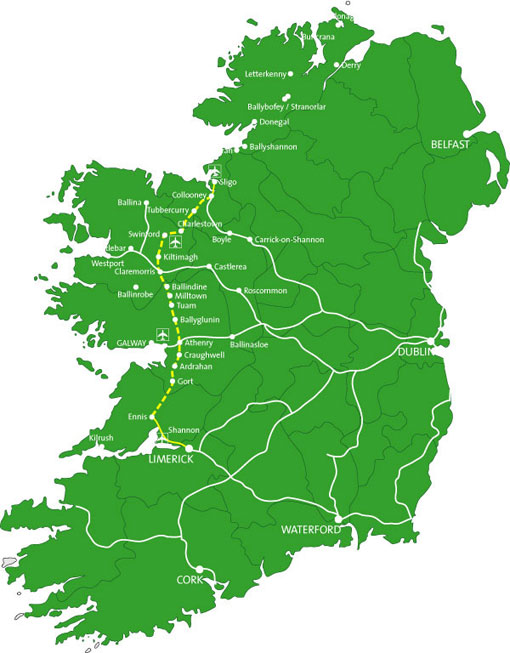
Having just posted about reinstating disused rail routes in Wales, I thought I'd check out what was happening on the west coast of Ireland, where there have been plans to reopen the route between Limerick and Sligo—the Western Rail Corridor—for some years. In 2005 it was included as part of a comprehensive €34bn transport infrastructure programme called Transport 21.

Serendipity was smiling. I found that the first part of the route has just been completed, and that the first direct service from Limerick to Galway ran just before Easter. The article in the Irish Times is here and this is the news item from TV3 on 29 March:


And I also found this 25 minute video of a programme from March last year called EcoEye, which should give some idea of the overall scope of the project, and even how it might be extended:


But for those who'd prefer to read about it, there's a Wiki article about the WRC here and a lot more information on the West on Track website here.


First, I don't think anybody could fail to be struck by the similarities between western Ireland and the western half of Wales. In the not too past Ireland, like Wales, had railways that ran north-south, but these were abandoned several decades ago, so now there is a rail network that radiates from Dublin in the same way as the British network radiates from London, leaving relatively good east-west links by rail, but nothing running in a north-south direction.

The second thing to note is that re-instating this railway will bring significant benefits to the area – both in terms of expanding the economy and in terms of environmental benefits to a predominantly rural area. That same argument must surely hold true for the western half of Wales as it does for western Ireland.

The third thing I would note is that the cost of reinstating the rail link has been extraordinarily low. The sections of rail from Limerick to Ennis and Galway to Athenry already exist, so this first stage involved reinstating 58km (36 miles) of track at a cost of €106.5m (£93m) including four new stations and associated works:

•  renewal of 36 miles of track, including all necessary fencing and drainage and installation of points and crossings at Gort and Ennis

•  a 90m platform with furniture, signage, shelter, Automatic Ticket Vending Machine, lighting, car park, PA, Customer Information Systems, help point and CCTV provision at Sixmilebridge, Gort, Ardrahan and Craughwell. These stations will also be accessible to the mobility impaired

•  At Ennis and Athenry stations, PA, Customer Information Systems, help point and CCTV has been provided

•  Repair and improvement work has been undertaken on bridges on the route to allow rail services to operate:
- modernised signalling systems
- improvement to level crossings, and elimination where practicable

Source

That works out at £1.6m per km or £2.6m per mile. To put that into perspective, the same sum of money wouldn't build more than three or four miles of motorway ... probably even less. The thankfully aborted M4 relief motorway would have cost £1bn, which worked out at £45m per km or £70m per mile.

-

Yet there are some things about what has been done in Ireland that cause me concern. First is the low speeds. It takes two hours to make the journey between Limerick and Galway but, on a clear road, the car journey would take 90 minutes. Although the track was already there, most of it had to be taken up and relaid, I would have thought that would be an opportunity to iron out some of the slower sections. But Irish railways are not particularly fast anyway, the train from Dublin to Galway takes about 2hr40m to cover 208km. That's only about 80km/h or 50mph. When we reinstate our railways, we should spend more to get a higher standard of track capable of supporting faster speeds.

There are some very wide variations in predicted passenger numbers. The video reports pointed to about 300,000 a year, but this report in the Irish Independent put the figure at only a third of that, meaning that the service would run at a €2.4m a year loss. As the service has only been running for a week, it's much too early to tell. However one encouraging sign is that Iarnród Éireann have upgraded the train from a two car to a four car unit, as reported here. As I mentioned in this post, other rail reinstatements have attracted many more passengers than were originally predicted.

-

My main reason for reporting this is to give us in Wales an idea of not only what can, but what is being achieved in a country that is very similar to our own. To look forward to the day when our own Minister of Transport can ride on the first train in fifty years to link Porthmadog to Blaenau Ffestiniog or Bangor, or Carmarthen to Aberystwyth.

In total, the WRC in Ireland is or 185km (115 miles) in length. The length of track it would be necessary to reinstate for us to get a west coast main line is 89km (56 miles) between Carmarthen and Aberystwyth, plus either 40km (25 miles) between the Cambrian Coast line and Pont Britannia or 18km (11 miles) between it and Blaenau Ffestiniog, although part of the second would be new rather than reinstated. So it's a smaller project, but just as important for just the same reasons.

-

Even though it is election time, I don't want to be overly political about this since the project in Ireland had support from across the political spectrum, although the more right wing Fine Gael seem to be lukewarm about future phases now. I would like to think that all parties in Wales could unite around a reinstated west coast main line for Wales ... but at the moment it seems that it isn't even on the radar of the other parties.

So much of this election seems to be about two parties making a big deal over what are really just minor variations on the same overall policies. On transport, for example, both the Tories and Labour are going to spend £16bn on a high speed line to Birmingham and more on extending it to Manchester and Leeds. The only difference between them is the exact route. If that sort of money can be spent by a UK government entirely in England, who else but Plaid is going to fight for our share of transport investment in Wales? Who else but Plaid has the vision to plan for it? We pay our taxes too, and our fair share of £16bn is 5% or £800m. A west coast main line for Wales would cost much, much less than that.

Bookmark and Share

I guess that's why they call it the blues

Wales' new NHS uniforms are being rolled out for the first time today in west Wales, and they are of course a good thing. But I was bemused by this description of the colours on the BBC website:

•  Hospital ward sisters/charge nurses and their deputies - navy blue
•  Clinical nurse specialist - royal blue
•  Staff nurse - hospital blue
•  Staff midwives - postman blue
•  Healthcare support workers - green
•  Nursery nurse - aqua green

BBC, 8 April 2010

I don't think anybody will have trouble with navy blue and royal blue ... but what on earth are "hospital blue" and "postman blue"?

Will be at all helpful to say to a woman who's just arrived at hospital after her waters have broken, "Just wait here a moment, the midwife will be along soon. You can't miss her, she'll be the one in postman blue"?

And yet, even though she will have no idea of what that colour might be, she couldn't help but marvel at the logic of putting the person in charge of deliveries in postman blue.

Bookmark and Share