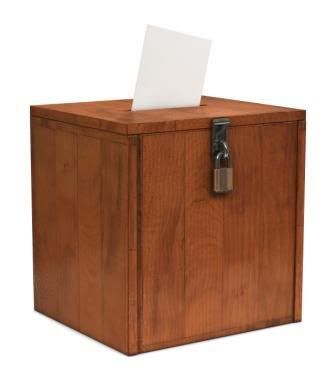
I trust some of you will remember this post in which I talked about how one town in Catalunya had set up a referendum on independence in spite of the fact that Spain was using all sorts of constitutional tricks to deny Catalans a vote on the issue.
Some people will have noticed that I have a feed from Nationalia on my blog list, and this has just flagged up the latest news on how a large number of communities in Catalunya are going to do the same thing en masse on 13 December this year, and how international observers will monitor the vote to ensure that it is fair. I had thought that it would be remarkable if fifty or a hundred communities did so, but 130 is a huge number, above all expectations.
For those of us who are interested there's a dedicated website which, thanks to Google Translate, we can read by clicking this picture:
OK, if that didn't work for you, try this instead.
It goes without saying that this could be one of the most momentous and significant days for stateless nations in Europe. Yes, a large majority of those who don't want independence are likely to simply boycott the vote, and it will not be officially binding on the Spanish State. But if the result is anywhere near similar to that in Arenys de Munt in September (96.2% in favour on a 41% turnout) it will become all but impossible for the Spanish to continue to deny Catalunya an official referendum.
It will also mean that the EU has to seriously consider how it would accommodate an independent Catalunya ... and that will pave the way for "internal enlargement" (to use the jargon) for countries such as Wales, Scotland, Euskadi, and Flanders to follow if and when a majority of people in these nations vote for it.
One of the comments on last week's posts by Penddu and myself mentioned that the Parliament for Wales campaign group submitted very similar evidence to the Richard Commission in 2003. As people tend not to read comments after a few days, I thought it would be best to address this in a new post.
PfW's formal submission to the Commission and a transcript of their oral evidence is here:
This is their PowerPoint presentation, together with a précis of what it says:
1. The first past the post system produces a noticeably lower turnout in seats where the outcome is not in doubt. These safe seats, nearly always Labour held, had on average a turnout of about 34%, whereas the turnout for seats where there was a close contest was 44%. This shows that many people do not vote if they think their vote will make no difference to the result, and it is therefore reasonable to conclude that turnout would increase by adopting STV.
2. The the difference between the percentage of votes cast and the percentage of seats won is called "disproportionality". Disproportionality would be reduced under the existing Additional Member System if the number of regional seats were increased relative to FPTP seats. Under the current system the disproportionality (in 2003) was about 10%, it could be reasonably be reduced to 5% but would never be completely eliminated because very small parties do not get any seats.
3. They then presented five different options for the number of multi-member constituencies in an STV system (some based on the existing Westminster constituencies and some on Local Authority boundaries) and compared them with AMS for proportionality. A 15 constituency division (the lowest number they analysed) came out best, but all STV divisions were better than AMS.
In terms of the division into multi-member constituencies, I would particularly note the point that fewer, slightly larger, constituencies tends to produce more proportionality. Therefore the 14 districts that Penddu suggested is going to produce better proportionality, though one or two more or fewer wouldn't make such a huge difference. Looking at all the options presented by PfW, I do lean more towards the Local Authority than Westminster constituency way of splitting things, and still like what Penddu has come up with.
-
As the person who gave the links commented, it does seem that there is a good deal of consensus about how STV might operate. The bigger question is to get it adopted at all. So in the remainder of this post I'm going to focus on one aspect of the various detailed proposals where I believe my view may be a little at odds with the consensus ... namely that I am in favour of slightly larger constituencies. The consensus probably stretches to six, and PfW said that more than six doesn't work so well ... though that conclusion does seem to be based on what works for Northern Ireland. So I'm going to make the case for the average to be six, but for individual constituencies to vary from four to eight. Perhaps others would like to give me some feedback.
There are two major arguments against larger constituencies: the first is that geographical size might make it difficult for somebody at one end of the constituency to think they had anything in common with people at the other end. The second is that a greater number of seats gives smaller, and sometimes undesirable, parties the opportunity to get elected.
Geographical size
If we look at the various splits suggested, the geographically large constituencies are Gwynedd/Môn, Powys and Ceredigion/Pembrokeshire. However none of these has a large number of members. These three districts are all at the bottom end of the range with 4 or 5 seats in an 80 member Senedd (3 or 4 in a 60 member Senedd).
The crux of the issue is that the districts do not all have to have the same number of seats. It is only if we insist on a model in which all districts return an equal number that we get a problem.
What constitutes too many seats?
The balance to be drawn in any system of proportional representation is between proportionality and an individual member's relationship to the people s/he represents.
However, systems with voting units that return a large number of members tend to operate a threshold, to prevent the very real problem of small, unrepresentative parties getting a seat in the legislature. To give two examples, both Germany and the London Assembly set the threshold at 5%.
In a constituency system there is no defined threshold, but the number of members does tend to set its own threshold. The largest constituency I proposed would return eight members, so it is worth looking at a parallel. The NW England European constituency returns eight members, and this was the result in June this year:
The final seat was won with 8% of the vote. Much of the argument about larger constituencies does not centre so much on the principle, but on the specific reaction to the possibility of a particular party (in this case the BNP) being elected. People tend to argue against larger constituencies not so much on the matter of principle, but because in practice a party like the BNP might be elected.
This, of course, is a very tricky issue. In terms of democracy we want all parties to be treated equally, no matter how obnoxious we think one of them might be. So we must find a way of making sure that all parties are treated scrupulously fairly, but at the same time deal with the problem of parties that polarize opinion such as the BNP. However the answer is not the size of the constituency per se, but the electoral system itself.
Going back to the NW England constituency, this video gives a very neat explanation of how the current voting system (it applies to the regional element of the Assembly elections as well as the European elections) works:
In essence, each person only has one vote, and must choose one party (or person) and one party only. However this does not equate to the way that people actually think. I would suggest that each of us has a range of views something like:
• what I really want
• what I'd be quite happy with
• what I'd put up with
• what I'd be unhappy with
• what I definitely don't want
In my opinion a fair voting system must reflect that range of opinion. However as the author of BlogMenai said here, adopting STV deals very effectively with the problem of the BNP. But it does this not by arbitrarily singling out the BNP and making it a special case, but by relying on the fact that although 8% of voters in NW England voted for the BNP, the big majority of people who didn't vote BNP would put the BNP in the "what I definitely don't want" category. I would venture to suggest that very few people would put other parties in that category, so that STV would almost certainly have resulted in the Greens picking up second, third or fourth choice votes, and therefore getting the final seat ahead of the BNP.
-
Finally, on the subject of large constituencies, we effectively already have constituencies of between 11 and 13 members in Wales. North Wales comprises 9 FPTP and 4 additional regional seats. In 2007 the final seat was won with 6.64% of the regional vote. The BNP got 5.37%. In other words it would not take much for the BNP to get a seat in North Wales under AMS, but if we adopted STV it would be harder for them to get a seat because the majority of voters would not give them any subsequent choice votes.
The Secretary of State for Wales (Mr. Paul Murphy):
... I agree that the [All Wales] Convention should be open to everybody in Wales to put their points of view. It is, in effect, testing the water. If the Convention believes that a referendum is necessary, the people of Wales will decide.
No ifs, buts or maybes. Just a simple commitment that if the AWC recommends it, the people of Wales will get to vote on it.
Paul Murphy might well regret having said it, but say it he did. So will he now stick to his word, or go back on it?
More importantly, he said it in his capacity as Secretary of State for Wales, thus commiting the Labour government in Westminster to hold a referendum if that is what the AWC recommends.
Tomorrow the Westminster Government is due to announce the next step in its plans to expand nuclear power in England and Wales. It won't do so for Scotland because Scotland, unlike Wales, can decide its energy policy for itself.
Nuclear power can only be made to happen if it receives very large subsidies—either directly, or indirectly in the form of guaranteed minimum pricing—and if the full costs of dealing with nuclear waste are not taken into account. As no workable solution has yet been found for dealing with nuclear waste, these costs cannot be adequately taken into account, by definition. Also as most of the costs of nuclear clean-up are incurred after the plants have stopped producing electricity, there is nothing to prevent private companies simply reneging on any obligation they might make now to clean up their future waste. As we've recently seen with railways (though on a far smaller scale) National Express simply walked away from a 14 year franchise to run the East Coast line because they decided they could no longer afford it. There is nothing to stop a private nuclear power producer doing exactly the same. All this government will be doing is giving private companies profits for as long as there are profits to be made, but leaving future taxpayers to bear the cost of any losses.
Over and above that, security is a large hidden element in the cost of nuclear power ... and it will be something that will only nominally be paid for by the nuclear industry itself. Ultimately we, as taxpayers, will have to pay the vast bulk of the cost for security, intelligence and, ultimately, armed force that nuclear power necessitates. Those additional costs will never appear on any balance sheet or business plan for a new nuclear power station.
Those arguments are well known ... and will be equally well ignored
by the current UK government. The purpose of this post is to highlight
a higher and even more insidious cost.
I doubt that many people will have heard of the Office for Civil Nuclear Security. But this, as reported today in the Sunday Herald, is the sort of thing that it is now going to do in a bid to reduce the security risks that surround nuclear power:
Thousands of staff at UK nuclear power stations have been told to spy on the private lives of workmates and inform on colleagues who might be “vulnerable” to blackmail or bribery by terrorists intent on getting access to Britain’s nuclear secrets and stocks of weapon-grade plutonium.
As part of the “security measures” nuclear power station staff are being asked to keep a watch on their colleagues’ love lives. They are also being told to keep tabs on colleagues they think may be using illegal drugs and even those travelling abroad.
However, it gets worse:
But OCNS director, Roger Brunt, made it clear that he wanted to go further.
He says: “I would like to see all employees develop an awareness of how they can help identify and provide support for individuals holding a vetting clearance who may become vulnerable, for example, as a result of a change in personal circumstances.”
Mr Brunt pointed out that close colleagues were likely to be the first to notice any “unusual behaviour”. A system has been put in place requiring “the notification of relevant events such as a change of partner, new co-habitees, and travel overseas”.
Travelling abroad could make nuclear employees “the target of an attempt to gather intelligence”, Brunt cautioned.
If I were to ask whether this is the sort of thing people in Wales, and Ynys Môn in particular, would be prepared to tolerate, it would be a purely rhetorical question ... of course we wouldn't. Is it the business of any agency of the State—let alone an employer—whether you have just broken up with your partner, or who you are sleeping with, or where you take a holiday? This is something straight out of the old Soviet Empire.
Does this constitute unnecessary intrusion into people's lives? Dare we go so far as to call it spying? Don't be so silly, of course it isn't. As Mr Brunt said, it's
not spying but a natural caring response
This is part and parcel of what an expansion of nuclear energy will actually cost us. It is far more than money that could be better spent on less dangerous ways of producing electricity; it is far more than pollution that no-one knows how to clean up ... though both those are surely disqualifying weaknesses in themselves. Nuclear power necessitates the increasing erosion of basic rights and freedoms such as privacy. It has to because its dangers are so high.
Well, it's finally happened. The Tories have got off the fence and said what they think about the referendum:
There are two sides to this story: what's been going on within the Tory party itself, and what the right response to it should be.
John Osmond has provided us with one of the best insights into what has been going on behind the scenes in the Tory party in this post on the IWA blog. It is worth reading. Seriously, please click the link and read it before you read the rest of this post.
Essentially Lord Roberts' report on the position that the Tories should adopt on devolution provoked very mixed reaction in the Tory ranks. So much so that the Tories refused to publish it at all. On one side there are the Tories that have come round to embrace devolution and who want it not so much to go further, but want to tidy up the mess that we currently have under the GoWA 2006 so that our Assembly has the ability to pass laws on those matters for which it already has administrative responsibility. That's all the referendum is going to do. The most unequivocal of these—in the blogosphere, at least—has been Glyn Davies, though his view is probably shared by the majority of Tory AMs, including Nick Bourne as leader. On the other side are the Tory MPs. The most ferocious anti-devolutionist is of course David TC Davies, but David Jones probably runs him close.
Each side has been trying to bend Cameron, who couldn't really be bothered either way, to their point of view. The antis' position was to put things off. They wanted a commitment that a referendum wouldn't be held in the first term of a new Tory government. This in itself speaks volumes: it can only mean that the antis feel sure they will lose. Public opinion has been moving in only one direction over the past two years or so. If there was the slightest chance of the vote being lost they'd have wanted the referendum as soon as possible, while things were still in the balance. As that point has now been passed, the only thing left is to hold the inevitable off for as long as possible ... which, strangely enough, is exactly what Peter Hain wants too.
The pros wanted Cameron to adopt a compromise position: instead of five years' delay they wanted to get it down to two. That actually wouldn't have done much good, since the Tories would be in mid-term and therefore at their most unpopular.
That's how things look from the Tory side, but what are the rest of us to make of it? I'm bound to say that one thing Peter Hain said in the ITV interview was quite right. In fact, he seems to have been quoting directly from what I've written in this blog! What on earth is any promise from Cameron actually worth? Circumstances are bound to change, and it won't be too difficult for him to use any change in circumstance as a pretext for changing his mind. "Events, dear boy, events" ... as old Etonians have been known to say.
As the interviews show, Cameron couldn't give a fig one way or the other. But one thing is going to change: the Tories currently only have three MPs in Wales, after May 2010 they may well have ten ... and what's the betting that the majority of those ten will be as against a shift of legislative power from the Westminster to which they've just been elected as some of the current crop of Labour MPs are? Three MPs can be ignored as cranks, it's rather harder to ignore ten, especially if they're only sitting a few yards from you in the Commons. So Cameron's position could easily shift ... especially if he sees an electoral advantage in it.
Another factor is simple pride. Most Labour politicians in Wales will very loudly claim that they were the party that gave us devolution ... although Peter Hain does seem very much more fond of using the word "I". So Hain is as grumpy as hell about what Cameron has said. This is how he put it to the Western Mail:
If Cameron’s true intentions were indeed for the best interests of devolution in Wales, he should have waited to consider the widely-anticipated recommendations of Emyr Jones Parry [Chair of the All Wales Convention] due to be published in less than two weeks.
This is no more than a Cameron headline-grabbing stunt.
Odd, isn't it? He thinks that Cameron should have waited until after the AWC had reported. But has that stopped him taking every opportunity he could get his hands on to pump out his own opinion, so as to try and undermine what Sir Emyr's report will say? Once again, Hain's own hypocrisy on this issue has become so "up close and personal" that he can't see the wood for the trees.
But let's use this. The very last thing in the world that Hain wants is for the Tories to able to say that they delivered legislative devolution to Wales ... that they were the ones that took the dog's breakfast of the current LCO system and let us move on to something more simple, more straightforward and more easy to understand. And not only that, but something that is less wasteful and therefore less expensive because it will mean that two different sets of politicians will not be able to spend years covering exactly the same ground on every single area of new legislation.
So, since people like Hain are impervious to even the most basis concepts of democracy—namely that it is not for any party to "give us" the right to make laws about things that concern Wales alone—let's pander to his ego. If he so wants to be remembered as the person who "gave us" devolution, then he still has the chance to do so in the few months he has left as Secretary of State for Wales.
-
Of course, if any Labour MPs prefer not to think about it in terms of Labour's largesse towards the people of Wales, they just have to think about it in terms of whether the Tories can be trusted. Either way, the answer is the same. Do it now, while you still can.
Thanks to one of David Cornock's tweets, I watched the recording of a debate on the probation service that was held at Westminster on Wednesday.
Elfyn Llwyd managed to secure the debate (which is in itself no mean feat) and it went a long way to highlight just how poorly resourced the service is, and the pressures on those who work in it. A major element in the debate was a thirty page document cataloging some the pressures on the service and in particular how little time officers are able to spend in contact with offenders, and that a far larger part of their time is tied up in administration.
The debate got rather pointed, for the government had been asked if such a document was available, and had said that it wasn't. It's quite "unparliamentary" to say that the government is untruthful, so the term settled on was that the government had "unintentionally misled" Parliament. Maria Eagle's body language at that point spoke far more eloquently than could ever be recorded in Hansard. But she was taking the hit for the government, she herself has only been prisons minister for a few months ... though that few months has co-incided with the government changing its mind about building a 750-or-so place prison in Caernarfon.
It was good to see Elfyn take a lead on this. As a barrister with a lot of experience in criminal cases, he is in a good position to know exactly what he is talking about. Prisons are overcrowded, so whenever the pressure on numbers grows the "safety valve" is to release those serving short terms and put them onto the hands of the probation service. But there is no such fallback for the service, so if they get overloaded the less serious cases have to get dropped completely.
-
This is a subject on which it's best not to make any party political points. People in every party are all too well aware of the problem, so it is not really a political policy problem, it is more of a structural problem. From my point of view the NOMS (National Offender Management Service) for England and Wales is much too big to be able to effectively link with the other services—social services, education, health—which need to work together in order to minimize the risk of re-offending. Those other services are administered at a more local level, so to my mind it would make sense for NOMS to be dismantled and re-constructed as smaller units.
A unit the size of Wales would be just right.
Update - 18:00
Or perhaps that should be backdate, since I don't know how I missed this interview. For those who don't want to listen to a one-and-a-half hour debate, this sums up what was eventually said quite nicely:
But it's still worth seeing Maria Eagle getting tetchy ... and what led to her finishing the debate by calling Elfyn an irritant. This was his reply:
The Minister's description of me as deeply irritating is probably the best compliment I have had in my political life, so I am grateful to her.
National Theatre Wales has taken another huge step forward with its official launch today, as reported here:
National Theatre Wales to launch with global webcast
After years of waiting, Wales will finally get its own National Theatre today.
... Although exact details of the programme will not be unveiled until the launch, McGrath has revealed that NTW won’t be shying away from any challenges. There will be 12 productions during the launch year, which runs from March 2010 to spring 2011. And they will be staged throughout Wales.
Like the National Theatre of Scotland, NTW does not have its own performing house so the company will take productions to existing theatres as well as work at site specific locations.
... After years of talk, detailed plans were finally announced in 2007 for NTW and the Welsh Assembly Government invested £750,000 in preparatory work. Now the company is receiving £3m from WAG during the first three years. NTW will run alongside the Welsh language company Theatr Genedlaethol Cymru.
It will be another few months before the first performances, but to get a taste of what's to come why not take a look at their website.
A good question to ask would be why it has taken so long to set up an English-medium National Theatre, when we have had the Welsh-medium Theatr Genedlaethol Cymru since 2004. The answer is in a post I wrote on the WalesOnline forum a couple of years ago:
The (English-medium) National Theatre of Wales
I'm pleased to see that the first steps have been taken to set up an English-medium National Theatre of Wales.
If we really are committed to achieving a fully bilingual Wales, this means being committed to English just as much as Welsh. We have a fine tradition of English language literature and drama here in Wales, and it would be quite unfair to sideline that at the expense of Welsh. We have our Theatr Genedlaethol Cymru ... an English equivalent is long overdue.
There has been talk about such a project for a long time, but no political commitment to make it a reality. But it is part of the One Wales Agreement, and Heritage Minister Rhodri Glyn Thomas is mandated to make it a reality.
-
Now, just in case you are wondering why we get it only now (though I daresay it will take another year or so to become a reality) when the Welsh version has been up and running since 2004, you just have to look at the manifestos for the May election.
Plaid wanted it, Labour didn't. That's why we didn't get it before now. But we managed to negotiate it into the One Wales Agreement.
Plaid Cymru supporting English isn't the sort of picture our opponents want to paint of us ... but the reality is somewhat different, isn't it?
We are just as committed to supporting English as we are to supporting Welsh.
This blog has been set up to complement the Syniadau Forums.
Much of what will appear on this blog will also appear in the Syniadau Forums, but the emphasis on this blog is slightly different. The forums are focused more on the structures and institutions that Wales will need to develop in order to become a successful independent nation, arranged on a subject by subject basis, but the blog will have more of an emphasis on day to day political news and developments.
People are welcome to reply or leave comments either here or on the Syniadau Forums. If anyone wants to initiate a new subject they are very welcome to do so there.