New Welsh-medium schools in Swansea

A few years ago now, Swansea was one of the first local authorities to conduct a survey asking whether parents of very young children wanted them to have a Welsh-medium education when they reached school age. It wasn't particularly publicized at the time and I first heard of it almost a year later, when it was mentioned in this news release on the RhAG website. The headline figures were that 28% of parents wanted to send their children to WM schools no matter how far they had to travel, but that this figure would rise to 38% if a WM school were available within easy travel distance.

I wrote about it on the WalesOnline forum, crunching some numbers from documents on the Swansea website to conclude that, even using the worst case figures, Swansea would need to open some new WM schools:

The number of children in primary education in Swansea is set to reduce from the current 17,611 to 17,364 in 2011 ... an overall reduction of about 250 in three years. This means it should be possible to close a couple of English-medium schools (because the total demand for EM education will fall by 700 in the same three years and Swansea already has more than 3,200 surplus primary places) and convert them to WM with minimal inconvenience.

MH on WalesOnline Forum - 16 September 2008

A few months later, in March 2009, Heini Gruffudd of RhAG published this paper on where new WM schools were most badly needed. This was no doubt in response to the fact that Swansea themselves had not come up with any public proposals for new WM schools ... even though the original survey had been done in 2007. It was good that Swansea conducted the survey in the first place, but it is a pointless exercise unless they are then prepared to act on its findings.

-

In the meantime Swansea, along with most other local authorities in Wales, were faced with a huge number of surplus of spaces in their schools, meaning that some schools would need to be closed. They put forward proposals for closing three primaries—Cwm, Arfryn and Llanmorlais—in March 2009, but because of objections each of these was eventually referred to the Education minister in the Welsh Government for a final decision. On Friday, Leighton Andrews made the first of these decisions, as reported here:

     Cwm School closure is confirmed
     Welsh Assembly Government agrees to close Cwm Primary School

As might be expected, the people who objected to the proposal won't be happy with the final decision. But the fact is that Cwm Primary is only about 300m away from Cwm Glas Primary, which is itself just about large enough for the children from both schools. The decision was inevitable.
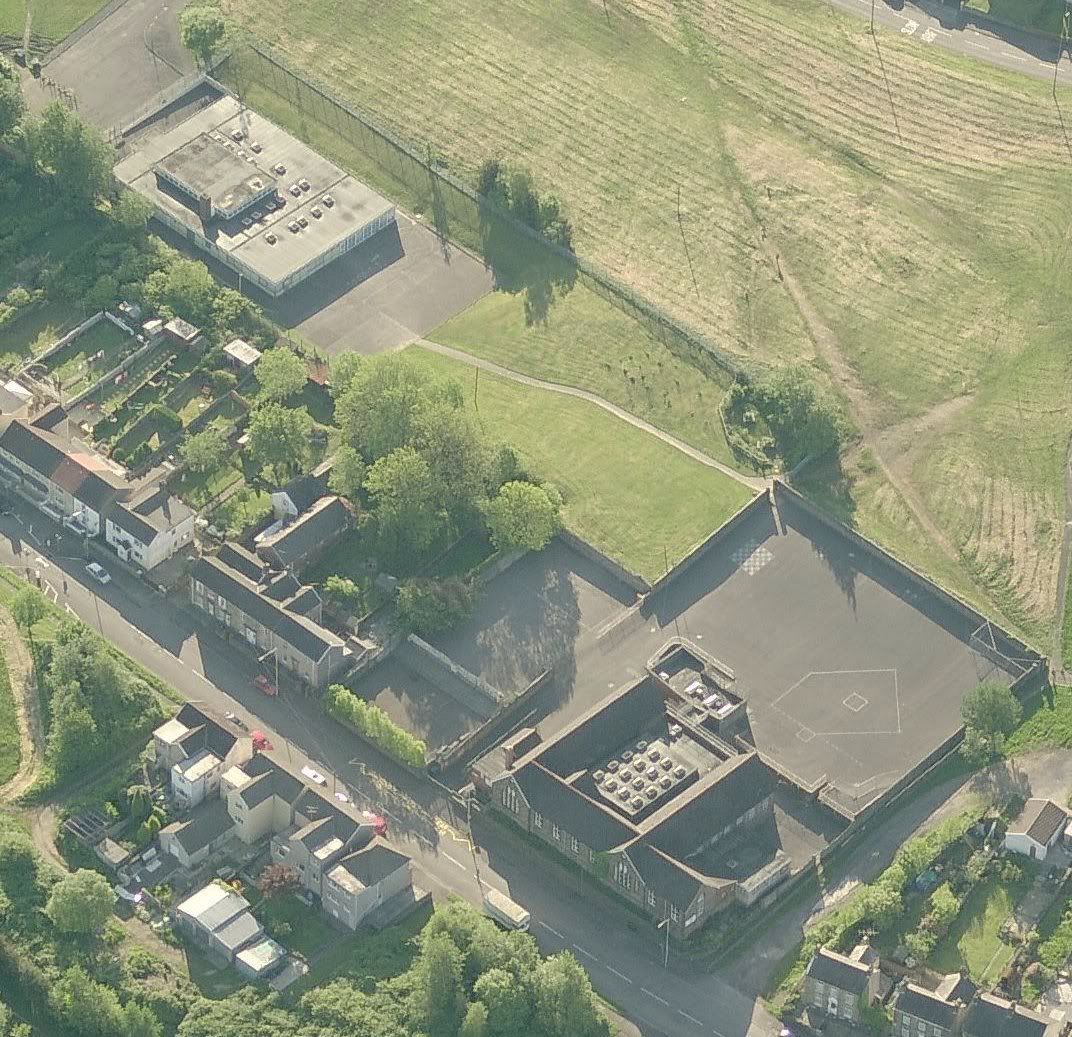
     

The picture above shows Cwm Primary, Cwm Glas Primary is below.
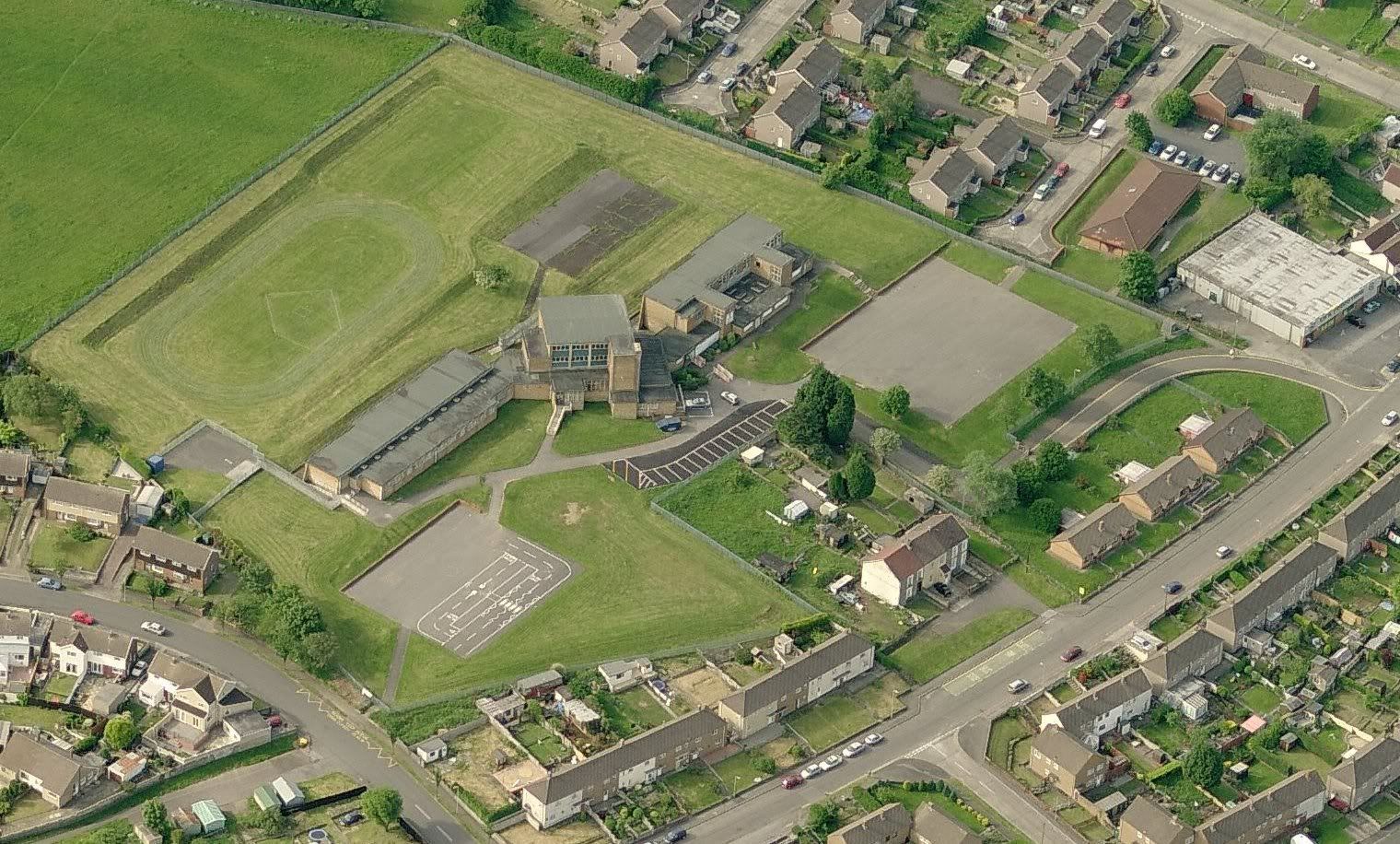
     

No school closure decision is easy, but what has happened does open up a solution to Swansea's problem of where to open at least one much-needed WM school. At present there is no WM school at all in East Swansea, at least not until you get as far north as YGG Lôn Las in Llansamlet. The RhAG report I linked to shows that a considerable number of children from Bon-y-maen have to travel 2km or more to get to YGG Lôn Las, and that some even travel 6km or so from St Thomas:

74 children from Bonymaen attend Lôn-las and 20 from St. Thomas. 9 children from St. Thomas attend Bryn-y-môr. 103 children from these areas suggests that there are sufficient numbers here to support a Welsh medium school, and quick growth could be anticipated.

So we have the bizarre situation where some parents are up in arms because their children will have to travel a maximum extra distance of just over 300m to get to Cwm Glas, while there are easily enough local children in Bon-y-maen who are currently having to travel many times further by bus or car to get to the closest WM school, but who would be able to walk if the Cwm buildings were to become a WM school. And for the community as a whole it's surely better for the buildings to remain in use, for they will be just as much available for community use outside school hours as they are now. To me, it's an obvious solution to a pressing problem.

Cwm Primary is closing simply because the numbers wanting EM education do not justify two EM schools with so many surplus places in such close proximity to each other ... but its closure opens up the opportunity for Swansea to provide more WM places in accordance with the wishes of the 28% of parents that want it for their children.

-

At just about the same time as the closure of Cwm was confirmed, Swansea announced some other plans for the expansion of WM education:

More Swansea school closure plans announced

As part of the council's plans to shakeup education in the city Pentrepoeth Infants and Juniors, and Graig Infants schools will close and a new all-through primary school will open on the Pentrepoeth sites.

... If the plans are given the go-ahead, the council wants to open a Welsh Medium school on the vacated Graig school to meet what councillor Mike Day, cabinet member for education, called "the continually growing demand for Welsh Medium education in the area."

... Current figures from Swansea Council show that there is enough capacity in a new primary school incorporating facilities at Pentrepoeth infants and juniors to include children from Graig infants.

Graig Infants currently has 51 full time pupils, but capacity for 113
Pentrepoeth Infants has 98 pupils with capacity for 123
Pentrepoeth Juniors has 239 pupils and capacity for 276

Evening Post - 6 March 2010

As the figures show, the children currently at Craig infants can be accommodated at a combined Pentrepoeth Primary School. It is just over 600m away. The current Graig Infants is more than half empty and although, as the picture below shows, it isn't big Morriston has the most crying need for more WM provision. There are no WM schools in Morriston, but last year there were over a hundred children from Morriston travelling outside the area to get a WM education.
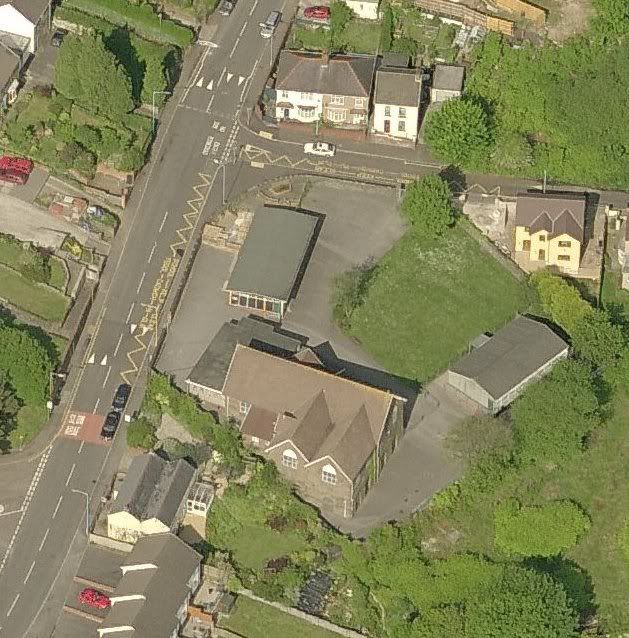
     

So this isn't really a closure. Converting Graig Infants to a small WM primary will comfortably fill what is currently a very under-used school with local children. To me, it again seems obvious. It's perhaps smaller than would be ideal ... but Swansea aren't coming up with any other ideas.

-

In conclusion, Swansea conducted their initial survey in 2007, but no new WM schools have been opened in response to that survey (Llwynderw was already under construction). Therefore plans for the next few WM schools are long overdue.

The decision to close Cwm opens the very real possibility of a new WM school being set up in September this year. That is an opportunity that must not be missed. Swansea's intention is for the Pentrepoeth/Graig reorganization to happen by 2011. That's possible but not definite, because the decision making process can take a long time if the matter has to be referred to the Assembly.

And there are some other possibilities ... but they will depend on the outcome of decisions which have not yet been taken.

Bookmark and Share

Guto Bebb

Not so long ago Guto Bebb, the Tory candidate for Aberconwy, wrote a couple of posts about tax and borrowing powers for Wales. In the first he said:

The fundamental dishonesty of the debate surrounding Barnett in Wales is the fact that Plaid Cymru continually make wildly exaggerated claims about the unfairness of the current formula without ever attempting to explain what would happen if their stated aim of an Independent Wales was to be achieved.

Think about it. No Union = No Barnett Formula. Plaid Cymru claim that the current shortfall is hugely unfair to Wales. The current shortfall has been identified by Holtham as spending of £112 per head via the Assembly block grant rather than the £114 per head which Holtham thinks it should be if the needs based analysis used to distribute money to the English regions was utilised here in Wales. What would be the shortfall if the stated Plaid Cymru aim of independence was achieved? They never seem to be willing to respond to that question and their Honorary President conspicuously failed to address the issue last night when I made these very points.

The lesson is clear. When Plaid talk about Barnett ask them what they would do to make-up the shortfall if Barnett did not exist because that is the ultimate aim of their policy of independence.

Not much that Guto writes is that relevant, but this included several references to Plaid and posed some direct questions. So I replied with a comment based around what I said in this post:

     Holtham: Taxes and Barnett

I checked his blog again today as a result of reading this post by Alwyn ap Huw, and saw that Mr Bebb had simply deleted it. It appears he's very good at throwing out accusations, and of course he's quite entitled to put his fingers in his ears so that he can't hear any reply ... but it is something else to stop anybody who reads his blog seeing the reply.

Aberconwy is going to be a tight contest between Plaid and the Tories, but one that I think Phil Edwards will win. One of the things that will swing it for Plaid is that the Tories do seem to have made a rather unfortunate choice of candidate.

Bookmark and Share

The Message from Llandudno


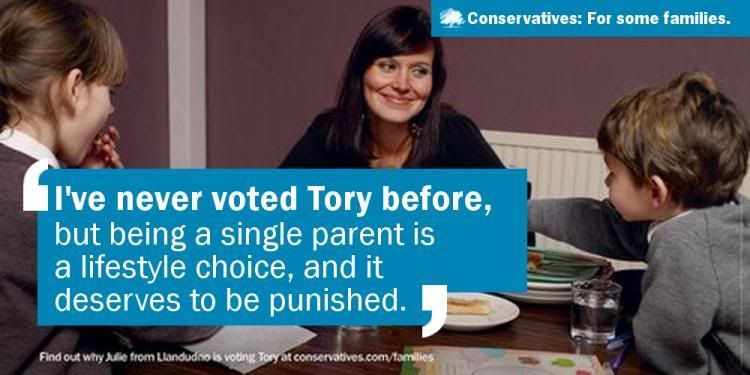
Sadly not mine, but one of my favourites. And particularly appropriate as their conference was held at Llandudno this weekend. The Tories may get a few things right, and I'll give them credit when they do ... but they get much, much more wrong.

Actually, there's an ulterior motive for this post. If I've set things up properly, the new button below should enable people to retweet any posts they particularly like. If it doesn't work, please let me know.

Bookmark and Share

Cameron Comes Clean

When David Cameron made his "Broughton Declaration" in November a good number of people thought that he had committed the Tory party to backing a request for a referendum on primary lawmaking powers. Since then I have constantly reminded people that he only said he would not stand in the way, and that he specifically said that there would be a free vote on the issue. My aim was that one of two things would happen: either that it would galvanize the Labour Party into getting the Referendum Order through while they were still in control of the process, or that the Tories would come up with a more definite commitment.

Sad to say, the first doesn't seem to have worked. The Wales Office appears to be committed to sitting on their hands and doing nothing about it. But David Cameron has rather pleasantly surprised me. This is what he said yesterday in an interview on WalesOnline:

The party has previously said it will not "stand in the way" of a referendum, but in a wide-ranging interview as the party begins its Welsh conference in Llandudno, the Tory leader went much further.

"We have said very clearly that if people in Wales want a referendum on law-making powers, we will allow that to happen," he said. "Not just 'we won't stand in the way', if we're the Government we will make that happen if people ask for it."

Despite the rather silly pretence that this is what he said all along, there is a huge difference between allowing Tory MPs a free vote on the issue and him now saying that a Tory Government "will make it happen". It is a very welcome development, although it does seem rather odd for him to have added "if people ask for it". There is the little matter of the National Assembly already having asked for it ... unanimously. So perhaps we should just put this down to him not being quite up to speed on what happened only a few weeks ago.

-

This statement is game changing, because it contains the vital element of commitment that was lacking in what he said before. It's game changing because it takes away the last hopes that Peter Hain and the Welsh Office have of delaying the referendum. It's now definitely going to happen one way or the other.

So it will be interesting to see what effect Cameron's new statement has on Peter Hain. The Secretary of State has two important decisions to make: the date of the referendum and the exact wording of the question. The choice is either to leave it for a new Conservative SoSW to decide, or to take the initiative and make the decision himself. Will Peter Hain trust the Tories to do it for him?

-

On the subject of the date, Cameron was less certain:

"The only complication at the moment is that we don’t know exactly when the election is going to be, we don’t know how far [Welsh Secretary] Peter Hain will have gone with the consultation, so it is difficult to answer that," he said.

"But people should be in no doubt that if the Welsh people through their Assembly want a referendum we will grant it, we will name the date and it will happen.

"I can’t give any more detail today because I don’t know whether Peter Hain will, for instance, try to make a decision before the election. I think it’s unlikely, because decisions have to go through the Lords and the Commons and all the rest of it."

But this uncertainty is justified. If Hain can't bring himself to lay the Referendum Order in time for it to be passed before the election, the new Tory SoSW will have to do it either for the first time, or again. If s/he has different ideas about what the question should be (and it should be noted that although the Electoral Commission must be consulted about the wording, the final decision remains with the SoSW) it may well not be possible to hold the referendum in October 2010.

There is also a chance that Peter Hain will use uncertainty about the outcome of the Westminster election as another excuse for not making a decision while he still can. Yes, it is possible that a hung parliament may result in another election at about the same time ... and of course nobody would want that. However the date of the referendum can [Schedule 6, 4] be changed if the new SoSW and Welsh Ministers agree (and if neither the Commons or Lords object). So there is nothing to stop Peter Hain setting a date of 21 or 28 October in the Referendum Order, for it to be approved, but for the date to be changed later if an October general election proves necessary. The next ideal date would be March 2011. It need not necessarily be at the beginning of March because the date of the Assembly elections can [Part 1, 4] be put back by up to a month to allow a decent interval between the two votes.

In short Peter Hain has no excuses left. How embarrassing would it be for him to sit out his last few weeks as SoSW doing nothing, and for the Tories to deliver the referendum instead? And what would that do for his party's credibility in the upcoming election?

Bookmark and Share

Enviroparks ... a better way to deal with waste

I have to admit to being dismayed by two posts yesterday from Dafydd Trystan Davies on the proposal for a waste handling plant at Hirwaun by Enviroparks.

     Enviroparks - open letter to councillors
     If you tolerate this your children will be next

As a society, we produce a lot of waste and need to reduce it. The first way of doing it is to reduce it at source, in particular to reduce unnecessary packaging, and to make the sort of goods which last and can be repaired or upgraded rather than thrown away. The second way is to increase the amount of waste we recycle. I'm sure there is broad consensus that we need to do both. The first is something that is rather harder to do because we buy products from all over the world, but the second is something we can deal with at local and national level. We have set ourselves targets for recycling, and we are gradually increasing the amount we recycle as a result. That's good.

But, even after doing those things, we are still left with lots of waste. The traditional way of dealing with it has been to put it into landfill sites. However we cannot continue to do that on the scale we have been doing, and there are now considerable disincentives to doing so in the form of landfill taxes which rise steeply year-on-year.

Because of that disincentive, we need to look for new ways of getting rid of waste, and the next obvious solution is to burn it, and to generate electricity from it. This explains why there has been a spate of planning applications for waste incinerators not just in Wales, but everywhere. Now yes, I would agree that burning waste is a better option than burying it. But it is not a good option ... it is simply the "next worst" option.

The reason it is bad is because it is very difficult, if not impossible to ensure that what is burnt can be burned cleanly. Therefore waste incineration produces a host of nasty emissions which are dangerous to people's health. The companies that operate such incinerators are also put in the invidious position of producing less electricity if they filter out the more dangerous waste before burning it, and of being left with waste that they can only get rid of by putting into landfill sites. They lose money if they don't burn it, and it costs them money to get rid of it. So of course the temptation will always be to burn it.

-

Now, rather than talk only in general terms, let me make things more specific and more local. In the valleys next door to Cynon we have two examples of what needs to be avoided. Trecatti is a landfill site just outside Merthyr. It was a big hole in the ground, and some bright spark thought it would be a good idea to fill it. However it is far too close to residential areas in Dowlais Top and Caeharris, and the shape of the valley tends to hold the smell rather than allow it to be blown away. The same is true for the dust that the Ffos y Fran opencast mine produces ... but that's another story.

However, just a few miles south, there are plans for a huge waste incinerator (there has been talk about it taking waste from all over south Wales) by the name of Brig y Cwm at Cwmbargoed ... and the preferred operator is the American firm Covanta, which has been repeatedly fined for breaking environmental laws in its waste incineration plants over there.

So, right on Cynon's doorstep, we have two examples of what not to do.

-

Let me now turn to project proposed by Enviroparks. The process is multifaceted, but involves recycling, the separation of food and non-food waste with food waste going to an anaerobic digester to produce gas to be used as fuel, the plasma gasification (as opposed to incineration) of other waste to again produce gas, and burning the gas from both sources to produce electricity. This animation shows how these processes work together:


The crucial difference between this and incineration is that burning the gas is clean, whereas burning waste directly gives rise to high emissions of dioxins, nitrous oxide, toxic metals and particulates. The plasma arc breaks these down into individual atomic elements.

The Wiki article is here, including a list of projects planned or already operational. Enviroparks own website is here.

-

When election time approaches, politicians might be expected to say things motivated more by political rivalry than an objective analysis of any particular proposal. But this is an issue which is far too important to be treated in a partisan way.

I simply cannot see what is particularly "dangerous" about this proposal. Yes, there is waste water, but it is produced by a controlled process and is therefore as treatable as any other water waste. The danger of polluted water seeping from landfill sites is much greater. The Penderyn Reservoir is above rather than below the site, therefore it would be almost impossible for any leak to pollute it.

But if Dafydd and others think these risks are understated, then I urge you to discuss this in objective terms. Please don't resort to language like, "If you tolerate this, your children will be next." It is horribly sensationalist, if not downright offensive. You insult people's intelligence by resorting to cheap headlines of this kind. It is not the way to foster debate on an issue that concerns everyone in Wales, not just one valley.

To the Plaid councillors that voted against it and to Plaid supporters in general who read this blog, I would ask that you look at the merits of this proposal rather than just treat it as if it were just another waste incineration scheme. It is not, the process is many times more environmentally safe than ordinary incineration.

I cannot think of a better way to deal with waste. So if people are so opposed to this, I have to ask what alternative you have in mind. For me there is only one thing wrong with the Hirwaun scheme, namely that waste is brought in by truck. For all its other faults, the Brig y Cwm scheme envisages waste being brought in by rail. But that can be very easily fixed; the rail link for the old Tower Colliery stops only a hundred metres or so from the site, and is due to be upgraded for passenger use anyway. If the Enviroparks scheme was redesigned to allow waste to be brought in by rail I think it would be just about perfect.

Bookmark and Share

The Welsh Language Measure

Like Alan Trench, I was rather surprised that the proposed Welsh Language Measure was not published on St David's Day as intended. The reason given made no sense, so I can only conclude that one of the parties in the One Wales Coalition needed to get the proposed Measure approved by their leaders in Westminster before they would allow it to be published. Which is fair enough. Carwyn Jones is not the leader of the Welsh Labour Party, just the leader of the Labour Group in the Assembly. The Labour Party hasn't yet reached the point where Labour politicians in Wales can make their own decisions about any policy in Wales ... I hope that might change in future, but it is up to them.

-

But anyway, it's only a few days late, and it makes interesting reading even though it is very long. Choose for yourselves which level of detail you want to go into:

     Welsh Government Press Release
     Proposed Measure
     Explanatory Memorandum

In the process of getting the LCO that now allows the Assembly to make legislation on the Welsh language, it appeared to me that the main focus of the argument was on which bodies should be brought under the scope of any new legislation. The end result was that bodies operating in some areas—notably large private companies providing some essential services—were included and that some weren't. It was a compromise which failed to satisfy some, but which represented a minimum that politicians from all parties felt comfortable with. That consensus shouldn't be underestimated. We should not make the language a party political issue.

But as that argument was happening, my thoughts were that not too many people were thinking very hard about the other legislative powers that were being sought. And of course if they hadn't noticed, why should I have wanted to bring it to their attention? Even so, I wasn't exactly sure which direction the eventual legislation would take. The commitment in the One Wales Agreement was only this:

•  to confirm official status for both Welsh and English
•  linguistic rights in the provision of services
•  the establishment of the post of Language Commissioner

What is in the proposed measure, at least at first glance, is very positive in these two major respects:
 

Enforcement

The current Welsh Language Act requires bodies to agree Welsh Language Schemes with the Welsh Language Board. There way no way in which the WLB could insist on any of these bodies doing anything in particular. They could reason, persuade, cajole ... but not insist. Therefore many WLSs were characterized by nice sentiments but very few firm commitments. But, even where commitments were made, the WLB has never had any power to hold the body concerned to its commitments. It had the power to investigate and report ... it could "name and shame" ... it could try to persuade ministers or other officials to apply pressure from above ... but it had no enforcement powers. In short, many bodies got away with saying one thing, but doing either nothing or very little.

What has now changed is that the Commissioner has powers of enforcement, and that there is also to be a Welsh Language Tribunal in any case of disagreement ... followed by resort to the Courts for enforcement of penalties if all else fails.
 

Championing individual rights

Under the current Act, individuals or groups that felt aggrieved by the way they had been treated by a body that was subject to the Act had no direct way of seeking redress from that body. They could raise the matter with the WLB, but even then the WLB had no way to enforce any sort of redress. So another big change is that the Commissioner will be able to act as a champion for individuals and groups, to investigate and seek redress on their behalf. This is very much the same model as is used by the EHRC in matters of discrimination on race, gender, disability etc. To my mind this is entirely appropriate, for it recognizes that the Welsh language is not some sort of special case, but that we are merely seeking to give those who choose to interact in Welsh the same sort of rights that we already accept should be given to other minorities.

The only reason rights for Welsh are not included under the general umbrella of the EHRC is that these language rights only apply in Wales. But given some of the problems within the EHRC that is, shall we say, rather fortunate.

Another part of the Measure (Part 6) deals with the general right to use Welsh or, more specifically, for any two people who choose to communicate in Welsh not to be prevented from doing so. This does not apply just within bodies that are currently required to produce WLSs (or the other large bodies brought now under the scope of the Measure) but would apply in any situation, even in the smallest private companies. This is obviously welcome, and in fact goes further than the One Wales commitment.

-

Taken together, these two aspects of the Measure have the power to make a very real difference to the way we use Welsh. The intention of the 1993 Act was that all public bodies would be required to treat Welsh and English equally, and that provision of services should be available in both languages. In practice, only some public bodies have actually done this. Even after seventeen years some councils, health authorities and the like have only paid the most nominal of lipservice to doing it. It is high time that some enforcement mechanism was put in place to require these bodies to do what they themselves agreed to do.

However it is time to move forward from there. Yes, these are many bodies that have failed to do what they said they would, but in that same seventeen years we also have many good examples of public bodies providing decent bilingual services. So another aspect of the Measure I like is that we will gradually move away from agreed Welsh Language Schemes to enforceable Welsh Language Standards. If some bodies can deliver bilingual services properly, why shouldn't we expect similar standards from all bodies that are included in the scope of this measure?

Bookmark and Share

The WASC Report on a Prison for North Wales

Today the Welsh Affairs Select Committee showed itself at its best. Following the fiasco of the Government changing its mind about a new prison in north Wales last year it decided to reopen its inquiry on the subject, take new evidence to try and get to the bottom of what happened, and make some new recommendations. The report is here:

     Welsh prisoners in the prison estate: follow-up

I was pleased to see that they had come to many of the same conclusions that I have expressed on this blog here, here and here.

Condemning what the Government did last year as "a backward step" their main point is that a 1,500 place prison is unsuitable for the needs of north Wales, but that the UK government is locked into a way of thinking that will only envisage prisons of that size.

The Government has now announced its intention to consider alternative sites in regions across England and Wales, meaning that North Wales can no longer be assured of securing a prison. This is a backward step when there is a pressing need for the immediate creation of prison facilities in North Wales. The Government should give priority to identifying a site in North Wales.

... There is a tension between the size of the prison needed to accommodate prisoners from North Wales and the Government’s intention to build prisons of 1,500 places. We do not believe that North Wales should be denied a prison it so badly needs due to a rigid policy on size on the part of the Ministry of Justice. We urge the Government to be flexible in its approach, which would be consistent with the considered views expressed in recent reports by the Justice Select Committee.

This is a request that is so obviously reasonable that it is difficult to imagine how or why the Labour Government in Westminster so pointedly ignores it. But ignore it they have, and they are still ignoring it, as this quote on the BBC website shows:

A Prison Service spokesperson said: "The Government continues its search for sites suitable for 1,500-place prisons.

"The search is focused on our priority areas of London, north Wales, the north west and west Yorkshire. Some have been suggested by local authorities or members of the public. After carrying out a suitability assessment of the sites we will publish a shortlist of preferred sites later this year."

Of course the government is not obliged to do anything that any Committee of MPs recommends, but to my mind this another perfect illustration of the fallacious way that Labour are conducting their election campaign.

Labour likes to claim that electing Labour MPs will make a difference for Wales. The WASC has a majority of Labour MPs (six out of eleven) and I have no doubt that these Labour MPs sincerely want what is best for Wales. But the fact is that this Labour Government continues to ignore them. It's quite possible to understand why the Labour government would ignore MPs from other parties (even though in this case I'm sure the other parties on the WASC agreed with their Labour colleagues) ... but what sort of party is it that ignores its very own MPs?

Surely the answer is obvious: The Labour Party is set on policies that work for middle England because it needs the votes of middle England. The Labour Party does not represent Wales ... unless, of course, Welsh interests just happen to co-incide with those of middle England.

So what on earth is the point of us voting for Labour candidates in this forthcoming Westminster election? Labour MPs may claim to speak for Wales, but in practice their views will get ignored because the Labour Party is more concerned about being in power at Westminster than it is about Wales. This is just the latest example of it.

-

The second point I want to make is about Labour's mendacity. When the Ministry of Justice reversed its decision to build a prison on the Friction Dynamex site at Caernarfon, the reasons given centred on the suitability of the site in relation to ground contamination.

However the report shows that the MoJ and the owners of the site had very different views about this. But at the end of the day it was just a question of money, for the ground could be remediated, though at a cost.

The much more fundamental problem is that the Caernarfon site is 27 acres, but the MoJ—because it has changed its mind about the size of the prison—will now not consider any site of less than 35 acres. In other words the Labour Government is clearly lying about its reason for rejecting the Caernarfon site. Any argument about the site's value is secondary ... a smokescreen to try and hide the fact that the site could not accommodate the larger prison they wanted to build instead.

-

Anyway, that is now going to become history. So I want to conclude by asking a different question. Labour have said they won't change their minds, so what would the Tories do?

David Jones is a regular reader of this blog, the only Tory MP in north Wales and a member of the WASC. So let me put you on the spot, David. Will your party commit to build a smaller prison in north Wales to serve the needs of north Wales?

Or will David Cameron's government treat you and any fellow MPs you might get in Wales in the same way as Gordon Brown treats his party's MPs?

Bookmark and Share