Great Western upgrade put on hold

The BBC and others ran this story on Friday without particularly highlighting the huge economic impact it would have on Wales:

     Intercity train upgrade postponed until after election

The completing the contract to provide new trains to replace the backbone of the service between south Wales and London Paddington has been put on hold by the Labour Government ... until after the election.

Lord Adonis said difficulties with finance and slowing passenger growth had affected the project.

A "reduction in the capacity of the debt market to support the transaction" had made an impact, he said. But he added that good progress had been made, with Agility Trains being announced as the preferred bidder in February 2009. It was "not appropriate" to enter the contract before the election, he said.

The government had also had to identify "appropriate adjustments" after it and Network Rail committed to electrifying the Great Western Main Line from 2016.

"This has inevitably extended the contractual negotiations, which are not yet complete and would not be so until mid-March at the earliest. In all the circumstances, the government does not believe it would be appropriate to enter into this particular contract in the immediate run-up to a general election," Lord Adonis said.

He said Sir Andrew Foster, former controller of the Audit Commission, would provide an independent assessment within three months of the "value for money of the programme and the credibility and the value for money of any alternatives which meet the programme's objectives".

"Appropriate adjustments" and "an independent assessment of credibility" are, to my way of thinking, rather obvious ways of saying that the Labour Government in Westminster are now backing themselves away from their commitments to upgrade the route, a commitment that we in Wales fought hard for and thought we had secured. See here, here and here.

Now of course this contract is only for the trains, rather than for electrification of the line itself. But obviously we can't have an electrified service between Swansea and London unless we have both. The cost of electrifying the line is about £1.1bn, but the cost of this contract for trains is much larger, about £7.5bn in total for the GWR and East Coast main line. So if we can't get the finance right for the big part, we might as well forget about the far smaller matter of electrifying the line.
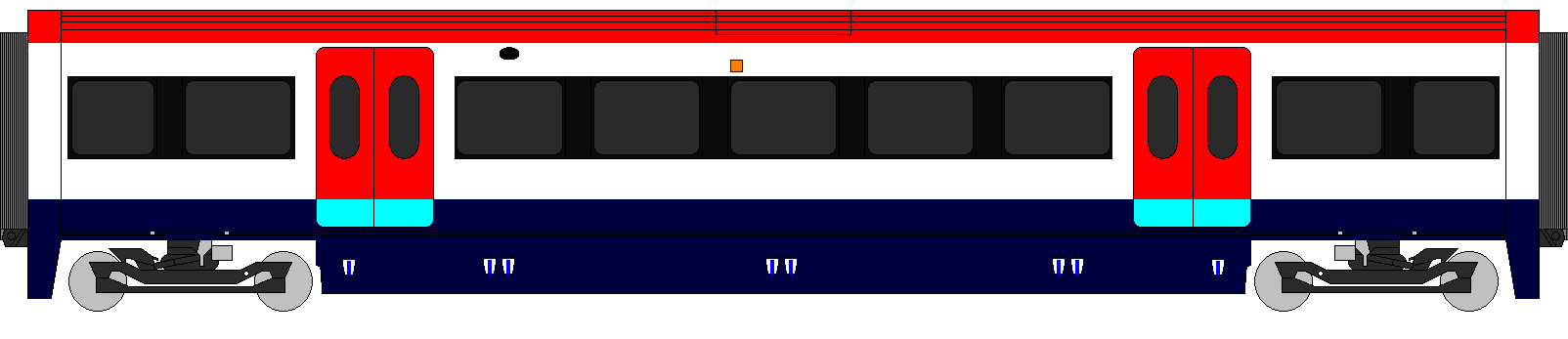
 

Now the one thing that the BBC didn't really grasp was the financial aspect of the story. The BBC stated that Agility Trains (the preferred bidder) was a consortium made up of John Laing, Hitachi and Barclays. Wrong.

On the very same day—just as it happens—Bloomberg in America broke the news that Barclays had in fact pulled out of the consortium:

     Barclays Withdraws from Hitachi’s $11.4 Billion UK Train Bid
     Update

The critical part of the story is:

Barclays Private Equity, the buyout unit of Barclays Plc, Britain's second-biggest bank, withdrew from Agility in November, according to Alistair Dormer, the bid group's chief executive officer.

"Barclays decided not to continue with the bid," he said in a phone interview. "They decided to invest in other projects."

Note the date. Barclays withdrew several months ago. So what's actually happening behind the scenes and why hasn't this been made public until only a few weeks before the election?

The obvious answer is that Barclays won't provide the finance, and that it is proving very difficult to get any other private company to do it. That's why Hitachi has bought out Barclays share ... but that of course would leave the consortium struggling, and that is why the bid now seems doomed. But, if it falls, are there viable alternatives? And even then, what of the delay?
 

Now I don't have the answers. But there is one thing I'm sure of ... and angry about. This Labour government either doesn't have the first clue about how to solve the problem, or doesn't want to solve the problem. Why else leave things for four whole months and then, rather than make a decision, announce that they won't do anything until after the election, when—as we all know—they will no longer be in power ... nor deserve to be.

That is nothing but cynical political buck passing. They are afraid to announce what can only be bad news until after this Westminster election. But you can be sure we would then see Peter Hain and Cobweb Jones going into the 2011 Assembly elections saying that Labour was going to deliver on electrification ... but that the Tories came in and scrapped it.

It's a cheap electoral trick that might well have been lost in the fine print of the business pages, rather than being played out in the full glare of the spotlight in Wales. No wonder Labour were looking so pleased with themselves this weekend:


Now perhaps the Tories will find a way to provide to upgrade the line ... but perhaps they won't. They do have some good ideas for rail infrastructure, as Penddu noted here. But I would be willing to bet that their priority would be to do exactly what the Bow Group says: Heathrow airport, the midlands and the north of England first, then on to Scotland.

If we want the best for Wales, our only hope is to elect enough MPs who will put the interests of Wales at the forefront of the agenda. Labour have just failed us on this, the Tories are looking in a different direction ...

... so I'm sure you can work out the rest for yourselves.

Bookmark and Share

None so blind ...

For a party that claims the Westminster election is a straight choice between them and the Tories, Labour do seem to be putting rather a lot of emphasis on trying to keep the United Kingdom together. This is what Gordon Brown said in an interview in this morning's Western Mail:

I think everybody knows that Wales, like Scotland, is stronger within the Union, and the strength of Great Britain and the United Kingdom is important to developing the modern economy and international relations that we need.

Because we can work together, we're stronger together than we are apart. I want a Britain that grows together and doesn't grow apart.

Gosh. Anyone might think the real challenge to his party is coming from another direction.

-

He then goes on to make this even stranger statement:

He also suggested that Labour could look again at the contentious system of funding Wales from Westminster, saying: "The principle should be that Wales and Scotland and the regions of England should be funded according to their need.

"How you implement that depends on you coming forward with proposals to do so, and we're always ready to look at any proposals that come forward."

This may come as news to Mr Brown, but the Holtham Commision has already put forward proposals to do exactly that.

-

So what are we left with? A Labour Party leader who knows that the funding formula is unfair, who knows the principle on which a fairer funding system should be based ... but who claims that someone has yet to come up with a way of changing the formula.

Now why would he do that? It's obvious: if Gordon Brown were to acknowledge the work already done by the Holtham Commission he knows people would then ask him why the Labour government did nothing to implement any changes. So it's better for him to turn a blind eye to it.

But he still expects people in Wales to vote for his party. Fat chance!

Labour have had plenty of chances to deal with the problem. They've chosen not to do so because unfairness to Wales matters little to a party whose main purpose is to hold onto power in Westminster.

Bookmark and Share

Schools in Whitchurch

There seems to be a plethora of options being floated for schools' reorganization in Whitchurch, with news of a fifth option in the South Wales Echo today.

I contributed to the debate on the WalesOnline forum in its earlier stages, but think that it may well be appropriate to comment again on the more recent developments. My major concern is that Cardiff ends up with a scheme that respects the wishes of parents wanting both English and Welsh-medium education for their children, rather than pitting one group against the other. It is a matter of great sadness that some people want to turn this into an acrimonious battle.

-

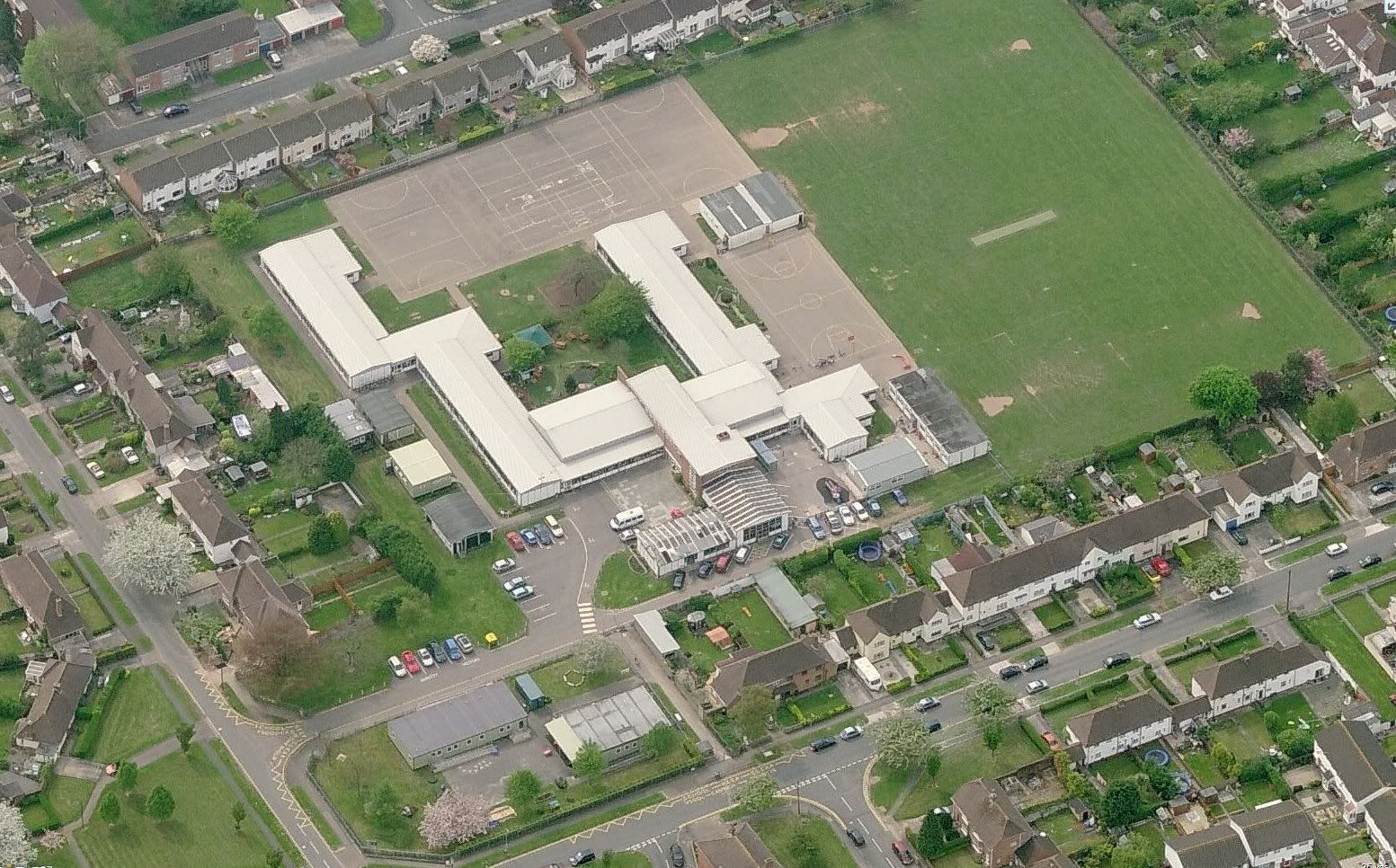
My starting point is the current situation on the site shared by the English-medium Eglwys Wen Primary (EW) and Welsh-medium Ysgol Melin Gruffydd (MG).


As we can see from the picture (click to enlarge it) the original building is much too small to accommodate both schools. There is a huge number of temporary classrooms—thirteen, including the doubles—which between them probably house enough pupils to fill a 1.5FE school.

Therefore the first necessity is that these classrooms are replaced by permanent accommodation. The question is only where this accommodation should be. The "fifth option" presented last night suggests that this should be somewhere on the site ... which would essentially mean building a new school of roughly the same size as the original on a tight site that can only be entered from one corner. There wouldn't be much open space left for play and outdoor teaching for one school, let alone two. So in my opinion, it would be better to do the new building that is required somewhere else.

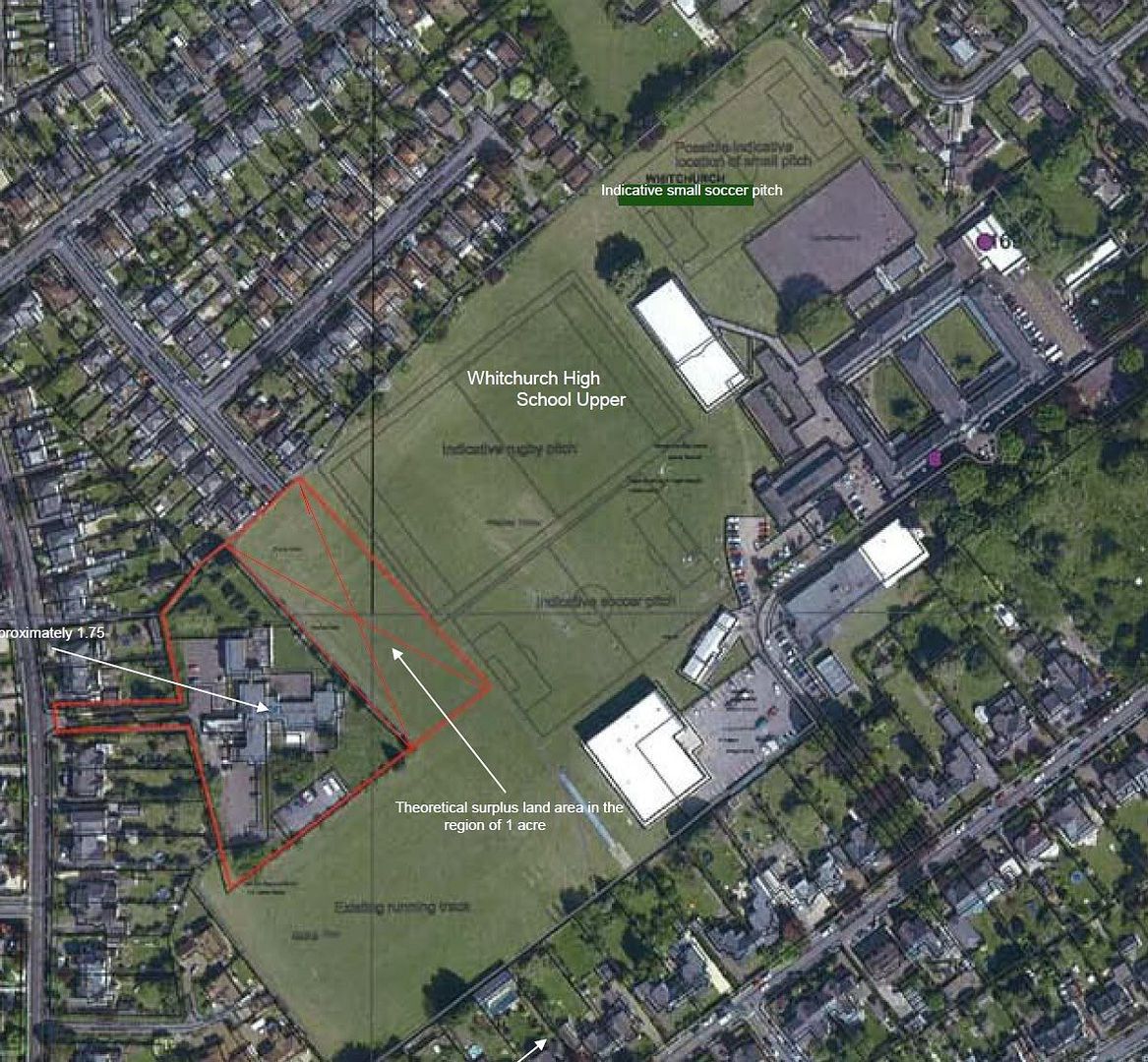
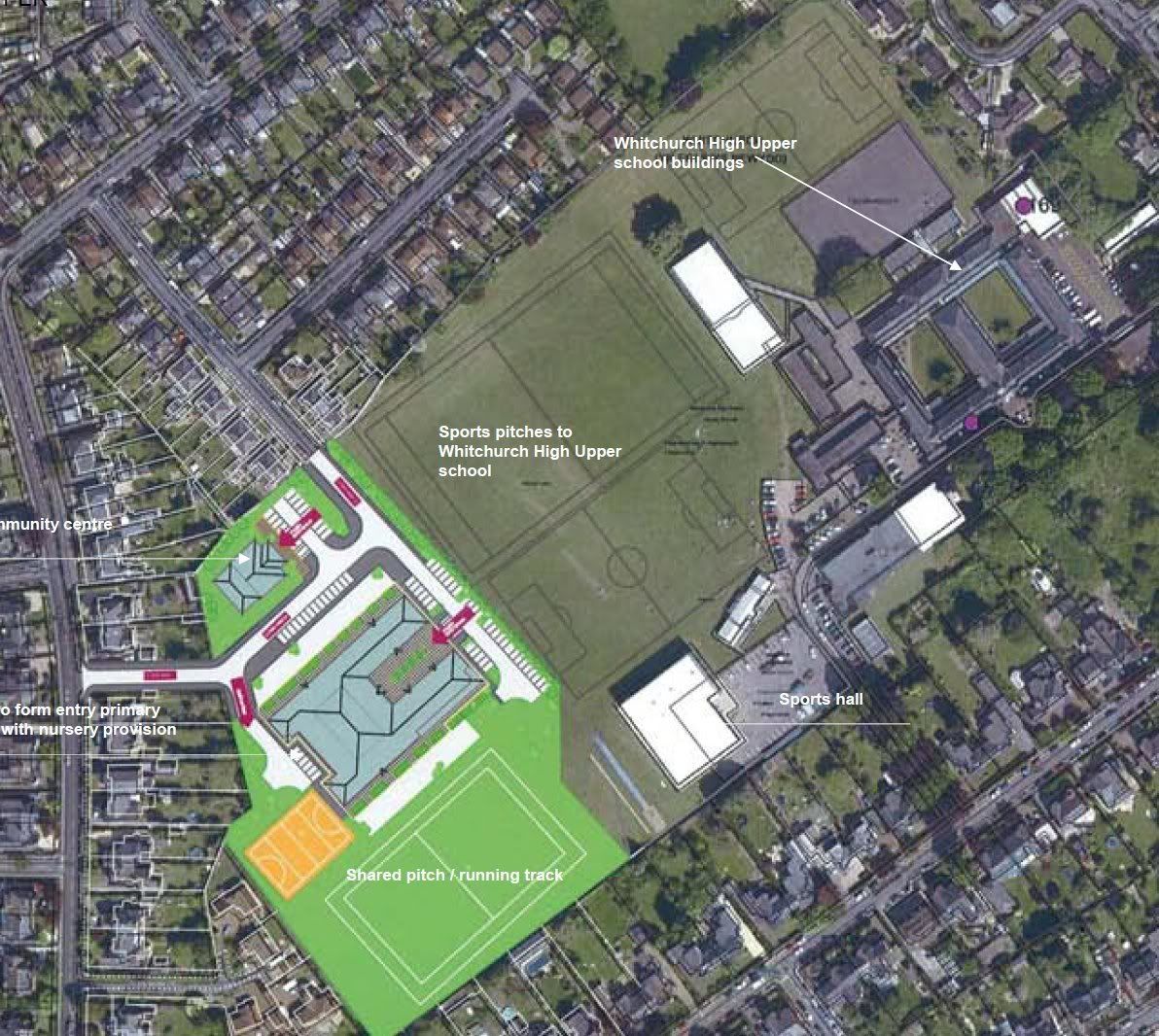
Now, as it happens, there is a very good site for a new school on Heol Don which was used by the Council's Adult Services department, but is now no longer required. This was included in the previous set of proposals and still, to my mind, represents the best option for a new school. These two pictures from the report of July 2009 show both the site as it is and how it could be used for new school:


As we can see, the proposal would take some land from Whitchurch High, but not very much. However what has been drawn on the second plan is a two form entry school, and also a new community centre. If the new school were smaller, and if the community centre was somewhere else, very little land would be lost.

-

The question now becomes what size the schools should be, which schools should be where ... and of course how the scheme contributes to the overall need to reduce surplus places in Cardiff. However in all the plans and proposals put forward there is no doubt that MG needs to become a 2FE school (420 places, plus nursery). So I think it would be best for MG to remain where it is, and for EW to move to the new Heol Don site.

The inconvenience of moving would be balanced by the fact that the school would have a brand new, state of the art building which is only a few hundred yards from its present site.

The tricky question is how big that new school should be. It could be a 1.5FE school, but this would be bigger than the current school. So if the aim is to reduce surplus places, then it might be better for it to be a 1FE school (210 places, plus nursery). Obviously a 1FE school will be cheaper to build and will take a little less space. But in my opinion that is a different fight which must be decided on the basis of population projections, catchment areas and a proper survey of parental wishes.

-

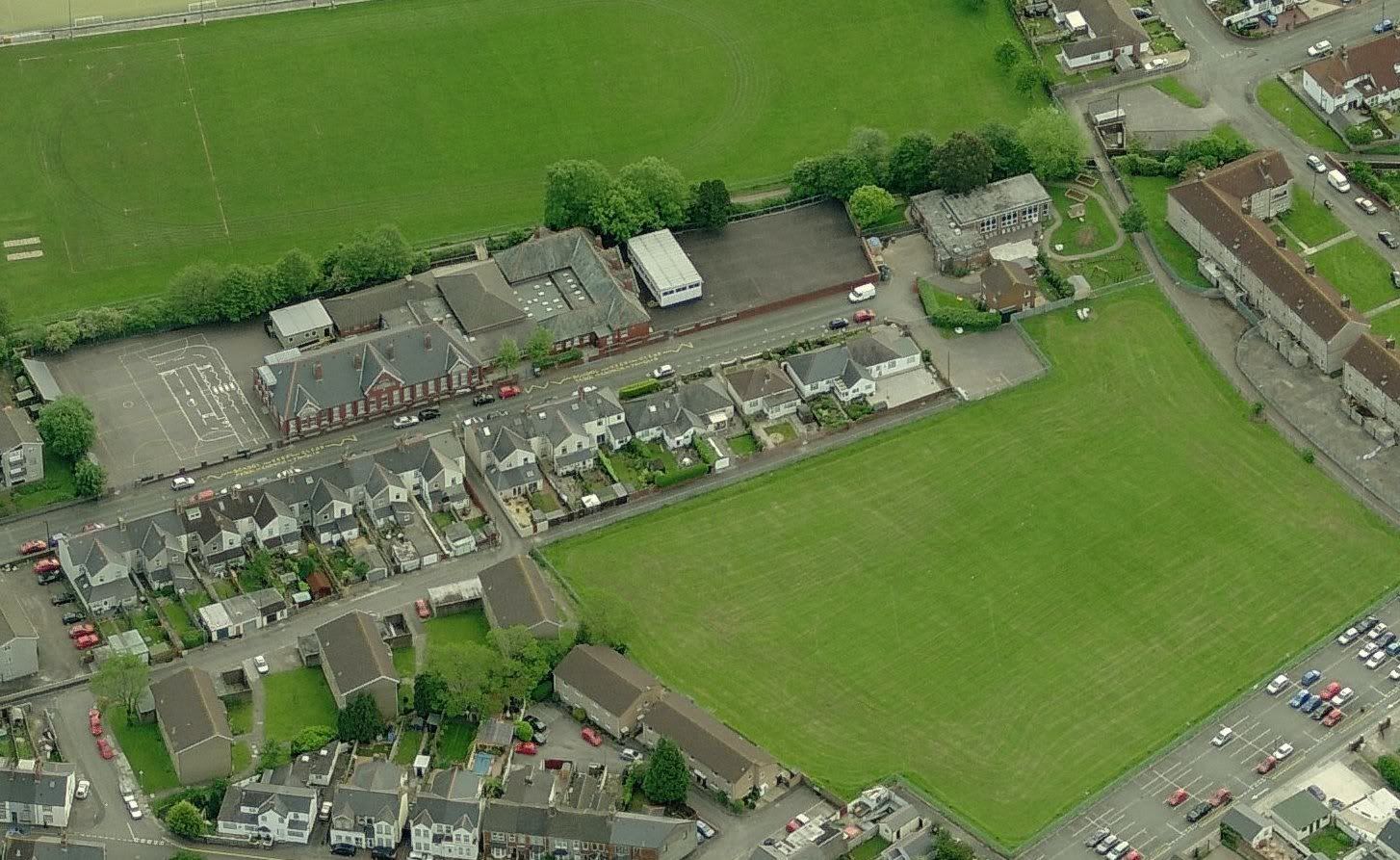
What this means is that Eglwys Newydd primary can remain as it is. However, as we can see below, EN also relies on temporary accommodation. So, if the aim of the council is to reduce surplus places, this can be done by simply removing that temporary accommodation. However this is not an urgent decision for now. If population projections, catchment areas and a proper survey of parental wishes justify it, the surplus places can be removed in due course. On the other hand, if things move the other way, that temporary accommodation can be replaced by a new, purpose built block at some time in the future.


Overall, the solution I have outlined will mean that surplus places can be reduced if that proves necessary. But the big advantage of what I propose is that the two English medium schools can continue without being forced together into one school. The only thing wrong with my proposal from Cardiff's point of view is that they seem to have an educational preference for larger, 2FE schools (or 2.5FE under Option 4) rather than two smaller schools. But in my opinion a 1FE school is perfectly acceptable—and having two of them retains parental choice, minimizes travel distances and, most importantly, allows both to retain the "ethos" that they have built up over the years. Yes, one school is inconvenienced by having to move, but that is compensated by the fact that they will be in a brand new building.

-

So far, I haven't mentioned the plans for Whitchurch High. My own personal opinion is that a twelve form entry school is horrendously big ... but what matters is what parents think. Cardiff's rationale for the reduction seems to be that diverting future secondary age children away from Whitchurch will help maintain the viability of other secondary schools. That is a probably a fair point.

My main concern (as will be obvious from a good many of the posts I have written) is to ensure that Welsh-medium education can expand in response to parental wishes. From that perspective, I do not particularly mind if Whitchurch High's popularity makes other EM secondaries less viable. It has been a struggle to get a third WM secondary, but the way primary demand for WM education is growing, Cardiff must start looking for a fourth.

My view is that plans for education must first and foremost reflect parental wishes. So if the popularity of Whitchurch High leads to a less popular EM school having to close, then that provides Cardiff with an option for the next WM secondary.

-

Finally, the other thing that has pervaded Cardiff's thinking (with the exception of the fourth option) is that school land must be sold off in order to pay for some of the new buildings. That may be valid, but it ignores one of the hidden factors in the "surplus places" argument. As I have shown in the photographs, a good percentage of these surplus spaces is temporary accommodation, some of which is well past its intended lifespan. Temporary accommodation is just that: temporary. Cardiff is under an obligation to replace this with proper purpose-built accommodation, but in the case of EW/MG site there is so much that needs to be replaced that it might as well be built as a brand new school rather than an extension. Building something has to be done anyway.

That said, I would not object to selling some land. For example the south east corner of the EW/MG site is presently occupied by two double temporary classrooms. These would no longer be needed if EW moved to Heol Don, and that corner would make a good site for new housing, as was proposed in the previous set of options. But it would make a very good site for a new community centre too ... better in fact than the one shown on the Heol Don plans and with the added advantage that it would take that much less space from Whitchurch High's grounds.

Bookmark and Share

The Western Mail

Wednesday's editorial in the Western Mail was one of those rare occasions when I have been genuinely surprised by a newspaper's stance on an issue.

Powers that would boost Welsh democracy

Devolution, as Ron Davies memorably said, is a process not an event. While the next step in Wales will be the referendum on further lawmaking powers, an equally important debate concerns the level of financial autonomy that should be available to the Assembly Government.

Many will be instinctively reluctant to grant any kind of tax-levying powers to Cardiff Bay, fearing that that would inevitably result in a higher tax burden. But that is by no means necessarily the case, as the Scottish Government has demonstrated by choosing not to vary the rate of income tax during the first 10 years of devolution.

We believe there is a strong argument for changing the way the Assembly Government is funded. There is already substantial concern about the workings of the Barnett formula, which allocates resources to Wales, Scotland and Northern Ireland. The Holtham Commission, which has been asked by the Assembly Government to investigate current arrangements, has already concluded that Wales stands to lose £8.5bn in Treasury funding over the next decade because of the way Barnett works. A move to a robust needs-based formula is clearly appropriate.

But there is a wider issue of accountability that suggests granting the Assembly Government the power to levy or at least vary taxes would strengthen Welsh democracy. At present AMs are only able to make decisions about how to carve up the block grant from the Treasury – they have no ability to vary the total amount of the cake. In this respect, they are in a less powerful position than the smallest community council in Wales, which can fix its own precept. Political parties and others often deplore the lack of political engagement with Welsh politics. Nothing would be more likely to stimulate a greater interest in the affairs of the National Assembly than the possibility of a tax increase. More crucially, the existence of tax-levying powers would force parties to concentrate their minds on the need to create the wealth from which tax revenue springs.

We also support calls for the Assembly Government to be granted full-scale borrowing powers. In the short term, this would allow a forward-looking administration to overcome the constraints on capital spending to be introduced whoever wins the general election. It would also give ministers greater flexibility in planning projects like new hospitals.

An additional reason for supporting tax-levying and borrowing powers is that Wales cannot afford to lag behind Scotland as devolution goes forward. With the Scottish Government likely to be granted income tax-varying power of up to 10p in the pound, our politicians should be trusted with the same responsibility.

Western Mail, 24 February 2010

The last time Martin Shipton said something that made my jaw drop was when the first part of the Holtham Commission's report came out in July.

As I mentioned in this post at the time, the doyen of Welsh political journalism—or weathered old hack, if he doesn't mind a little affection—said this:

The importance of the Holtham Commission’s findings about the way the National Assembly is funded cannot be overestimated.

... What is particularly neat about the Holtham report is the way the Commissioners have deployed the very same formulae used by the UK Government to allocate funds in the English regions to demonstrate that Wales is likely to lose out by billions of pounds over the next decade.

It is astonishing – and grossly unjust – that what is considered the right way to do things within England is regarded as unnecessary or unacceptable in the context of the UK as a whole.

Western Mail, 8 July 2009

The subject is the much same, so I'm not surprised at that. However what has changed is that the earlier statement was just one journalist's opinion, but it has now become the Western Mail's editorial position.

That is quite some shift ... and of course it is one that I welcome.

Bookmark and Share

A hermit crabb flipping its shell

Some of us are still amazed at how such a small, insignificant creature would be able to flip his home, but this exclusive footage from the shallow waters off the Pembrokeshire coast reveals how it was done:


Of course, we'll need to hit the replay button to get the full picture, because this particular specimen managed to flip his home not just once, but twice!

Since his exploits came to light he's found the shame rather hard to live down, and has been told to keep a low profile in the hope we'll all forget about it.

Crabb by name, hermit by ... er ... political necessity.

Bookmark and Share

Accommodating the Housing LCO

News is breaking about the Tories voting against the revised Housing ELO both from Betsan Powys, Gareth Hughes and Vaughan Roderick.

Betsan and Vaughan have pointed out some of the blatant discrepancies in the position taken by Tory AMs. However those don't really matter too much, except as an embarrassment to them ... and another reason not to vote for them. There isn't any need for a two-thirds majority on this matter, so the vote in the Assembly will be passed irrespective of what Tory AMs do.

The problem is in Westminster ... and it's a slightly different problem. The Welsh Affairs Select Committee has eleven members in total, reflecting the composition of the Commons. It has six Labour MPs, three Tories (one from England, because the Tories don't have enough MPs in Wales that are up to the job ... one of them has to keep a very low profile for obvious reasons) one LibDem MP and one Plaid MP. In fact the Plaid MP shouldn't really be there because, even though Plaid have the same number of Welsh MPs as the Tories, all that counts is the overall number of MPs in the Commons. Hywel Williams is only on it because it would be too politically embarrassing for the other parties to deny Plaid a place.

But anyway, the votes of those three Tory MPs wouldn't be enough to defeat the LCO request in the WASC either, so the LCO would go through by 8-3 in the normal course of events. However we are approaching a general election, which means that there isn't time to get every piece of legislation through. So what happens is that the parties do a deal with each other to let some items of business through without forcing time consuming debates or votes on the issue ... a process known as "washing up".

Now we don't know for sure whether this LCO will be included in the washing up or not. It's just one part of the horse trading. But the signs do not look at all good. However this is a constitutional rather than a policy issue and as such it should not be a matter for a few Tory MPs alone, but a matter for the Tory party leadership to decide.

-

David Cameron has made a big deal about "not standing in the way" of a request for a referendum on primary lawmaking powers. However, as I have warned on a number of occasions, passively "not standing in the way" is very different from saying that he will give us in Wales the right to decide. Doesn't this show in the clearest possible way that principle will always get thrown to one side if the Tories disagree with any aspect of what is being proposed?

If he wants to show that he is really in favour of us in Wales being able to decide things that affect only Wales for ourselves, he can still include this revised Housing LCO in the washing up. If he won't, it will be yet another example of him wanting to give people the impression of being in favour of downward devolution, while in fact doing absolutely nothing about it.

All mouth and no trousers.

Bookmark and Share

Holtham: Taxes and Barnett

A few people have followed up on a post on Tom Bodden's blog about what Gerry Holtham had to say in one of the Plaid Conference meetings over the weekend. Although some good comments were made (and some not so good) I'd like to offer a different perspective. This is what he said:

On Taxes

Some 100,000 people commute across the Wales-England border each day, many of those in the North East, while some 25% of population live within 50 miles of the border.

Varying the basic rate of tax by one or two pence, adding a few hundred pounds to tax bills 'wouldn't pay the cost of the removal van' for the economical mobile to up sticks and leave.

But raising the upper rate of tax, adding £10,000 to £20,000 to the bill ... well, 'they are gone.' You would get virtually no revenue from the upper rate of income tax and if you raise it too far you would probably lose it. If you want to maximise revenue you would cut the upper rate of income tax, then if you put a penny on basic rate ... How you explain that to the Welsh electorate I don't know.

I wasn't there, so I can only comment on what he was reported as saying, but it strikes me as a truism to say that adding 1p to the basic rate of income tax paid by, say, one million people in Wales is going to bring in more money than increasing the top rate of tax for a few thousand high earners by, say, 10p in the pound. That's just simple maths. It wouldn't be right for me to speculate why he would say it ... except maybe as a counter to the assumption that raising taxes for the rich is some sort of "silver bullet" that would solve any country's financial problems at a stroke.

But tax is not just a matter of raising money, it is a matter of fairness too. I am not in favour of "squeezing the rich until the pips squeak" ... but I am all in favour of squeezing the rich until it hurts them (and I realize I've sometimes been in that category) as much as it hurts everybody else. The UK is in the scandalous situation that the poorest pay a bigger proportion of their income in taxes than the richest, as reported here and no doubt elsewhere too. That is immoral and the balance must be reversed.

Where I would take particular issue with GH is his idea that people would "up sticks and leave" if the top rate of tax was 10p higher on one side of the border than the other. Tax is complicated, and every country in the world seems to take the default position of wanting to claim tax from you whether you earned it in one country or another. But to avoid the unfairness of paying two sets of taxes, countries enter into "double tax agreements". These are all different because every country has a slightly different system, but I've no reason to doubt that the UK would want to do much the same as in its agreement with France for people who live in France but work in England (a situation that was not uncommon with commuting on Eurostar). The principle was that tax was primarily paid where it was earned, rather than where the taxpayer lived.

So, in our case, if someone had a £150,000 job in Wrecsam it would of course be a no brainer for him or her to choose to live in the country that had the lower taxes if the rules were set up that way. But—if the UK is consistent—it won't be done that way. People will be taxed according to where the money is earned. So the choice is not where to live, but to try and find another £150,000 job in England. That is something very different.

On Barnett

The Holtham Commission discovered that, in his words, Wales received 'slightly less' under the Barnett Formula than it would if it were treated in the same way as an English region, that is £300m-a-year less. If Wales received a share as an English region it should at least receive about £114 for every £100 on spent on average in England. It actually receives £112.

The Treasury, Mr Holtham reports, are 'fairly reluctant to do anything' about that. Northern Ireland receives £125, when it should get £121, while Scotland's share is £120 compared to £105. So while Wales is £300m under-funded, according to Holtham's calculations, Scotland receives £4.2bn-a-year more.

And running into a General Election where the main opponents to Labour in Scotland is the SNP, Holtham reckons: "If you think they're going to change that, forget it." The Calman Commission in Scotland suggested extending the tax-raising powers there by sharing the income tax base, allowing the Scottish government to tax at 10p in the £, or to vary the bill, and reducing its block grant from the Treasury by say £5bn in recompense. Holtham says this is attractive because it "clarifies political accountability" for the electorate. If the UK Government accepts that argument for Scotland, then it should do so for Wales, he said.

What about a resources tax, say charging more for Welsh water exported to England? The Treasury would probably respond by cutting the Welsh block accordingly, says Holtham and, at any rate, it would be slim pickings, some 5% on £600m turnover would raise £30m, and half of that would lost.

The second part of what Gerry Holtham said is to do with the Barnett formula. Specifically that Scotland does much better out of it than would be the case if a needs based formula were to be applied. Well again, that is undeniably true. But the complicating factor is that Scotland's position is a sort of compromise that in practice reflects the fact that Scotland contributes a substantial amount to the Treasury through North Sea oil and gas even though in theory it is a simple head count formula. More by luck than judgement, the two tend to balance each other out.

Of course it's right to say that Labour, in particular, would never want to open the "can of worms" for fear of increasing support for the SNP if it treated Scotland as severely as it has treated Wales over the last decade or so. But I think the question is much easier to solve if the two issues are kept strictly separate:

•  Firstly, the UK should adopt a needs based formula for funding to replace Barnett. The Holtham Commision has suggested a number of simple to apply indicators that could be used to assess need. That would result in Wales getting more and Scotland getting less, thus being fair to Wales.

•  But secondly, the UK should adopt some way of allowing Scotland to keep a proportion of the taxes raised from North Sea oil and gas. In other words what Scotland loses on one side, they would stand to gain on the other. By separating, rather than conflating, the two issues it should be possible to reach a fairer overall solution.

Of course allowing Scotland to set the level, and keep, some of the taxes which used to go directly to the Treasury is one step further towards fiscal autonomy. But a degree of fiscal autonomy is now inevitable for Scotland because Calman, set up by the three unionist parties to establish a common position between them, has recommended its minimalist proposals for further devolution. In my opinion the principle is right (it is one half of what I said above) but what is wrong with the 10p proposal as it stands is that it gives Scotland control of only one lever. Effective taxation requires a balance of taxes tailored to suit each country's unique circumstances, to promote particular policies (such as green taxes) and to create fairness (because the 10p proposal has no mechanism for varying allowances, tax bands and higher rates it could increase the gap between rich and poor).

I think Gerry Holtham has got it wrong about any taxes Wales raises on its resources. It would be pointless to automatically reduce the amount of block grant Scotland or Wales gets to the same extent that we gain from any money we raise by taxing our natural resources. Of course the Treasury, under its present political masters, would try to do it, even though it would be unfair. One of the problems the UK has is that the Treasury acts as judge in its own cause ... so we need a more objective and independent way of making such decisions. For example, in a federal UK the federal chamber (currently the House of Lords) would make such decisions in a quasi judicial way, with each of the countries of the UK having its own Parliament ... the current House of Commons becoming England's.

-

However, for as long as we remain in the Union, we should expect to keep only a proportion of taxes raised in that way, or to get a proportionately, rather than strictly equal, lower block grant. The path towards fiscal autonomy must be one of increasing the proportion we keep from the taxes we set and raise, while reducing the proportion we get because of needs.

So for Scotland, for example, there would be an absolute needs based formula for assessing the block grant, but only 80% of it would be paid if 20% of the baseline taxation raised from Scotland were retained by Scotland. Scotland would of course be free to vary its taxes from that baseline in line with what it sees as its priorities. Later, the proportions could by mutual agreement be adjusted to 60%-40% ... 40%-60% ... and so on. There is also no reason why the proportions should be the same for Wales, Scotland, NI and England. Each could be negotiated separately after allowing for common expenditure such as defence, and it would of course be prudent to set aside a proportion as a common reserve or contingency.

And if any country got down to 0%-100% it would effectively be independent ... at least in fiscal terms. Though I think the political decision to be independent will have been made before then.

Bookmark and Share