A tactical mistake

There's probably not much of what Adam Price says that I fundamentally disagree with, but one part of what he's quoted as saying in today's Western Mail is worth challenging.

He wants the Welsh Affairs Select Committee to be made up in proportion to the number of seats held in Wales, rather than the overall composition of the House of Commons.

On the surface this sounds fine, but it has major flaws.


The reason the WASC has an "almost statutory role" is because it, like other similar committees, represents the overall make up of the HoC. This enables these committees to make recommendations which broadly reflect how the HoC will vote on any issue. This has immense practical advantages, because the purpose of such committees is to act as a microcosm of the HoC, so as to save the whole House from having to become minutely involved in too many different areas to do any of them justice.

Ultimately power rests with the HoC as a whole, and any vote on any issue can potentially be taken by the House as a whole. Those issues that go though with just a handful of votes do so because it isn't worth the hassle of every MP voting on every issue when the outcome is going to be decided on party lines anyway. If there were a situation where a committee was balanced differently from the overall make up of the HoC, it would end up being irrelevant because they could simply vote down any proposal it makes.

The only way that could change is if some sort of convention were introduced that the HoC as a whole would not overturn the decisions of the committee. To me, that sounds very like the sort of fudge the Tories dreamt up for an English Grand Committee.

Besides that—and much more seriously—the HoC is elected by under a FPTP system which gives an artificially inflated majority to a party that represents only a minority. This is particularly the case in Wales.

Westminster Election, 2005

Lab .... 42.7% of vote ... 72.5% of seats
Con ... 21.4% of vote ... 7.5% of seats
LibDem ... 18.4% of vote ... 10.0% of seats
Plaid ... 12.6% of vote ... 7.5% of seats

I think everyone, not least the Welsh Labour MPs, knows that Labour are in for a big fall in their share of the vote in the next election. I think the moot question is whether Labour's share of the vote will be above or below the 30% mark. Yet even so I think it is a cast iron certainty that Labour will remain the party with most Welsh MPs. Again, the moot question is whether the figure will be above or below 20 seats.

-

So what would Adam Price's proposal mean in practice? Assuming that there was a convention that the HoC did not overturn the WASC's recommendations, it would mean that a party with say 30% of the Welsh Westminster vote gets an effective veto on any proposed new areas of legislation for the Assembly.

Look at the big picture. The big constitutional issue of the day is whether the Assembly will get primary lawmaking powers. The decision about whether we get a referendum or not rests entirely with the Labour party: their votes are necessary to get the two-thirds majority in the Assembly, their majority is needed to get it through Westminster. If we now hand the WASC veto powers on a plate, then Labour will not support a referendum. Why should they? Why would they give up their power of veto?

The major factor in focusing the minds of Welsh Labour is that Westminster, and in particular the Secretary of State for Wales, has so much power over the Assembly. That's been all well and good for them while Labour has had a majority at Westminster. It has given them a "double handle" on politics in Wales. The only reason they will now change their minds is because they know they will lose the next election and someone else will hold one of those handles.

In tactical, as well as practical terms, Adam has got this one completely wrong. He is giving Labour MPs a straw to clutch at, and some of them will reach for it. As they do so, it will divert their attention from the real task at hand, which is to transfer power to the Assembly so that a future Tory Secretary of State for Wales has less influence over our own ability to make decisions on matters which affect Wales.

Bookmark and Share

A seat for Dafydd Wigley

The first part of this post probably doesn't need saying. The system of giving people life peerages is hopelessly corrupt. Gordon Brown didn't bother even putting forward any Plaid members for a peerage. The system left it entirely up to him, and he simply chose not to. Paul Flynn made that point very well in this post.

Of course we might expect a Prime Minister to act reasonably and fairly ... but why should he? His idea of politics is not to do what's right, but to do what benefits him and his party. That's why Mandelson and Kinnock (G) were rushed in at the drop of a hat.

The question is, What do we do about it?
The answer is, Get Dafydd Wigley elected instead!


But where? Vaughan Roderick asks the question on his blog, which Simon Dyda has kindly translated:

The question that arises next of course is will Dafydd try to return to the Assembly? The party rules giving women the first place on the regional lists prevented that from happening last time. That won't be a problem in 2011 if he decides to try for a place on the North Wales list. The system was changed following the last elections.

The problem is that there is no certainty that Plaid will win any seats on the regional list for North Wales next time if support for Labour at the constituency level continues to decline. As in Mid and West Wales it's possible enough that some of the northern regional seats will become consolation prizes for Labour next time.

Dafydd could look for a seat in another part of Wales, of course. He decided not to do that last time for personal and family reasons. If he felt different this time there are a few opportunities available especially if the Conservatives in Westminster stick to their intention to overturn the rule preventing individuals from trying for a constituency seat and a regional one at the same time.

Merthyr, where Dafydd began his political career, is a possibility. It would be strange if Plaid Cymru's new development unit weren't to target that constituency. More attractive perhaps would be the constituency that Dafydd "won" in the 1994 European elections, namely Montgomeryshire. With Mick Bates resigning perhaps the Liberal Democrats will have to re-paint their "Wigley out" slogan there in Comins Coch.

Original - Translation

Yes, he is quite right to say that Plaid's regional seat will almost certainly be lost if we gain another FPTP seat in North Wales. The safe thing is to stand for a seat which Plaid already hold, but I definitely don't want to see someone die, get taken ill, or "spend more time with their family" in order for him to get it.

Yet I don't think Merthyr is right for him. He's from the north, and if he doesn't stand in a northern seat he will be seen as no better than a candidate parachuted-in. But Montgomery is, well ... awkward. These are the figures from 2007:

Montgomery

LibDem ... 8704 ... 39.03%
Con ... 6725 ... 30.16%
Plaid ... 3076 ... 13.79%
UKIP ... 2251 ... 10.09%
Lab ... 1544 ... 6.92%

The constituency is just too right wing. We would have to make up more than 5,000 votes. So I'd like to suggest a better seat, Clwyd West. These are the 2007 figures:

Clwyd West

Con ... 8905 ... 33.98%
Lab ... 7309 ... 27.89%
Plaid ... 7162 ... 27.33%
LibDem ... 1705 ... 6.51%
UKIP ... 1124 ... 4.29%

These are my reasons:

• First, Plaid is starting from a much stronger base.

• Second, the constituency is more left leaning than right leaning. If, as we all expect, Labour's vote is going to plummet, who are their traditional supporters going to turn to? Isn't it likely that they will vote for a party that has not forgotten the social values that Labour used to stand for?

• Third, the LibDems are nowhere. If there is going to be any degree of tactical voting, it certainly won't go their way.

• Fourth, if UKIP make good on their promise following the Euro elections they will draw votes away from the Tories rather than from any other party.

• Finally, he has at least some connexion with the consituency in that he was at Rydal Penrhos School in Colwyn Bay.

Of course that still makes nothing certain. It means only that it is going to be a two horse race between Plaid and the Tories. The Tories are probably favourites right now, but Dafydd Wigley is a "big name" candidate in a way that the sitting Tory can't possibly match ... and that should make enough difference to swing it.

Bookmark and Share

Nationality and Race

One would expect someone like Nick Griffin to deliberately misunderstand the difference between nationality and race:


But even I would have expected someone like Peter Black to understand the difference. However, from what Cynical Dragon brought to our attention today, he obviously doesn't:

Don't think that just by calling yourself 'The Party of Wales' you are actually the 'Party of Wales'. At the end of the day you are just a bunch of politicians like all the rest of us. And actually the difference between racial nationalism and civic nationalism is not that great! But yes Wales is a lot bigger than any political movement.

As for Plaid they define their nationalism by their Welshness thus their race forms part of their identity as a party.

Facebook

I'm reminded of the time I enjoyed on the WalesOnline forum making fun of their BNP poster. I didn't think it needed saying again, but it evidently does. So I'll repeat one of the shorter posts I made then:

I too "want to live in my own country, amongst my own people, in my own way". My countrymen and women include:


Anyone who regards race as a component of nationality is a racist.

I'd be more inclined to think that Peter Black has let the recoil from another of his cheap snipes knock him back into a hole ... which he could yet climb out of if he chose to reframe his words. But to judge by his attitude on Facebook, he seems to want to stand by what he said. That makes him a racist.

And if he or anyone else thinks I'm being harsh on him, my answer is that woolly thinking from people who should know better is one of the things that allows racism to take hold. Being Welsh is a matter of nationality, and the things that define one's nationality (in Wales, as in the rest of Europe and the Western world) have nothing to do with race. If you mix the two things up, you can never hope to stand against racism.

Bookmark and Share

The case for a Welsh-medium school in Risca

In my last post on Welsh medium education in the County Borough of Caerffili I finished by asking where the additional WM schools should be. It would be silly to ask the question without making an attempt to answer it.

I did mention that a new WM primary school was being proposed as part of the Bedwas Colliery redevelopment, so I'll take that as a need that has already been addressed and for which there is an obvious solution. So the next priority I can identify is Risca (or Rhisga) and this post briefly sets out the case and supporting evidence for a WM primary school there.

-

At present the nearest WM school to Risca is Cwm Gwyddon at Abercarn, which is about 7km by road from Risca. As I mentioned before, the Welsh Government turned down Caerffili Council's application to provide three additional WM schools in 2003. One of those locations was Trinant. In the decision letter, one reason quoted for Jane Davidson's refusal was:

• Further Welsh language provision is required in the Risca and Crosskeys area, rather than at the top of the valley.

Source

So even six years ago there was a recognized demand for WM education in Risca. Now let's see if we can substantiate that and put some hard figures against it. As it happens there is an established WM nursery called Cylch Meithrin Dewi Sant in Ty Sign. This was inspected by Estyn at the end of 2006, and this is an extract from the report:

This Welsh medium cylch meithrin is held in St David’s Church Hall in the Ty Sign area above the town of Risca. The nursery serves a very large housing estate and its surrounding area which is acknowledged as being socially deprived with a high level of unemployment.

The nursery is open for four sessions per week, with 30 children between two and a half and three years of age currently on the register.

After leaving the nursery, nearly all the children transfer to the nearby English medium primary school as the nearest Welsh medium provision is a considerable distance away and the local authority does not provide for their transport.

Source

So, from the evidence of this one nursery group alone, in just one part of Risca, it seems clear that there is at least enough local demand to support a one form entry WM school somewhere in Risca.

-

Now let's turn to Caerffili's own Welsh Education Scheme for 2009-14. One of its objectives is:

• To ensure that there is a 100% transfer rate from cylchoedd meithrin and Welsh medium primary schools.

WES - Item 2.1 page 66

From the Estyn report, that is very far from being met. Of course, one obvious question to ask would be whether more parents would be prepared to let their children make the journey to Cwm Gwyddon if it were to be paid for. It's a good question, but unfortunately it's not really relevant because we can see from the WES (page 35) that Cwm Gwyddon now only has 10 surplus places in total, i.e. fewer than two spare places per year group.

-

The final part of the equation is of course the hardest. Having established that there is a clear need, the question is where that school should be and whether it's affordable. The three latest schools built or being planned in Caerffili (at Penallta, Waterloo and Bedwas) were, or are going to be, built under Section 106 agreements. All three are part of large new housing developments, and a Section 106 agreement is a contract under which the developer agrees to provide either a sum of money or build something of value to the community in return for getting planning approval for the development. In these three cases the Council essentially gets a new school building for free.

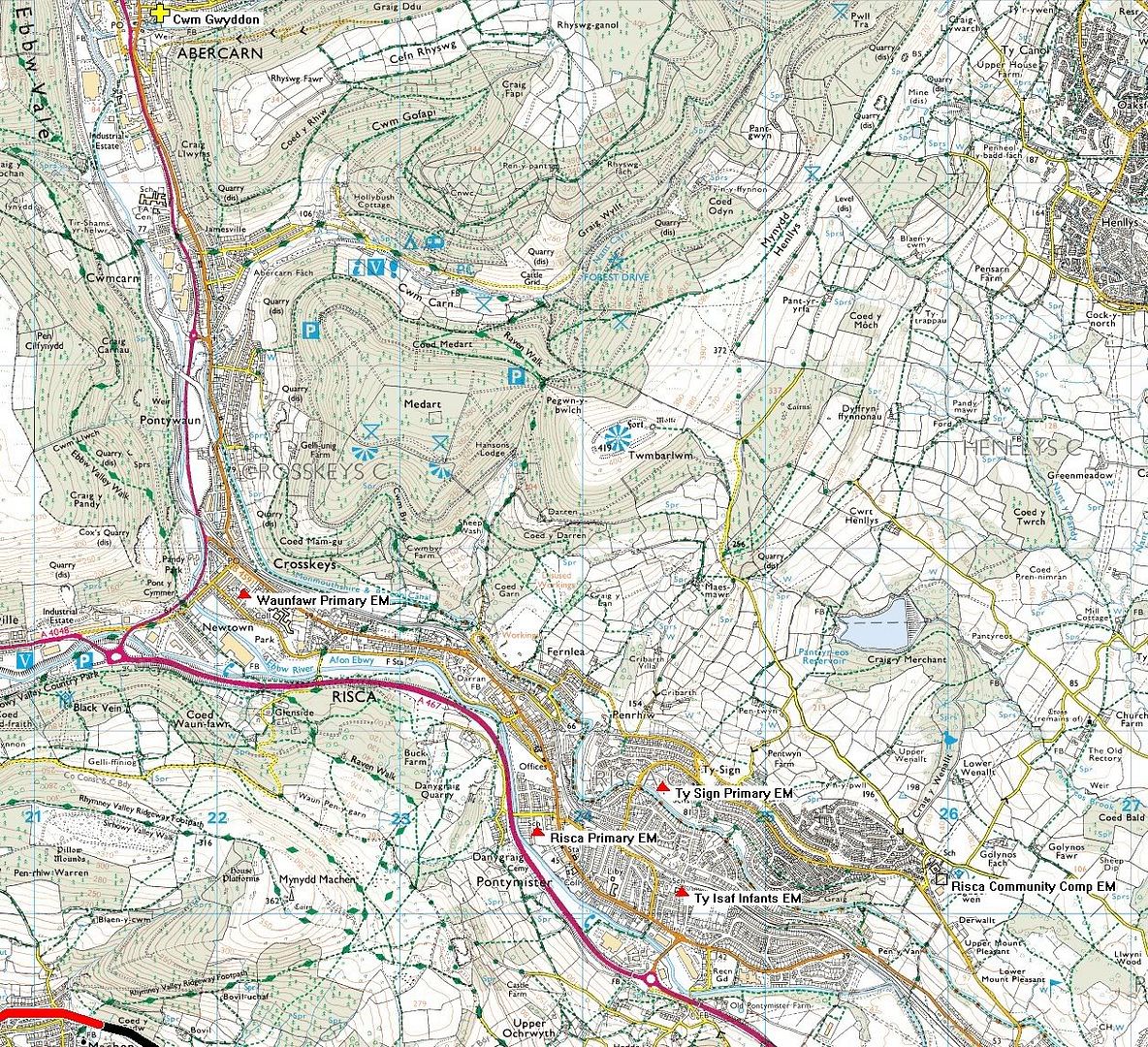
There is no similar derelict industrial site in Risca, and my guess would be that the Council doesn't have the money to build a new school, so we need to look at the existing provision to see if there is room for some juggling. This is a map of the area showing the four schools that feed into Risca Community Comprehensive School. Click on it to open it at a larger size.


From the 2007 figures, these are the numbers at each of the feeder schools and their capacities:

Waunfawr Primary School
132 on roll, 152 capacity, 20 surplus places

Risca Primary School
Infants building ... 91 on roll, 73 capacity, 18 over capacity
Junior building ... 254 on roll, 247 capacity, 7 over capacity

Ty Sign Primary School
458 on roll, 569 capacity, 111 surplus places

Ty Isaf Infants School
86 on roll, 150 capacity, 64 surplus places

Source

Now I hesitate to say this because it will sound glib, but at a strategic level it is clear that Ty Isaf Infants School could be closed, with all its current pupils accommodated at Ty Sign Primary instead. Even if we completely ignored the Welsh-medium factor, the number of surplus spaces at Ty Isaf would at the very least put a question mark over its continued viability as a school. Also the two schools are only 500m apart, so there would be little inconvenience for the children concerned.

However if we do take the WM factor into account, even a modest 20 children a year choosing WM education would reduce the numbers going to EM schools by 140.

-

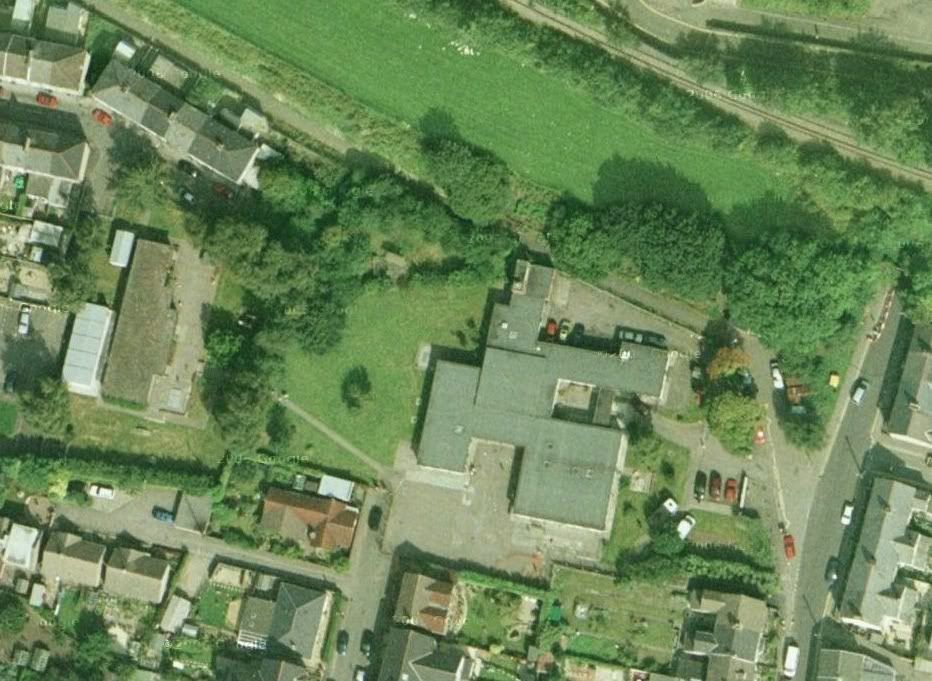
So next we need to look at whether the current Ty Isaf building would be suitable for use as a WM school. Their website has an informative video, and this is a satellite picture:


It is an infants school at present, with four teaching areas in the main building and a nursery in a separate annex. As it only caters for a nursery and three year groups, its capacity of 150 (excluding the nursery) is on the small size for a full 1FE primary. However there is room on the land between the school and the railway for either temporary classrooms in the short term, or for a permanent extension. Temporary classrooms are not ideal, but the sad fact is that an awful lot of schools, particularly WM schools, are forced to rely on them. Two additional classrooms would raise the capacity from 150 to the standard 210 for a 1FE primary school.

If it were up to me, I would not close the school and then re-open it as a WM school, but would implement the change gradually by making next year's intake entirely WM, with any children who want an EM education going to Ty Sign instead. Thus no child who is already at the school would have to change school, and when children reach the end of KS1 they move on to Ty Sign or Risca Primary anyway. The nature of the school would be a bit unusual for the first few years in that teaching in classes would be in Welsh but the communal activities would be predominantly in English. I don't think that should cause any major problem. After three years the school would become fully WM, so even the children in the first WM intake would have their entire KS2 education in a normal WM context. It would not be necessary to provide the additional accommodation until then.

-

Of course I in no way want to suggest that the current Ty Isaf is anything other than a very good school. According to Estyn it is one of the best. But that isn't the point. The point is that the parents of somewhere around 25 children in Risca each year choose to send them to a WM nursery but then have to switch to EM schools. Why should we make it so difficult for these children to continue with a Welsh-medium education, and why aren't they entitled to have this locally in Risca?

Bookmark and Share

Ysgol Penalltau

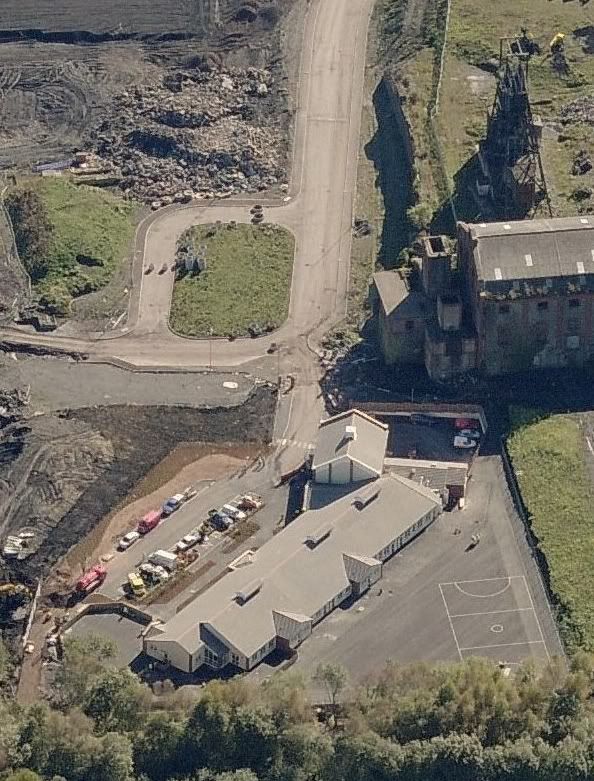
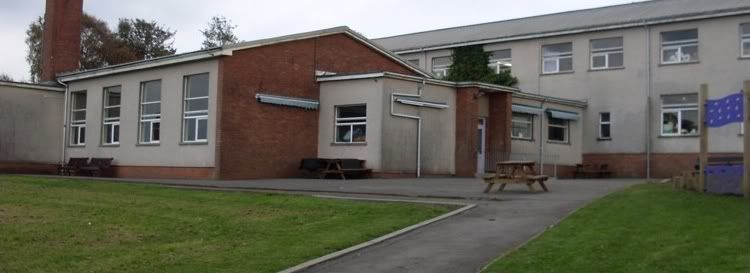
In the shadow of the old Penallta Colliery—almost literally, as we can see from the picture below—a new school has been built. It opened its door to children for the first time today, but it's had a bit of a chequered history.


Way back in 2003, Caerffili Council put forward plans which included building three new WM primary schools, one of which was at the old Penallta Colliery site.

The response was a lot of umming, ahhing and general grumpiness from a Welsh Government which wasn't too keen on co-operating with a council that was now Plaid-led, but at least made the grudging concession that more WM provision was probably going to be needed in the future.

Roll on a few years and a new housing development gets built as part of the colliery redevelopment, and with it a new school under a Section 106 agreement ... but still with the same old umming and ahhing about what sort of school it should be. The then Labour-run council (from 2004) had wanted it to be "bilingual" and managed to get the Welsh Government to agree to it, though without quite defining what that meant (it should be noted that bilingual is not the same as dual stream, which would be inappropriate for a one form entry school anyway). In the end, it turned out that what they had meant by "bilingual" was that "the school would essentially be predominantly English medium with significant use of Welsh." It was a con trick.

In May 2008, Labour lost control of Caerffili, and the new council asked the Assembly for permission to make the school (which would be ready for use in September 2008) fully WM. One of the things that had come out of the previous refusal to allow the new school to be WM was that surveys were conducted to establish parental preferences. These showed a strong and growing demand for WM education which, coupled with the growing number of surplus places in EM schools in the area, should have made the decision a complete no-brainer. But no, nothing so simple. Instead of accepting the obvious it was decided that the statutory procedures had to be gone through all over again, which made it impossible to open the school on the date planned. Eventually a decision was made at the end of February this year, and the school accepted its first pupils today ... after sitting empty for a whole year!

Now most people would say that this sort of ping-pong politics is not particularly edifying ... and I fully agree. Why else would I be telling the story? So let's step back and look at the bigger picture.


Welsh-medium education should be a matter of parental choice, not political pressure. The principle is straightforward: if parents want WM education for their children, it is up to the local authority to provide it. Simple.

However most councils in Wales do not do much to assess the demand for it. Instead they tend to rely on the preferences mechanism that exists for school admissions generally. The problem is that it only works for schools that already exist. There might be two or three EM schools within a mile or two of their home, so if the parents want a WM school their only choice would be to choose one that might be eight or ten miles away. Some parents will do that, but many others will opt for the convenience of a school that is within walking distance. The reticence to travel is then taken by the council to mean that the parents did not actually want WM education.

The only way round that problem is to ask parents of very young children whether they want a WM education, so that the council has time to act to provide it locally. Making such surveys compulsory is one of the key parts of the new Welsh-medium Education Strategy.

So let's look in detail at what Caerffili's survey found:

Caerphilly Local Authority has established an additional two Welsh medium primary schools since 1996 (Ysgol Bro Sannan in 2004 and Ysgol Gymraeg Cwm Derwen in 2008). Both these two schools have attracted pupils and had more nursery pupils on roll in September 2008 than the admission numbers of the schools. It has become evident that the demand for Welsh medium education in the Borough is rising. Pupil numbers at Welsh medium primary schools have increased from 1719 in 1996/97 to 2109 in 2008, an increase of 23%, with further increases forecast in the next 5 years.

At September 2007 nearly 13% of primary pupils in the unitary authority attended Welsh medium schools. In the Autumn of 2007 the Authority surveyed parents to seek their schooling preferences.

Academic Year of Birth ... Numbers wanting WM Education

2004/2005 ... 207 out of 948 = 21.8%
2005/2006 ... 222 out of 995 = 22.3%
2006/2007 ... 262 out of 963 = 27.2%

The responses relating to the Ysgol Bro Allta and Ysgol Gilfach Fargoed catchment areas in the vicinity of the new school reveal above average demand for Welsh medium education as follows:

Academic Year of Birth ... Numbers wanting WM Education

2004/2005 ... 40 out of 155 = 25.8%
2005/2006 ... 48 out of 183 = 26.2%
2006/2007 ... 58 out of 167 = 34.7%

Source

The figures speak for themselves. Taking the Caerffili Council area as a whole, the 27.2% demand for WM education was more than twice as large as the then current provision of 13%.

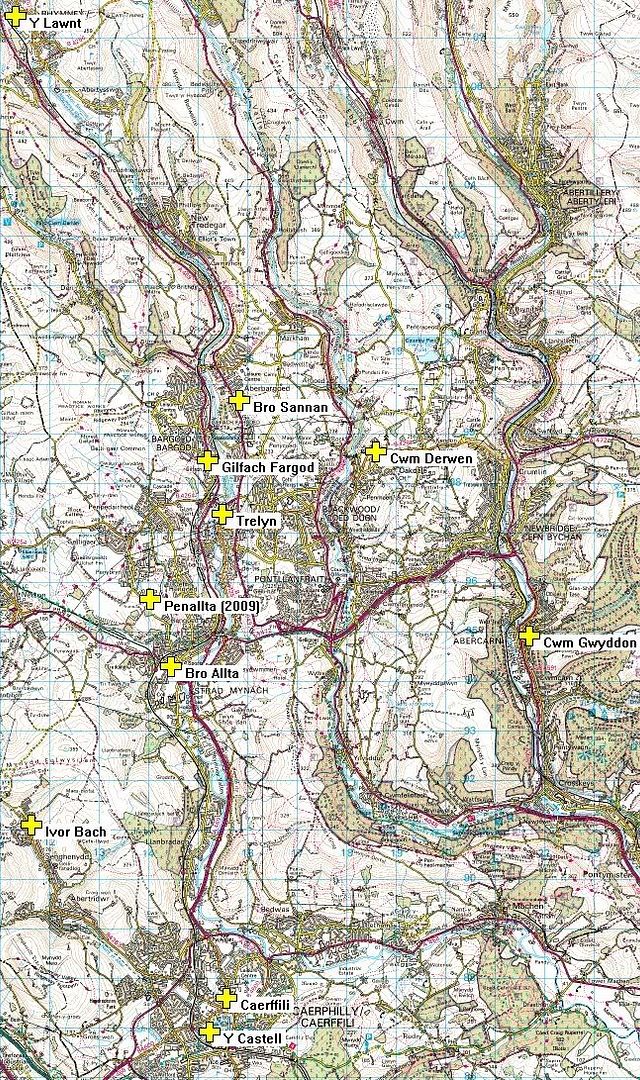
The irony is that Caerffili is one of the better councils in SE Wales when it comes to WM provision (at least at primary level). This is a map showing the eleven WM primary schools they now have:


As two of these are new, we need to imagine another seven schools (to put things into perspective, Caerffili has over 60 EM primaries). Where will they be? Who is planning for them? So far as I know, the only advanced plans are for the new school at the old Bedwas Colliery to be WM. Though if anyone can let me know of any others, I'd be grateful.

-

So all in all, it's been a rather shabby episode; too many political games. But in the end—despite the opposition of one council administration and the procrastination of the Welsh Government—the sheer weight of numbers of local parents wanting their children to be educated in Welsh could not be ignored. That's cause for celebration!

Bookmark and Share

A seamless transition

Today is the first day of a new school year, but for one school in particular it marks a significant change.


The primary school in Trimsaran, the home of the new Ffos Las racecourse, has had a Welsh and English stream running side by side for decades. Jonathan Davies, for example, went through the Welsh stream.

I read a few months ago in the Western Mail that this was this was going to change as the demand for EM education falls. From today, the English-medium stream at Trimsaran is being phased out and the school will, over the course of a few years, become a Welsh-medium school.

I have been very critical of some of Sir Gâr's education policies—and I still am—but this is something for which I must praise them. It is exactly the sort of thing I proposed here. I'd like to see what is happening in Trimsaran happening in other schools in the county, or for schools which are entirely EM to introduce WM streams. This evolutionary approach is much, much better than having to close existing schools to open new WM schools.

-

This can happen more easily in those parts of Wales that have a higher percentage of Welsh speakers. To give you an idea of the latent possibilities, I recently came across a report in which the head of one EM school in nearby Llanelli said that all twelve of her teachers were capable of teaching Welsh as a second language, but that none of them were currently proficient to teach through the medium of Welsh.

I have mentioned my concerns at the poor quality of WSL teaching, and do not want to single out just one person for an attitude which is widespread in large parts of Wales: namely that the standard of Welsh required to teach Welsh as a second language is lower than it would be to teach in Welsh. I believe the exact opposite is true: that teaching Welsh as a subject requires better training than teaching in the medium of Welsh. Too often teaching Welsh in EM schools has been left to any teacher who can speak a little Welsh themselves, rather than those with specific training in the subject.

-

Now obviously I don't know the linguistic capabilities of every teacher in Wales, but it just so happens that I know the person who was interviewed for the Western Mail's story. She has spoken Welsh all her life and been a teacher all her working life, but she has taught the English rather than the Welsh stream. This is where the Sabbaticals Scheme can, and does, make a real difference. It does not take all that much to turn a teacher who can already speak Welsh well (but who is used to teaching in English) into a teacher who can teach children in Welsh. The same would no doubt be true of many other teachers too, and it provides one of the main keys to expanding WM provision.

-

None of us can be unaware of the difficulties of opening new WM schools. The demand is undoubtedly there but—unless a new school is built from scratch—the only other way of making a transition is the traumatic process of closing an EM school because of falling numbers, then opening a new WM school in the old building. It is a process that is almost guaranteed to result in unnecessary antagonism and resentment in the local community. It is also painfully slow.

It seems to me that we need as much flexibility as possible. Introducing new WM streams and letting that change work through the system as children progress from year to year is one way to make a seamless transition without the trauma.

Bookmark and Share

Will the LibDems support an English Parliament?

Peter Black said in his blog last weekend that he had been reading David Melding's book, Will Britain Survive Beyond 2020?


This is what particularly interested me:

The book particularly focussed my thoughts on present Liberal Democrat policy which has been for some time the sort of federal state that David now advocates that the Tories should support. Our policy has been based on the regionalisation of England, which of course is a valid option but does not seem to have any support amongst voters and would be difficult to implement. David makes an excellent case for an English Parliament and argues that checks and balances could be written into the constitution to ensure that England would not overly dominate a Federal Union. This would include the House of Lords becoming an elected Federal second chamber.

It is clear that it would make sense to revisit Liberal Democrat policy along these lines by updating our commitment to federalism so as to make it fit into where we are now starting from. It also appears that it would be far easier to get general acceptance for an English Parliament within a reformed UK constitution than we would for regional parliaments.

Quite frankly, I'm amazed. To me this has always been a blind spot for the LibDems, as it was for the Liberals before them.

The UK is an over-centralized state, both politically and economically. Indeed I believe that one perpetuates the other in a vicious circle. To their credit, the Liberals have always (at least in my political memory) favoured a more federalized state as a means of breaking that circle. But their problem was that their thinking was based on the UK as a whole. Therefore, devolution for Wales and Scotland was fine, but England was simply to big to be devolved in the same way. So the only solution they could see was to break England up into smaller pieces roughly equal in size to Wales or Scotland.

Although this might be seen as a "logical" solution in terms of utility, it completely failed to address people's sense of self identity. It worked for Wales and Scotland because people saw themselves as Welsh or Scottish (whether or not they also saw themselves as British) but it could never work for England because people put any identity as "North West Englanders" after their more fundamental identity as simply "English". Indeed it is impossible to describe yourself as being from "the North East" unless it is understood that this means "North East England".

But the Liberals, and then the LibDems, stuck with it as a policy. And when they managed to persuade Labour of the merits of it, Labour tried to set up directly elected regional assemblies (unelected regional assemblies already existed, consisting in the main of appointees from local councils) but people in England didn't want them. They probably saw the attempt to break up England as some sort of sinister EU plot to divide and rule.

Yet, equally, people in England are very well aware that Wales and Scotland now have a measure of self government that they do not have. Rhodri Morgan might flatter himself that the English are "jealous" of us because of things like free prescriptions, but anyone who gives the matter any thought would realize that the only thing they would really be jealous of is the ablity we have to make some decisions about our own priorities for ourselves.

-

Peter Black's conversion appears to have come about by reading David Melding's book. However the chances of David Melding's views becoming Conservative Party policy are virtually nil. The Tories seem set on tinkering at the constitutional edges rather than ever doing anything so radical. Their policy seems to be to keep things as they are as much as possible, so long as they deny Scottish MPs the right to vote on English issues.

But Peter Black probably does have some chance of getting the LibDems to change their policy, and I wish him luck in getting it adopted. After all they have nothing to lose, since no-one was much interested in their old policy. But would it make any difference? Would the LibDems ever have the opportunity of being in power in order to implement it? Hardly.

But maybe, just maybe, the LibDems will find themselves holding the balance of power in a hung Westminster. And even if they don't they might find themselves pleasantly surprised at the increased support they get in England ... since at present the only parties that support an English Parliament are confined to the fringes. It won't make any difference to their support in Wales.

-

Of course for us in Wales, the advantages are obvious. If the English decide that they want their own Parliament (or Assembly, or whatever) we can guarantee that they will not give themselves fewer powers than the Scottish Parliament has. And that means that we in Wales would get the same powers as both instead of the half-baked mishmash we have at present ... and still will have, even after a referendum that will leave us a long way short of the powers and responsibilities the Scottish Parliament has had for the last ten years.

Bookmark and Share