The current leader of the Basque Government has just announced that elections will be held on 21 October this year, five months earlier than would normally be expected.
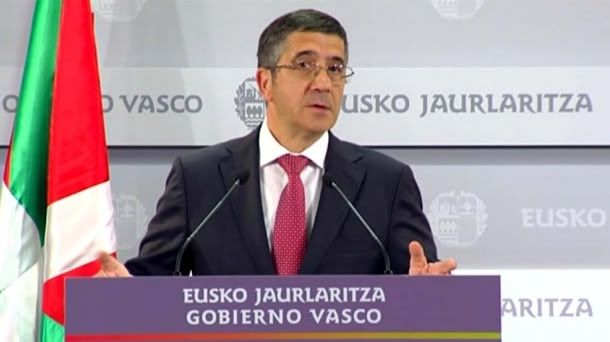
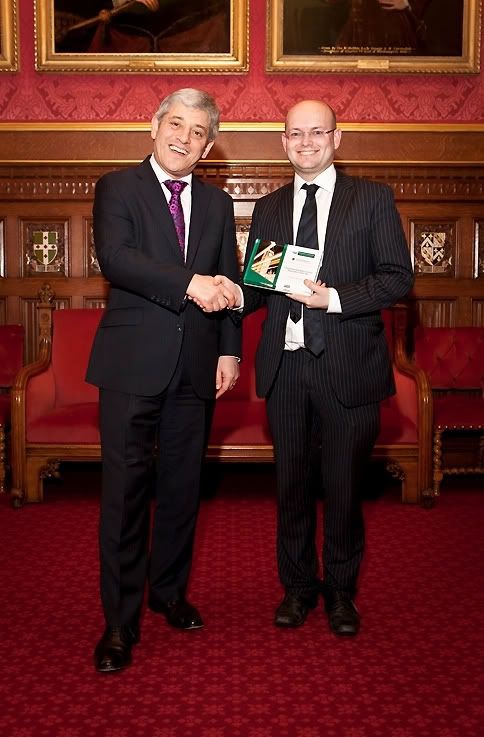
Paxti López of the PSOE, current Lehendakari of the Basque Autonomous Community
The government that had been formed following the 2009 election was an "unholy alliance" between the two main Spanish parties, the socialist PSOE (or PSE-EE in its local form) and right wing PP, formed with the sole purpose of preventing a nationalist government for the first time in nearly thirty years. Normally the centre-right nationalist EAJ-PNV was able to form a government with occasional support from the smaller left-wing nationalist parties, but last minute bans on two of these parties meant that they won maybe half a dozen fewer seats than they would normally. This blatant gerrymandering proved to be just enough to allow the formation of a PSOE-PP governing coalition ... with a majority of just one in the 75 seat parliament.
Needless to say, it wasn't a particularly happy marriage. It was the equivalent of expecting Labour and the Tories to work together here. Apart from wanting to keep the nationalists out of power, there was practically nothing else they could agree on. The PP withdrew their support from the PSOE after winning power in the Spanish general election in November last year. As we would expect from a right wing party, they embarked on a savage austerity programme involving cuts that no left wing party could be expected to agree with, even though they would probably have done exactly the same thing if they had been in power. The EU wouldn't have given them much choice. Put bluntly, Spain's economy is in such a mess that there is very little room for manoeuvre for either left or right, but a party in opposition always has the luxury of saying they would do something different.
-
Perversely, this wasn't helped by the Basque economy being in markedly better shape than anywhere in Spain. While Spanish unemployment is at 24.4%, in Euskadi the figure is 13.5%. Not good, of course, but a lot less bad. Over the years, and with the benefit of almost full fiscal autonomy, the country has become more economically prosperous than any part of Spain. It has a higher credit rating and lower borrowing costs than Spain. Not that it needs to borrow much anyway, for its deficit-to-GDP ratio is only 0.25% compared with Spain's ratio of 90%. The figures are here and here. It all means that Euskadi does not have to take the same extreme steps to put its economy in order as Spain does.
The problem was that Paxti López was rather more focused on his image in Spain than what was happening in Euskadi. He was being widely tipped as a future PSOE leader in Madrid, and his political line was to point to the Basque economy and use it as a supposed example of how much better things would be if Spain adopted the PSOE's cuts than the PP's cuts. Disingenuous because Euskadi's economic success had been built on the foundation of nationalist policies over several decades rather than PSOE policies in the last couple of years. For their part, the PP couldn't continue to work with him while he was playing that game. They withdrew support and he was a dead man walking from then on. He kept denying that he would call early elections, but this announcement has not really come as any big surprise.

So what can we expect of these elections? The first thing to say is that the political landscape has completely changed. The pro-independence left was determined to make sure that what happened in 2009 would never be repeated. It acted on two fronts: the parties worked together to form a united platform for elections, and they took pains to disassociate themselves from any connexion with ETA.
In parallel ETA first declared a new ceasefire and later made that ceasefire permanent. Who persuaded whom to do what depends very much on your perspective. For Spain, ETA were in always in the driving seat, and seeking Basque independence by political means was never more than a front for terrorism. Such thinking resulted in the first platform, Sortu, being almost immediately banned on the grounds that anyone who wanted independence must by definition be associated with ETA.
A second platform called Bildu was then formed and banned as well. But when the EAJ-PNV withdrew its support from the minority Spanish government in protest, the Constitutional Tribunal promptly overruled the Supreme Court decision. This showed the world that the Supreme Court's decisions had been taken for political rather than judicial or constitutional reasons, and the Spanish game was effectively over. Bildu stood in the municipal elections of May 2011 and the result was remarkable: it won more seats than any other party.
Analysing that result here and here, the major swing was away from the Spanish left (the PSOE) towards the Basque left (Bildu). Broadly speaking there were now four major parties/groups: a Spanish left and right (the PSOE and PP) and a Basque nationalist left and right (Bildu and the EAJ-PNV), but the Spanish parties were now being marginalized. On the right of the political spectrum the PP had always got far less support than the EAJ-PNV, but now the same was true on the left of the political spectrum as well.
As I saw it, Basque voters with views on the left of the political spectrum had previously been inclined to vote for the Spanish PSOE first because the nationalist left was associated with violence and second because of the confusing number of often squabbling small parties (not of course helped by them frequently getting banned and then reforming as something else). But now that the pro-independence left had finally got its act together, voters started switching en masse from the Spanish left to the Basque left.
In the Spanish general election in November 2011 Bildu expanded to become Amaiur, and once again won more Basque seats than any other party. Details here.
The one thing that we can say with almost complete certainty is that Paxti López and the PSOE will be the big losers in the upcoming elections in October. The main contest will be between the Basque nationalist left in the shape of EH Bildu (they haven't quite lost the habit of continually changing their name) and the Basque nationalist centre-right in the shape of the long established EAJ-PNV. The PSOE and PP will be a long way behind.
The opinion polls conducted so far this year (at the bottom of this page) show the EAJ-PNV in a range between 29% and 35%, EH Bildu between 25% and 28%, the PSOE between 15% and 20% and the PP between 12% and 17%. However this won't translate directly into numbers of seats, for although the voting system is proportional in each of the three provinces that form the Basque Autonomous Community, each of them has a flat 25 seats even though they are quite different in terms of population size.
Personally, I would expect the PSOE to be squeezed even more than the polls suggest. Voters do tend to put the knife into a dying party, so I would expect a much closer race between EH Bildu and the EAJ-PNV.
-
Whichever party gets most seats, neither EH Bildu nor the EAJ-PNV will be able to govern alone. So the question is whether the next government will be formed on left-right lines or on nationalist lines. There are only three possibilities: the EAJ-PNV could form right-of-centre government with support from the PP; EH Bildu could form a left-of-centre government with support from the PSOE; or there could be a nationalist coalition.
I'll write about the likelihood, and consequences, of each of these outcomes in another post.